
As a rough guide, a straightforward combi-for-combi swap costs most UK homeowners somewhere between £2,000 and £3,000 fully installed. Converting to a combi from a system or regular boiler is a bigger job and typically lands between £3,000 and £5,000, because the old cylinder and tanks come out and the pipework changes.
Those are broad estimates rather than fixed facts, because the real number depends on your home, the boiler you choose and how much of the old system needs bringing up to standard. The good news is that a combi is usually the simplest and most affordable type of boiler to install, which is a large part of why it has become the default choice in most British homes.
Here is what actually sits behind the price, and what a proper installation should always include.
Straight swap or conversion? The biggest cost question
A straight combi swap
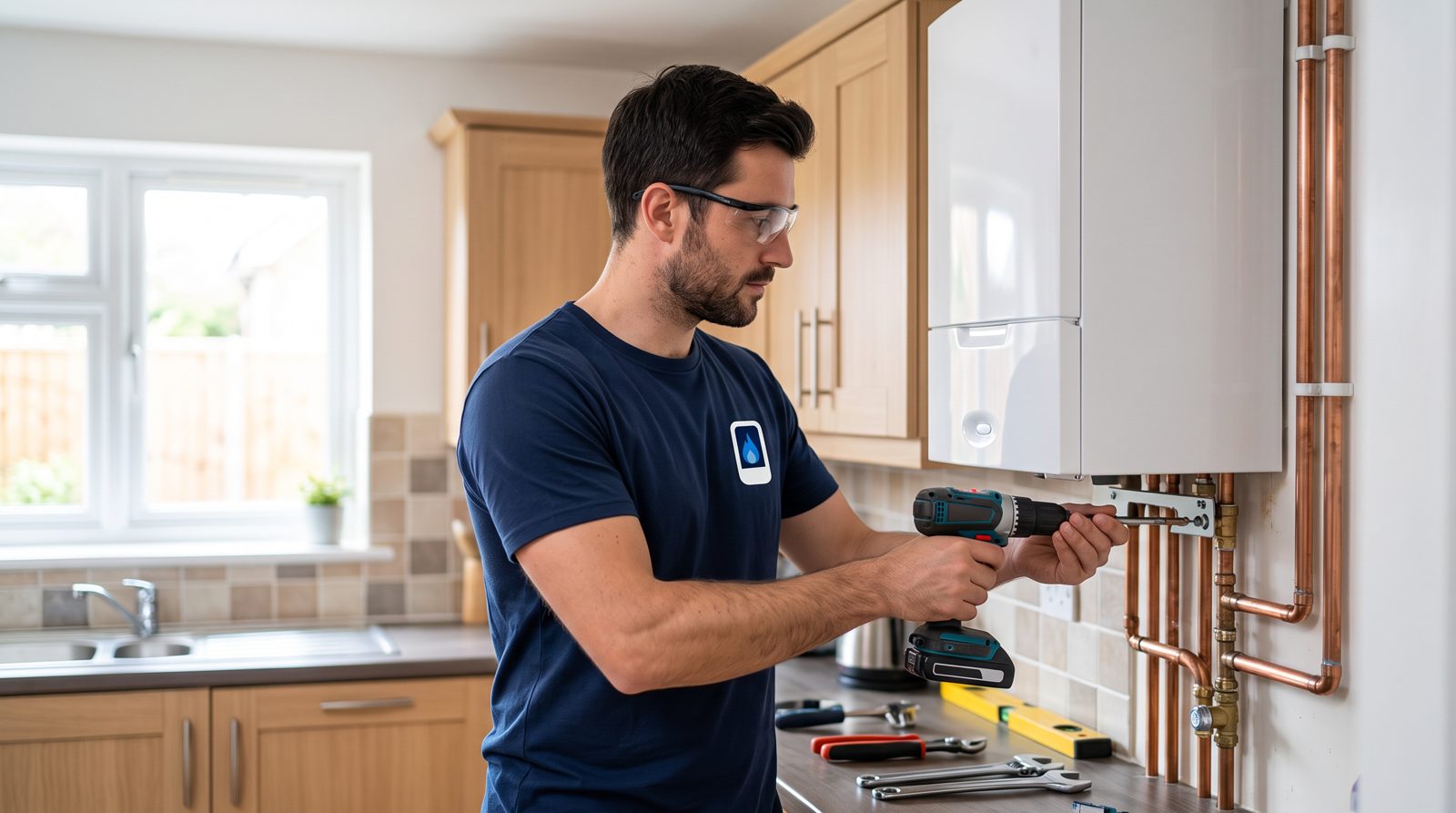
If you already have a combi boiler and are replacing it with a new one in the same spot, you are at the cheap end of the scale. The gas, water and heating connections are already where they need to be, the flue route usually works with minor adjustment, and a competent engineer can normally finish in a day. Most of the cost is the boiler itself plus a day of skilled labour and the required extras covered below.
Converting from a system or regular boiler
Converting is a different animal. A system boiler works with a hot water cylinder, and a regular boiler adds a cold water tank in the loft as well. Moving to a combi means removing the cylinder and tanks, capping and rerouting pipework, upgrading the gas supply pipe if the new boiler demands more than the old one, and often rebalancing the whole heating circuit. It is one to three days of work rather than one.
Is it worth it? Often, yes. You free up an airing cupboard and loft space, you stop paying to keep a cylinder of water hot, and you get mains-pressure hot water on demand. But combis suit some homes better than others. If you have two or more bathrooms in regular use, or weak mains water pressure, a combi can disappoint, and keeping a cylinder may serve you better. An honest survey settles this question before any money changes hands.
What else moves the price
- Boiler output. Combis for larger homes with higher hot water demand cost more than compact models for flats. Sizing is about your hot water use as much as your radiators.
- Brand and warranty. Premium boilers cost more but often carry warranties of up to 12 years. Over the life of the boiler, a long warranty is usually the better buy.
- Flue changes. A new flue position, a vertical flue through the roof or extensions to reach an outside wall all add cost.
- Relocation. Moving the boiler to a new room means extending gas, water and condensate runs.
- System condition. Old radiators full of sludge need flushing before a new boiler goes anywhere near them, and badly corroded pipework may need attention.
What a proper combi installation includes
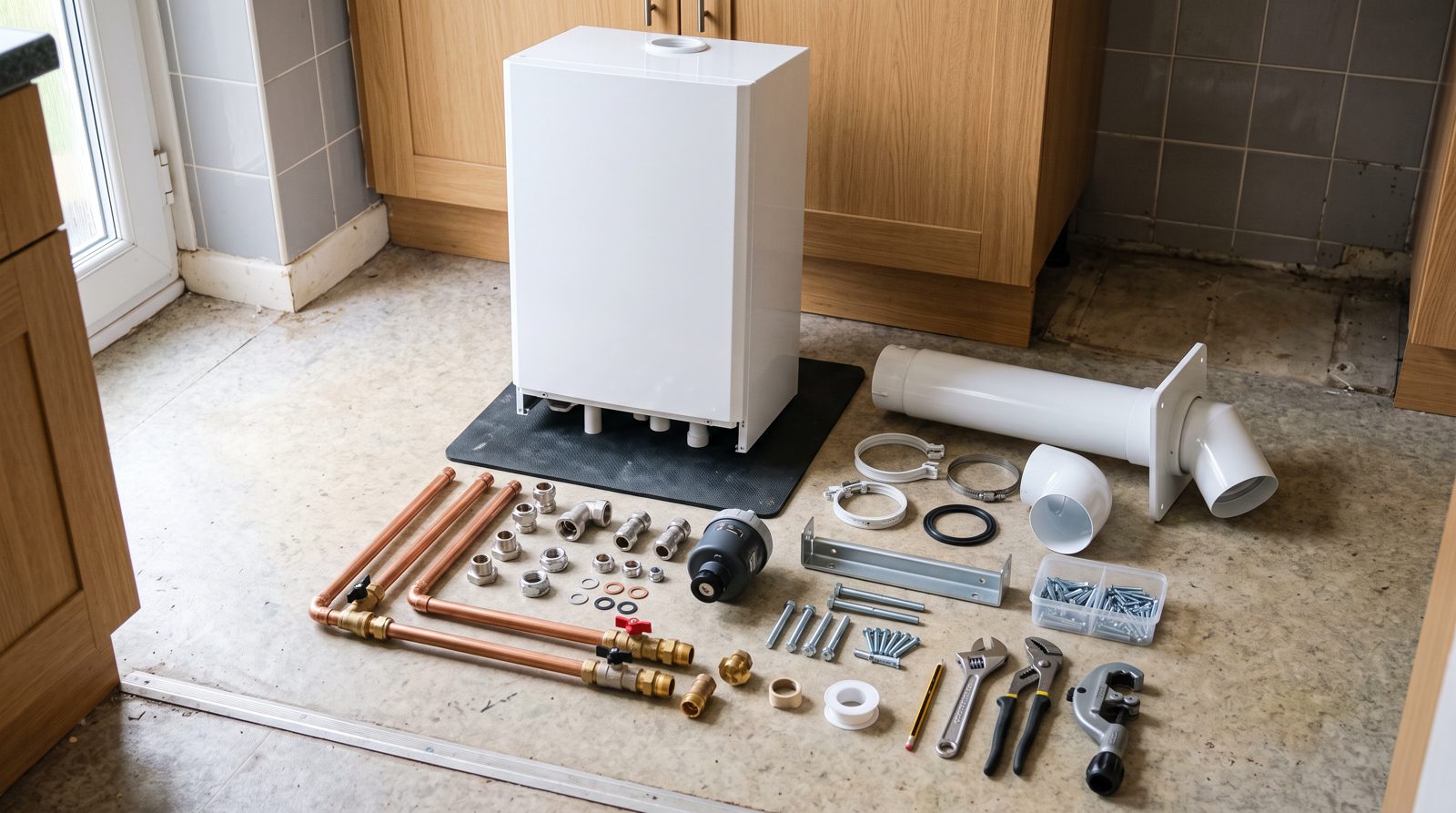
The gap between a cheap quote and a good one is usually hidden in this list. A proper installation is not just “old boiler out, new boiler in”. It should include:
- A full system cleanse or power flush. Sludge from the old system will wreck a new heat exchanger. Manufacturers can refuse warranty claims if the system was not cleaned.
- A magnetic system filter. This catches debris before it reaches the boiler and is required by most manufacturers for their longest warranties.
- Inhibitor chemicals added to the system water to prevent future corrosion.
- A modern control setup, at minimum a room thermostat, to meet building regulations on boiler efficiency.
- Gas pipe checks and upsizing where needed. Many modern combis need a larger gas supply than the boiler they replace.
- Condensate pipe done properly, insulated or rerouted so it cannot freeze in a cold snap, which is one of the most common causes of winter breakdowns.
- Commissioning, registration and paperwork. The boiler should be commissioned to the manufacturer’s checklist, registered for its warranty, and notified to building control. You should receive the Benchmark documentation completed.
If a quote is dramatically cheaper than the others, it is worth asking which of these items it quietly leaves out. All DCI Boilers engineers are Gas Safe registered, and every gas boiler replacement we install includes the full list above with a fixed price agreed before we start.
Why fixed pricing matters
Combi installations are exactly the sort of job where loose estimates go wrong. An engineer opens up the system, finds a gas pipe that needs upsizing or a flue that no longer meets regulations, and suddenly the bill has grown. With a fixed upfront quote, that risk sits with the installer, not with you. The survey is done properly first, the complications are priced in, and the figure you agree is the figure you pay.
Once your new combi is in, an annual service keeps the manufacturer warranty valid and keeps the boiler efficient. Our boiler servicing guide explains what that involves. And if a boiler fails before you get to replacement, boiler repairs or a 24/7 emergency boiler call-out can keep you warm in the meantime.
How DCI Boilers can help
DCI Boilers installs combi boilers across Cornwall and Devon from our base near Saltash. Every gas boiler replacement starts with a proper survey, comes with a fixed upfront price, and is backed by up to 12 year manufacturer warranties. If a combi is the wrong choice for your home, we will tell you that too, and quote for what will actually work.
Need help now? Call DCI Boilers on 07888 862 603 or get a free quote.
Frequently asked questions
How long does a combi boiler installation take?
A straight swap is usually done in a day. Converting from a system or regular boiler typically takes two to three days, depending on how much pipework changes and whether the cylinder and tanks are being removed.
Is a combi boiler right for every home?
No. Combis shine in homes with one bathroom and decent mains pressure. Households with two or more bathrooms in use at once, or poor incoming water pressure, are often better served by a system boiler and cylinder. A survey answers this definitively.
Do I need a power flush with a new combi?
The system needs cleaning to some standard, yes. Whether that is a full power flush or a chemical cleanse depends on the state of your system. Skipping it risks early failure and can void the manufacturer warranty.
What warranty should I expect on a new combi?
It varies by brand and installer. DCI Boilers installs combis with manufacturer warranties of up to 12 years. Almost all long warranties require an annual service by a registered engineer to remain valid, so factor that into your running costs.