

As a rough guide, most UK homeowners pay somewhere between £80 and £130 for a gas boiler service, and a little more for oil, typically £90 to £160, because oil services involve replacement parts and combustion testing that gas does not. Prices vary by area and by how thorough the service actually is.
That last point matters more than the headline number. A boiler service is one of those jobs where you cannot easily see what you paid for, and a ten-minute glance with a torch costs a company much less to deliver than a proper strip-down and test. The cheapest service on the market is not always a bargain.
This guide covers what a genuine service includes, why gas and oil are different jobs, and why the modest annual cost protects something far more valuable: your manufacturer warranty.
What a proper boiler service includes
A competent engineer servicing a gas boiler will typically:
- Visually inspect the boiler, flue and pipework for corrosion, leaks and damage
- Check the flue is sound, correctly routed and terminating safely
- Run the boiler and test the flue gases with an analyser to confirm it is burning cleanly and efficiently
- Check gas pressure and flow rate at the boiler
- Inspect internal components: heat exchanger, burner, ignition, seals, condensate trap
- Clean components where the manufacturer’s instructions call for it
- Check the expansion vessel pressure and system pressure
- Test the safety devices that shut the boiler down when something goes wrong
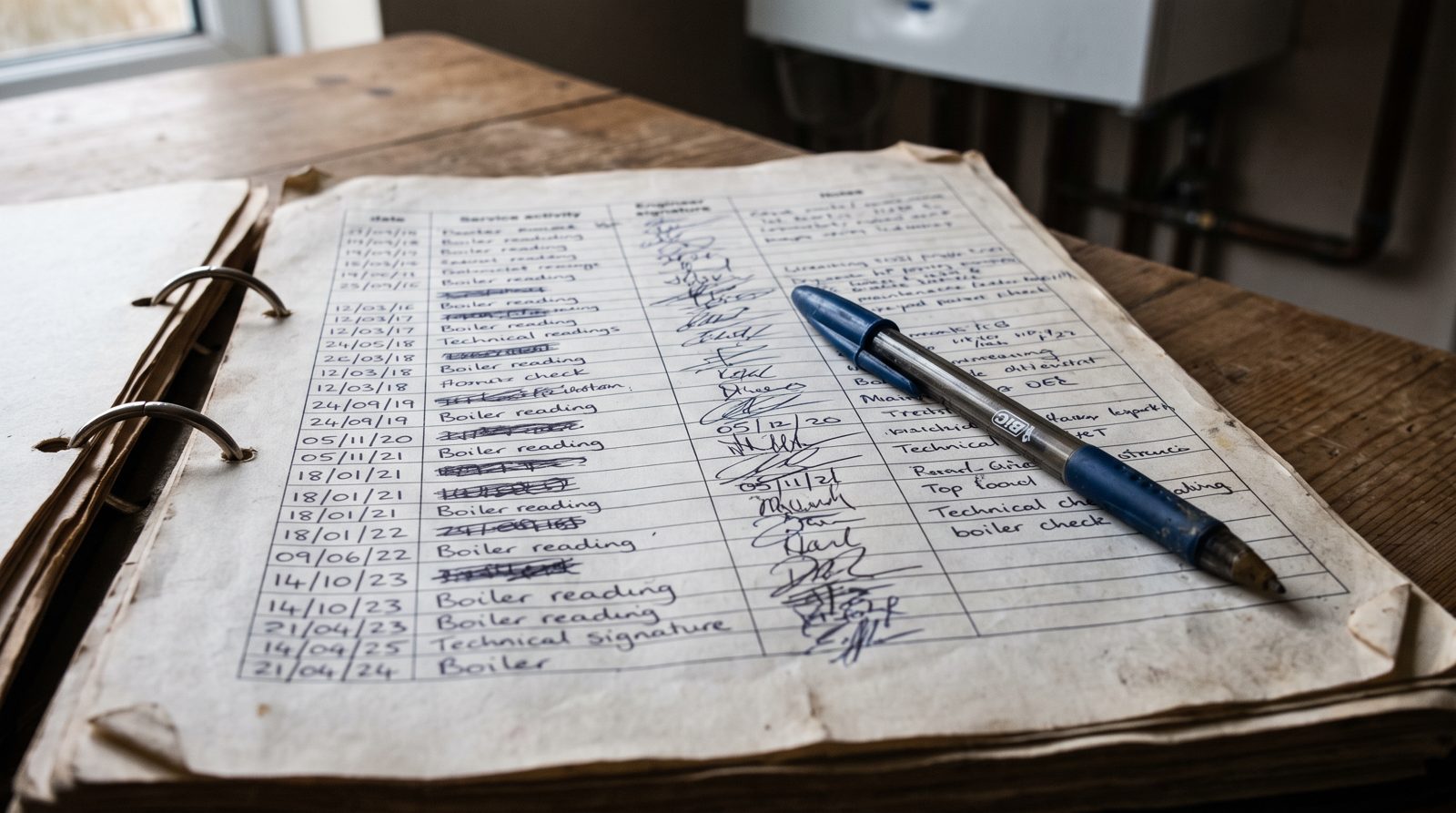
- Record everything, sign the Benchmark or service book, and tell you honestly what condition the boiler is in
If someone is in and out inside a quarter of an hour, most of that list did not happen. It is fair to ask any engineer what their service includes before you book.
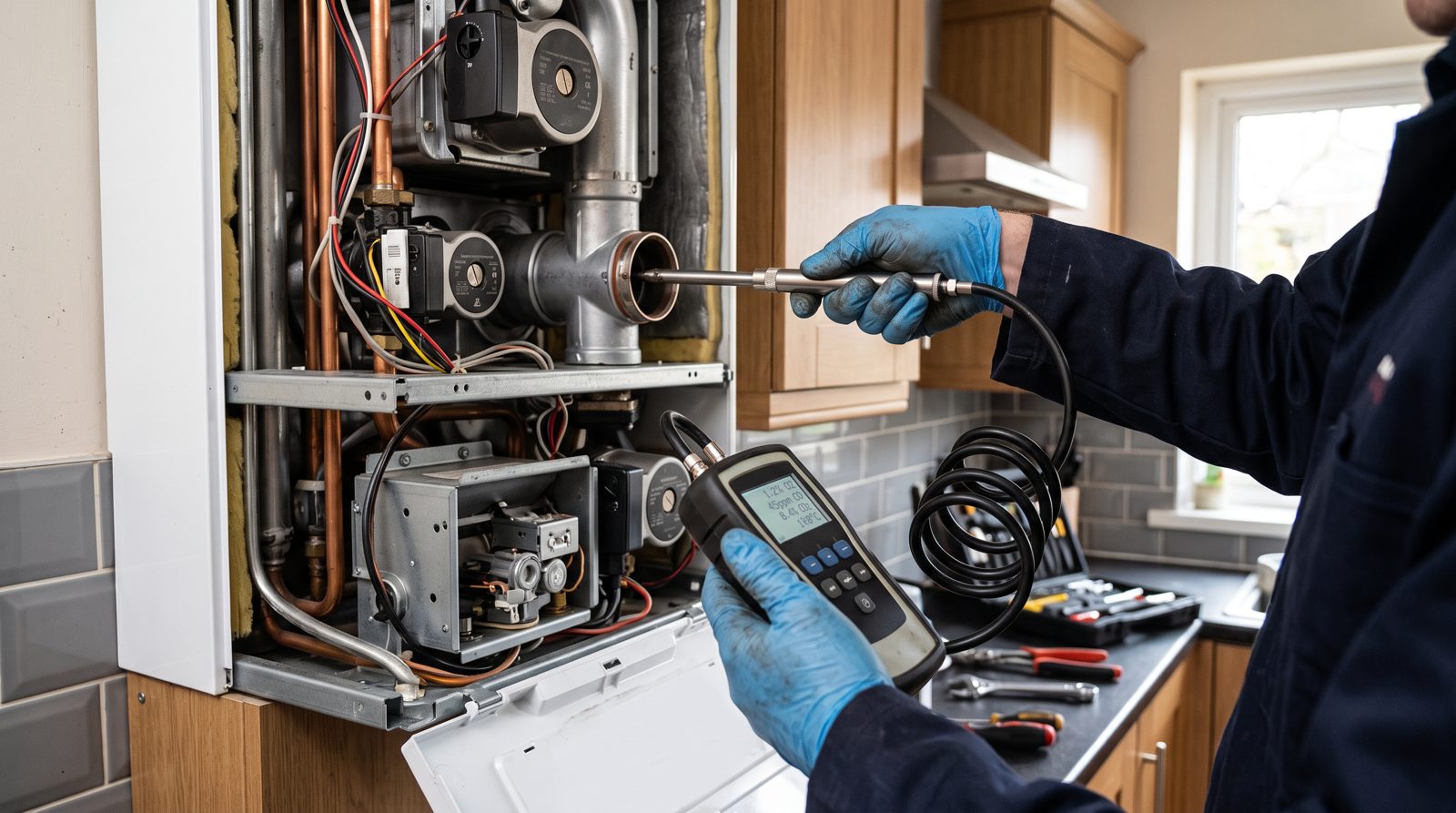
Gas and oil services are different jobs
A gas boiler burns a clean fuel delivered at a regulated pressure, so a gas service is mostly inspection, testing and adjustment. An oil boiler physically burns atomised kerosene through a nozzle, and that process leaves deposits and wears components every heating season.
An oil service therefore includes work a gas service never needs: the burner nozzle is replaced, the oil filter is changed, the combustion chamber and baffles are cleaned of soot, the fuel line and fire valve are checked, and the burner is re-commissioned with a flue gas analyser to set the air and fuel mix correctly. That extra work is why oil services cost a little more, and it is genuinely not optional. A worn nozzle sprays oil badly, soots up the boiler, wastes fuel and eventually causes lockouts. Whichever fuel you have, book boiler servicing and we will carry out the right job for your boiler.
Oil work should be done by an OFTEC registered technician and gas work by a Gas Safe registered engineer. DCI Boilers is registered for both.
The warranty question: why annual servicing pays for itself
Here is the part many homeowners only discover when it is too late. Almost every manufacturer warranty, including the long 10 and 12 year warranties on modern boilers, requires an annual service by a registered engineer to remain valid. Miss a year and the manufacturer can refuse a claim, even on a boiler only a few years old.
Set against that, the service fee looks like cheap insurance. A failed heat exchanger outside warranty can cost many hundreds of pounds to put right, and in some cases makes replacement the sensible option. An £80 to £160 annual service protecting a 12 year warranty is one of the better deals in home ownership.
Servicing also catches faults while they are still small. A weeping seal, a tired pump, a partially blocked condensate pipe: found at a service, these are minor jobs. Left until January, they are a cold house and a call to our emergency boiler call-out line. If a service does turn up a fault, boiler repairs caught early are almost always cheaper than repairs after a breakdown.
When to book your service
The smart time is late spring to early autumn. Engineers are less stretched than in winter, appointments are easier to get, and if the service finds anything that needs fixing, it gets fixed while the weather is warm rather than in the middle of a cold snap with the heating off.
Whatever time of year you choose, the important thing is the rhythm: once every 12 months, without gaps, with the paperwork completed each time. If you have just moved into a house and have no service history for the boiler, book one straight away. It establishes the boiler’s condition, restarts the record, and in many cases is needed before a manufacturer will honour any remaining warranty.
How DCI Boilers can help
DCI Boilers provides boiler servicing for gas and oil boilers across Cornwall and Devon, from our base near Saltash. Our engineers are Gas Safe and OFTEC registered, our pricing is fixed and agreed up front, and every service is done properly, with the flue gas analysis, checks and paperwork your warranty depends on. We also offer the full range of heating services if the visit turns up anything that needs more than a service.
Need help now? Call DCI Boilers on 07888 862 603 or get a free quote.
Frequently asked questions
How often should a boiler be serviced?
Once every 12 months, for gas and oil alike. Annual servicing keeps the boiler safe and efficient, and it is a condition of almost every manufacturer warranty.
How long does a boiler service take?
A thorough gas boiler service usually takes 45 minutes to an hour. Oil services run longer, often an hour to 90 minutes, because parts are replaced and the burner is re-commissioned. Be wary of anything much quicker.
Does a boiler service include repairs?
No. A service is inspection, testing, cleaning and routine parts (on oil, the nozzle and filter). If the engineer finds a fault, repairs are quoted separately, and with DCI Boilers that quote is fixed before any repair work starts.
Is a boiler service a legal requirement?
Not for homeowners in their own home, though landlords have separate legal duties around gas safety checks. For everyone, though, an annual service is effectively required in practice, because warranties depend on it and insurers may ask about maintenance after a claim.