

As a rough guide, most homeowners pay somewhere between £90 and £160 for an oil boiler service. That is a little more than a gas service, and for a good reason: an oil service is a bigger job, with parts replaced and the burner properly re-tested, not just an inspection.
Across rural Cornwall and Devon, where mains gas never reached, oil boilers do the heavy lifting of home heating. They are sturdy machines, but they burn a fuel that leaves soot and deposits behind, and they rely on components that wear a little every heating season. An annual service is what keeps them efficient, reliable and safe.
Here is exactly what you are paying for, and why skipping a year costs more than it saves.
What an oil boiler service includes
A proper oil service is closer to a car service than a check-up. A competent OFTEC registered technician will typically:
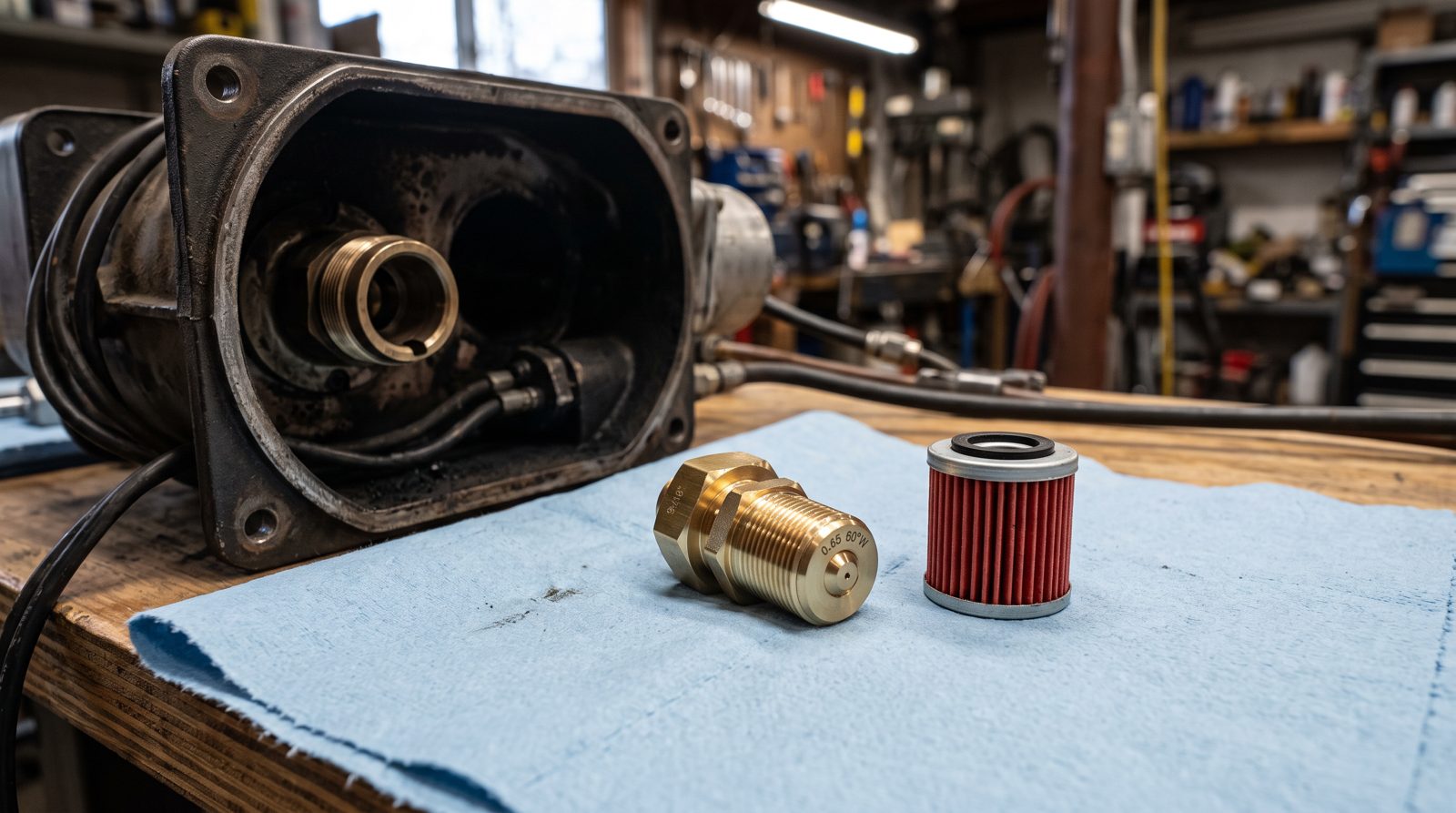
- Replace the burner nozzle. The nozzle atomises kerosene into a fine spray for clean burning. It wears every season, and a worn nozzle sprays unevenly, soots the boiler and wastes fuel. It is a routine annual replacement, not an optional extra.
- Replace or clean the oil filter. The filter stops sludge and debris from the tank reaching the burner. A blocked filter starves the burner and causes lockouts, often at the coldest point of winter.
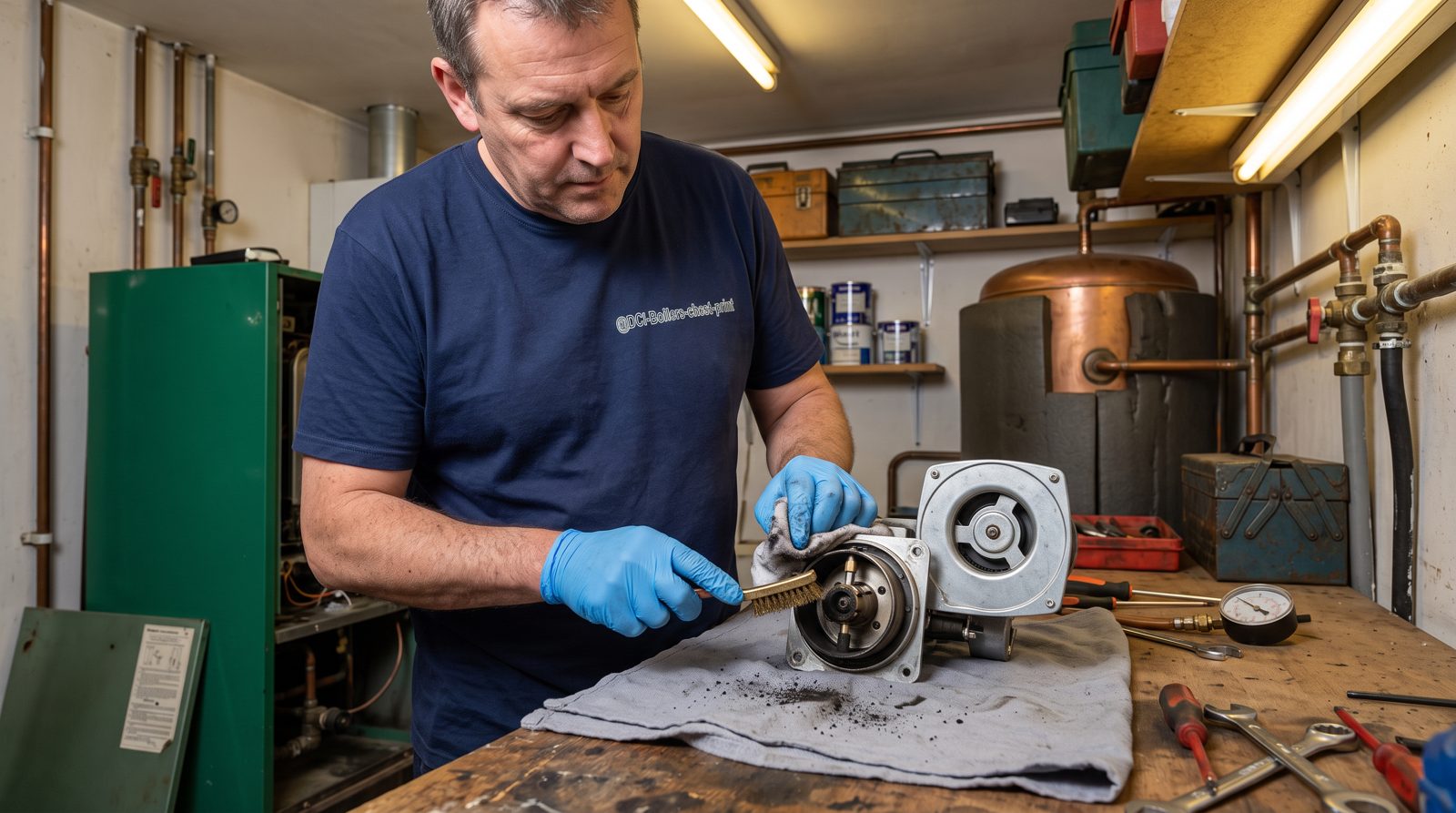
- Clean the combustion chamber and baffles. Soot is an insulator. Even a thin layer on the heat exchanger surfaces means heat goes up the flue instead of into your radiators, so the boiler burns more oil to do the same work.
- Check the flexible fuel lines and fire valve. Fuel hoses perish with age and the fire valve is a critical safety device that cuts the oil supply in the event of fire. Both get inspected every service.
- Inspect the flue and air supply. The flue must be sound and the boiler must have the ventilation it needs to burn safely.
- Test the electrodes and photocell. These handle ignition and flame detection. When they drift out of spec, the boiler locks out.
- Re-commission the burner with a flue gas analyser. This is the part that separates a real service from a quick clean. The technician measures the smoke number, CO2 and flue temperature, then adjusts the air and fuel settings until the burner runs at its efficient best. It is done with instruments, not by eye.
- Complete the paperwork, including the service record your manufacturer warranty depends on, with the combustion readings noted.
Why oil servicing differs from gas
Mains gas arrives clean and at a regulated pressure, so a gas boiler service is mostly inspection and testing. Kerosene is stored in a tank in your garden, picks up moisture and sediment over time, and is physically pumped, filtered and atomised before it burns. Every stage involves parts that wear or foul: the filter, the pump, the nozzle, the electrodes, the baffles.
That is why oil services take longer, usually an hour to 90 minutes, why they include replacement parts as standard, and why they cost a little more. It is also why they matter more. A gas boiler that misses a service usually keeps working. An oil boiler that misses a service or two tends to lose efficiency steadily, then fail, and often at the worst possible moment. If you would like the gas comparison in full, our general guide to boiler servicing covers both fuels.
Oil work should always be done by an OFTEC registered technician. OFTEC registration is the oil-fired equivalent of Gas Safe registration, and DCI Boilers holds both.
The efficiency maths
Heating oil is one of the bigger bills a rural household faces, which makes burner efficiency a pounds-and-pence issue rather than an abstract one. A boiler with a sooted heat exchanger and a worn nozzle simply burns more litres to deliver the same warmth. The combustion testing done at a service sets the burner back to its efficient best, so a well-serviced boiler typically costs noticeably less to run across a heating season than a neglected one. For most households the service goes a long way towards paying for itself in fuel before you even count reliability.
The warranty and the tank
Two more reasons the annual visit earns its keep. First, manufacturer warranties on modern oil boilers, including the long ones, require an annual service by a registered technician to stay valid. Miss a year and a claim can be refused. Second, a good technician will also cast an eye over your oil tank while on site. Tanks age, bases settle and current siting standards are stricter than they once were, and it is far better to hear about a deteriorating tank at a spring service than to discover it via a leak. If the boiler itself is reaching the end of the road, we will say so honestly, and our guide to oil boiler replacement explains what comes next.
If a service uncovers a fault, catching it early keeps the cost down. Boiler repairs booked from a service finding are almost always cheaper and calmer than repairs after a mid-winter breakdown, and if the worst does happen we run a 24/7 emergency boiler call-out service.
How DCI Boilers can help
DCI Boilers services oil boilers across Cornwall and Devon from our base near Saltash. Every visit is carried out by an OFTEC registered technician, includes nozzle and filter replacement and full combustion testing with an analyser, and comes at a fixed price agreed up front. Book your annual boiler servicing in spring or summer and your boiler goes into winter ready for it.
Need help now? Call DCI Boilers on 07888 862 603 or get a free quote.
Frequently asked questions
How often should an oil boiler be serviced?
Once every 12 months. Oil boilers accumulate soot and wear consumable parts every heating season, so annual servicing is both a warranty condition and a practical necessity.
Why is an oil boiler service more expensive than gas?
Because more happens. An oil service includes replacement parts (the nozzle, and usually the filter), physical cleaning of the combustion chamber, and re-commissioning the burner with a flue gas analyser. It typically takes an hour to 90 minutes rather than 45 minutes.
What is the best time of year to book?
Late spring to early autumn. Technicians are more available, and any faults found get fixed before the cold arrives. Servicing just before the heating season also means the boiler starts winter freshly tuned.
My oil boiler keeps locking out. Will a service fix it?
Very often, yes. Lockouts are commonly caused by exactly the things a service addresses: a worn nozzle, a blocked filter, tired electrodes or a dirty photocell. If the cause is something more serious, the technician will diagnose it during the visit and quote a fixed price for the repair.