
An oil combi boiler heats your radiators and your hot water from a single unit, with no separate hot water cylinder and no tank in the loft. Turn on a hot tap and the boiler fires up and heats the water on demand. For off-gas-grid homes in Cornwall and Devon, it is the closest oil heating gets to the neat, space-saving combis that gas households take for granted.
Combis are not right for every property, though, and oil combis have a few quirks of their own. This guide explains how they work, who they suit, the internal versus external question, and what to realistically expect from the hot water. It is written by DCI Boilers, an OFTEC registered installer working across Cornwall and Devon.
How an oil combi boiler works
A conventional oil system heats water in a cylinder, stores it, and tops it up as you use it. A combi skips the cylinder entirely. Inside the boiler, the burner heats a primary circuit for your radiators, and when you open a hot tap a diverter valve switches the boiler’s output to a plate heat exchanger that heats mains water instantly as it flows through.
Because oil burners take a little longer to fire and modulate than gas burners, most oil combis include a small internal hot water store, typically a coil or mini-cylinder inside the casing. This keeps a reserve of hot water ready so the tap runs hot quickly rather than waiting for the burner to get going. You still lose the airing cupboard cylinder and the loft tanks; the storage is hidden inside the unit.
Fuel still comes from your outdoor oil tank in the usual way. The combi changes how hot water is made, not how the oil is stored or delivered.
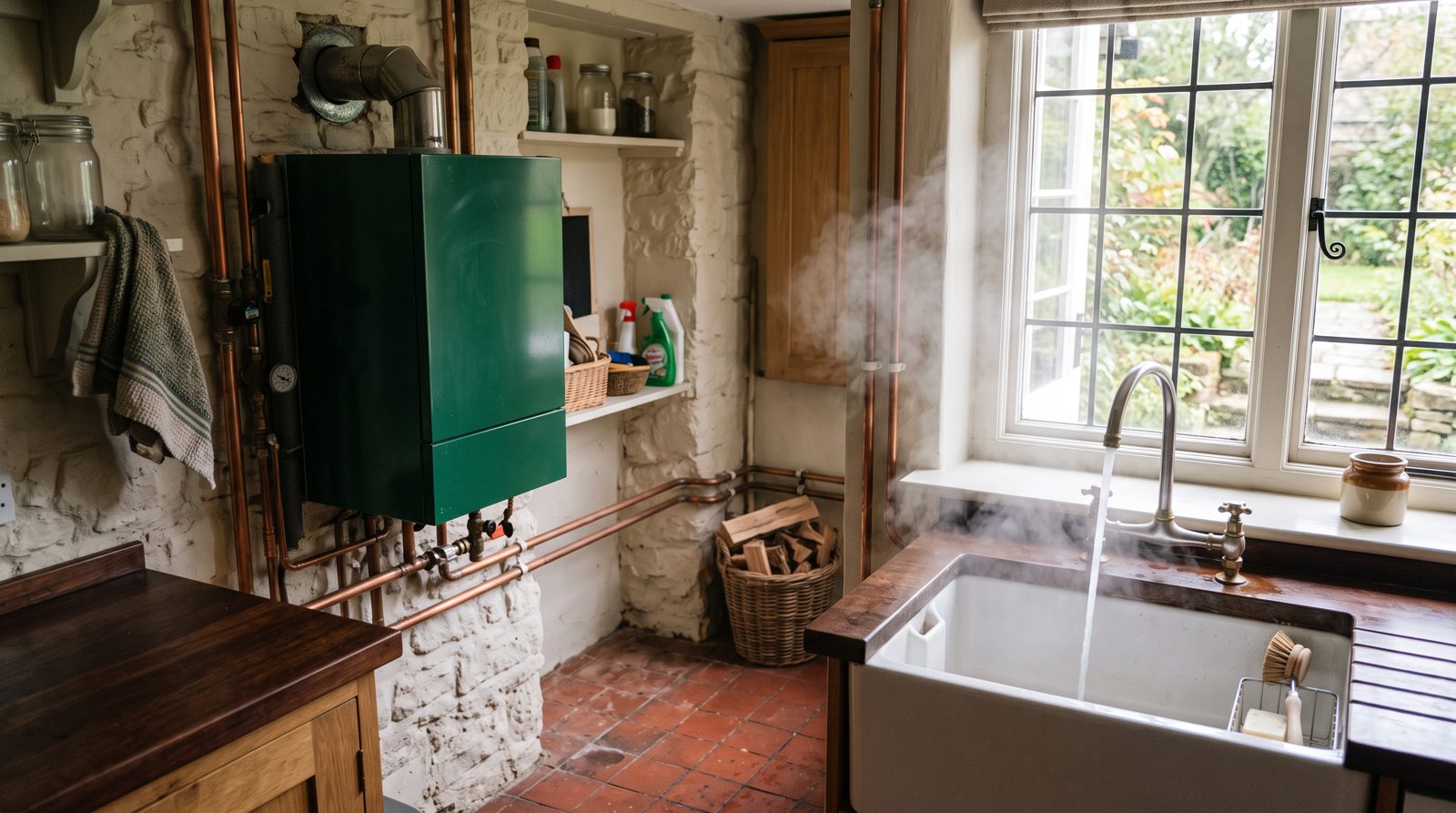
Who suits an oil combi boiler?
Combis shine in some homes and struggle in others. As a rule of thumb:
- Good fit: one and two-bedroom cottages, bungalows, small family homes with one bathroom, and households of one to three people. Also anyone desperate to reclaim an airing cupboard or remove loft tanks.
- Think carefully: homes with two bathrooms that are sometimes used at once. A combi serves one hot outlet well; two at the same time means shared flow and cooler showers.
- Poor fit: larger households, three or more bathrooms, homes with poor mains water pressure, or anyone running big bath-and-shower mornings. A heat-only or system boiler with a cylinder will serve you better.
Mains water pressure deserves special mention. A combi heats water directly from the mains, so your hot water flow can only ever be as good as the cold supply coming in. Some rural properties in Cornwall and Devon, especially those on long private supplies or older mains, simply do not have the pressure and flow a combi needs. We check this at survey before recommending one.
Internal or external oil combi?
Oil combis come in two formats, and the choice matters more than most people expect.
Internal models
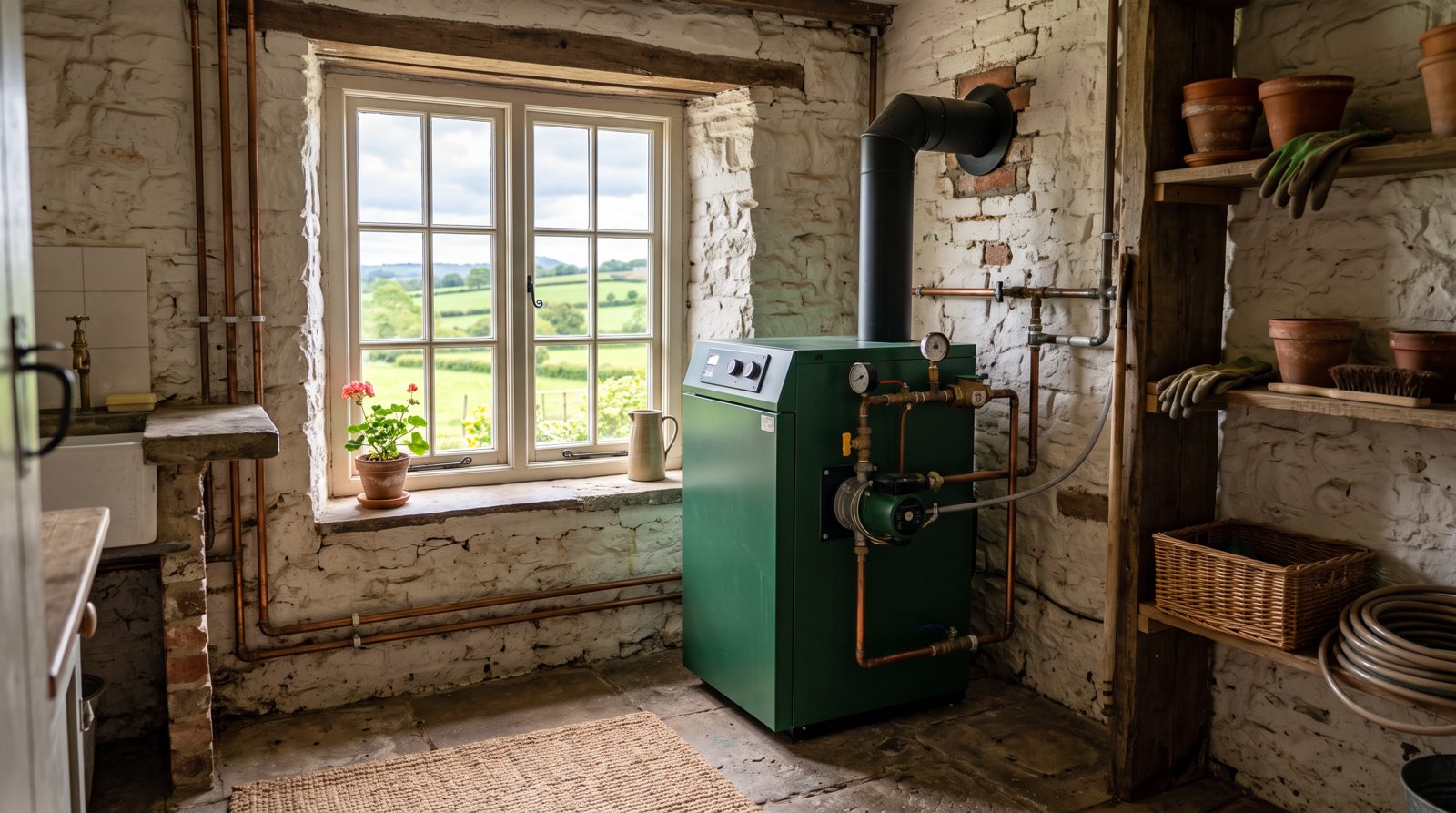
These sit inside the house, usually in a kitchen or utility room. They are protected from the weather, easy to service and slightly more efficient because they lose less heat to the outdoors. The downside is the floor space: an oil combi is a floor-standing appliance, bulkier than a wall-hung gas combi, and it needs a flue.
External models
These are weatherproofed versions that live outside against a wall, freeing up the kitchen entirely. They are popular in smaller cottages where every cupboard counts. They come with built-in frost protection and a robust casing, but they do work harder in cold snaps and servicing happens outdoors. If outdoor siting appeals, our guide to external oil boilers covers the pros and cons in more depth, and the same considerations apply whether the boiler is a combi or heat-only model.
Either way, siting is governed by regulations covering flue positions and distances from boundaries, windows and the oil tank. A proper survey settles what is possible at your property.
Hot water performance: the honest picture
This is where expectations need managing. An oil combi will give you mains-pressure hot water on demand, which means a strong shower without a pump and no risk of running the cylinder cold. What it will not do is fill a large bath at speed while someone else showers.
Flow rate is the number to watch. Combis are rated by how many litres per minute they can heat to a useful temperature, and the bigger the temperature lift needed, the slower the flow. In winter, when the incoming mains is colder, the same boiler delivers noticeably less hot water per minute than it does in summer. That is physics, not a fault.
The internal hot water store in most oil combis helps with short draws, washing hands, rinsing dishes, so the boiler is not firing for every ten-second tap run. For most small households the day-to-day experience is excellent. For big simultaneous demand, a cylinder system remains the right tool.
Efficiency, warranties and running costs
Modern condensing oil combis achieve efficiencies over 90%, a big step up from boilers fitted 15 or more years ago. Replacing an ageing unit typically cuts fuel use meaningfully, though the exact saving depends on your home and habits, so treat any precise promise with suspicion. The boilers we install come with up to 12 year manufacturer warranties, provided they are installed correctly and serviced annually. Yearly boiler servicing by an OFTEC registered technician keeps the warranty valid and the boiler safe and efficient.
How DCI Boilers can help
DCI Boilers is based near Saltash and installs oil combis across Cornwall and Devon. We will survey your property, check your mains flow and pressure, and tell you straight whether a combi suits your home or whether a cylinder system would serve you better. Every oil boiler replacement comes with fixed upfront pricing, and if an existing boiler is misbehaving in the meantime we handle boiler repairs and 24/7 call-outs too.
Need help now? Call DCI Boilers on 07888 862 603 or get a free quote.
If you are weighing up whether to stay on oil at all, our comparison of oil and gas systems and our full oil boiler replacement service page are good next reads.
Frequently asked questions
Do oil combi boilers exist?
Yes. Several major manufacturers make condensing oil combi boilers, in both internal and external formats. They are less common than gas combis but well established, and they are a popular choice for smaller off-gas-grid homes in Cornwall and Devon.
Can an oil combi boiler run two showers at once?
Realistically, no. Like any combi, an oil combi heats water as it flows, so two hot outlets running together share the available flow and both run cooler. Homes that regularly need simultaneous hot water are better served by a boiler and cylinder.
Does an oil combi boiler still need an oil tank?
Yes. The combi changes how hot water is produced, not how fuel is stored. You still need a compliant outdoor oil storage tank and supply line, and both should be checked as part of the annual service.
How often should an oil combi boiler be serviced?
Once a year, by an OFTEC registered technician. Annual servicing keeps the boiler safe and efficient, catches wearing parts like the burner nozzle before they cause breakdowns, and is a condition of most manufacturer warranties.