
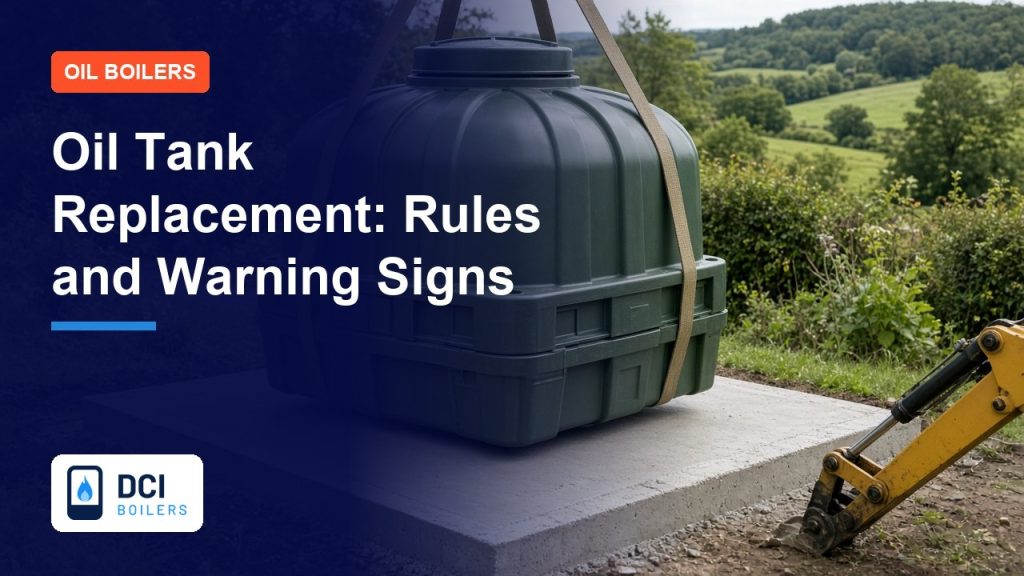
If your heating oil tank is more than 15 to 20 years old, or it is showing signs of wear, it is worth taking replacement seriously. A failed tank can leak hundreds of litres of kerosene into your garden, contaminate soil and groundwater, and leave you with a clean-up bill that dwarfs the cost of a new tank. Oil tank replacement costs far less done before the failure than after it.
This guide covers the rules on replacing a domestic oil tank, the warning signs of a tank on its way out, and what you can expect to pay, written for homeowners in Cornwall and Devon, where oil heating is common and a lot of tanks are quietly getting old.
The rules: what the regulations say about replacement tanks
Domestic oil storage in England is covered by Building Regulations and by OFTEC standards. The important point for homeowners is this: when you replace a tank, the new installation has to meet current rules, even if the old one never did. You cannot simply drop a like-for-like tank onto the old base and carry on.
An OFTEC registered technician can install or replace a tank and self-certify the work, which means you do not need a separate Building Control application. If the installer is not registered, you do. That is one very good reason to use an OFTEC registered firm for the whole job.
The main requirements a replacement tank has to satisfy are:
- Fire separation distances. A tank generally needs to sit at least 1.8 metres from buildings, boundaries, eaves and openings such as doors and windows, unless a fire-rated barrier is fitted. Many older tanks were installed far too close to the house, and moving or shielding the tank is often part of the replacement job.
- A proper base. The tank must sit on a level, non-combustible base, usually concrete or paving slabs, that extends at least 300mm beyond the tank on all sides and fully supports it. Tanks perched on loose blocks or old sleepers are a common sight and a common cause of split seams.
- Environmental protection. A risk assessment decides whether the new tank must be bunded. In practice, most replacement tanks in Cornwall and Devon end up bunded, and for good reason.
Bunded tanks: why most replacements need one
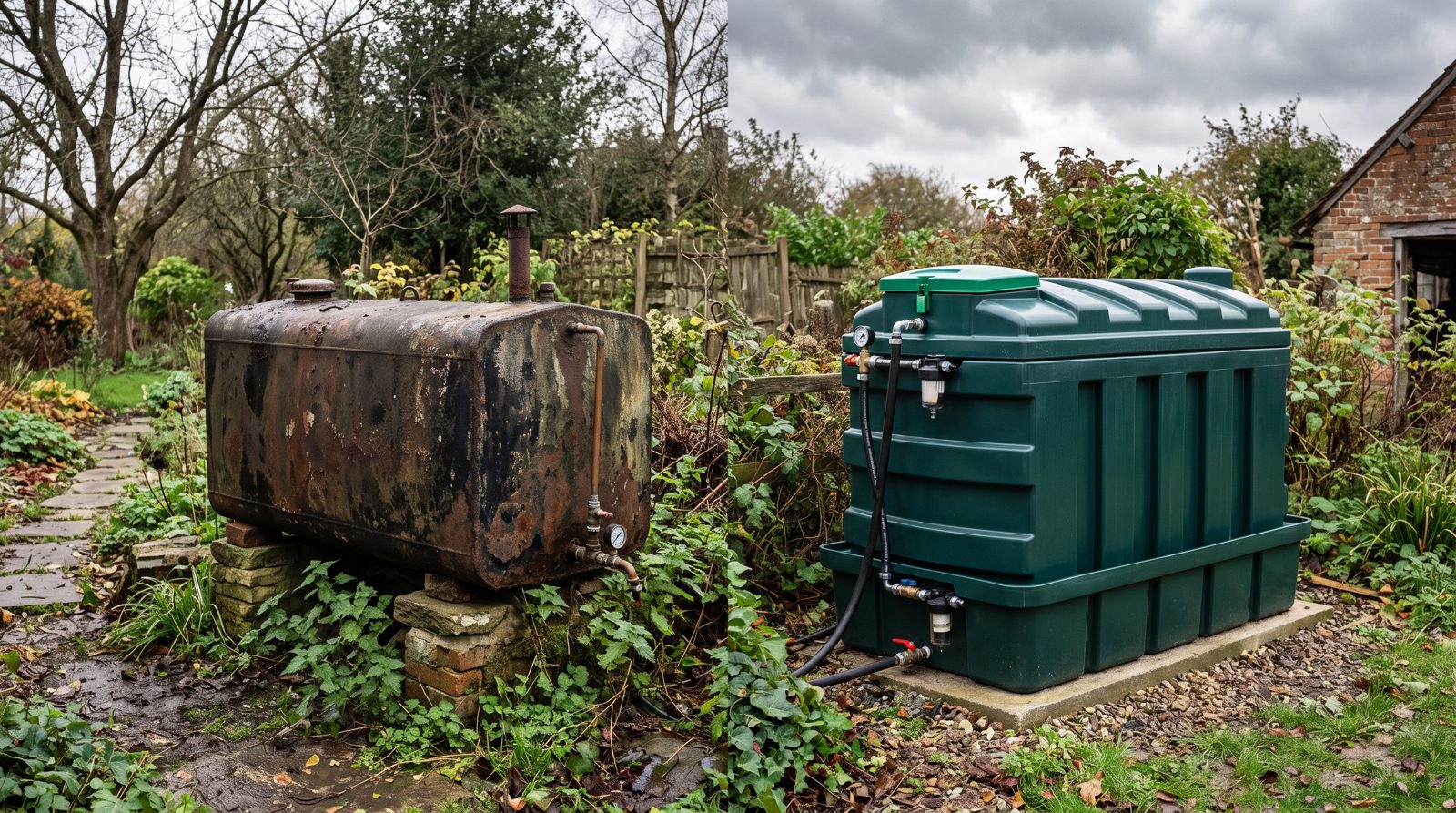
A bunded tank is a tank within a tank. The inner vessel holds the oil, and the outer skin catches anything that escapes, with capacity for at least 110 per cent of the inner tank’s contents. If the inner tank ever fails, the oil stays contained instead of soaking into your garden.
A single-skin tank is only acceptable where the risk assessment shows a low pollution risk. A bund is required where the tank holds more than 2,500 litres, or where a spill could reach a watercourse, a well or borehole, a drain or a manhole, or where the tank sits close to any of these. Given how many rural properties in the South West have streams, soakaways and private water supplies nearby, single-skin rarely passes the assessment any more. Insurers increasingly take the same view, and some will not cover oil spills from an old single-skin tank at all.
Our honest advice is simple. If you are paying for a replacement anyway, fit a bunded tank. The extra cost is modest compared with the total job, and it removes the single biggest environmental and financial risk of oil heating.
Warning signs your oil tank needs replacing
Plastic and steel tanks fail in different ways, but both usually give warnings first. Walk around your tank a couple of times a year, ideally before the winter fill, and look for:
- Cracks or crazing in plastic tanks. Fine spiderweb lines in the surface, especially on the sunny side, mean the plastic is becoming brittle with UV exposure. Deep cracks can open suddenly under the weight of a full tank.
- Bulging or distortion. A plastic tank that has changed shape, sagged or developed a pronounced belly is under stress and should be replaced before it splits.
- Weeping seams and rust on steel tanks. Dark staining, a persistent oily smell, or damp patches along welds and seams mean oil is already finding its way out. Rust blisters on the base and lower panels are the classic failure point, because steel tanks corrode from the inside out where water collects.
- Oil staining on or under the tank. Any staining on the base, the ground or the tank supports needs investigating straight away.
- A failing base or supports. If the tank has tipped, the slabs have cracked or the piers are leaning, the tank is being twisted, and that stress will eventually find a weak point.
- Age. Most manufacturers work on a design life of roughly 15 to 20 years. An older tank that looks fine on the outside can still be close to the end.
If you spot weeping oil, do not wait for a quote round. Stop ordering oil, put a container under any active drip and get a professional out quickly.
What does oil tank replacement cost?
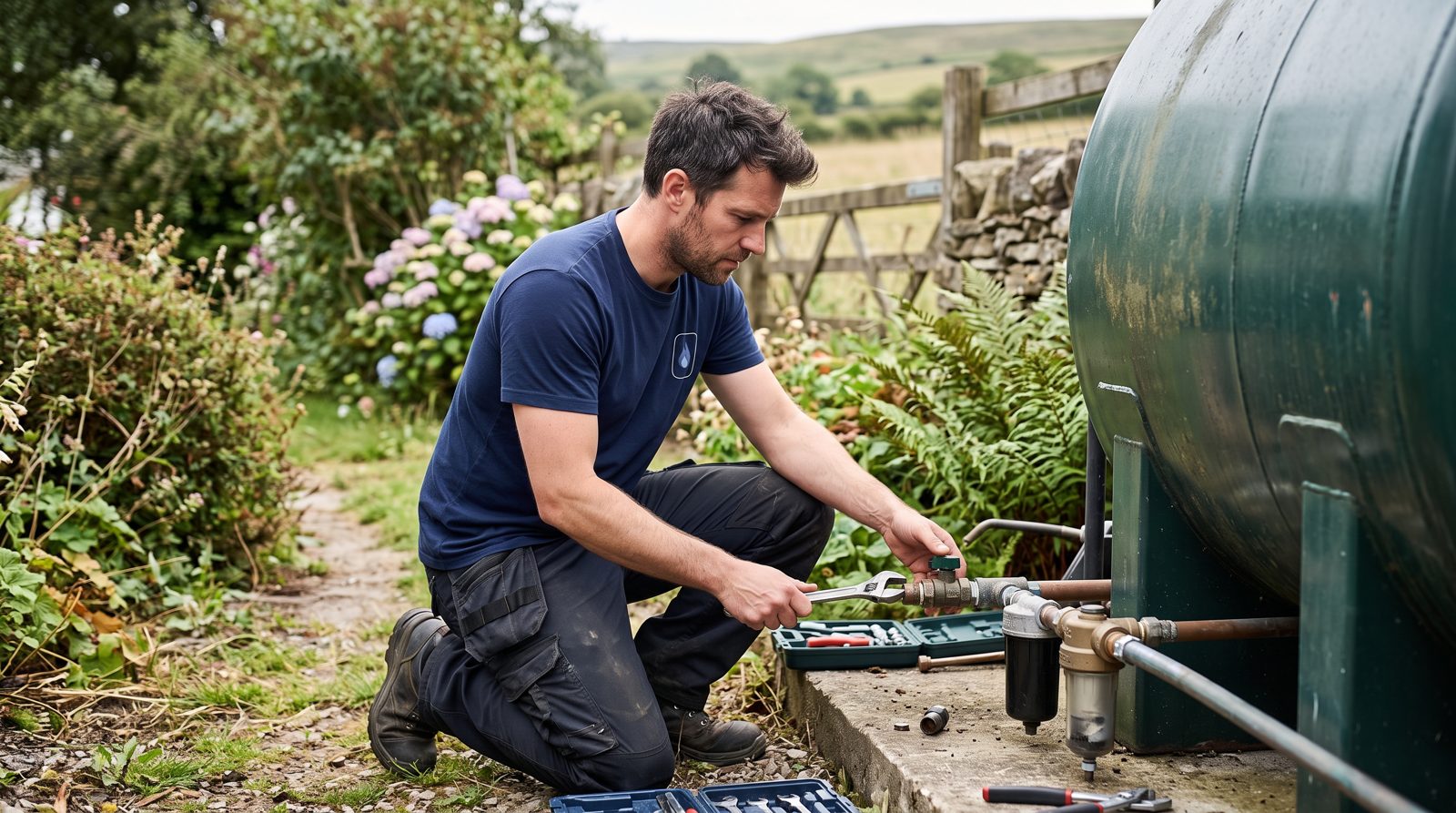
Every installation is different, so there is no single price. As a rough guide, most homeowners pay somewhere between £1,500 and £3,500 for a straightforward domestic replacement, covering the new bunded tank, a compliant base, oil transfer, disposal of the old tank and reconnection to the boiler. Costs rise where the tank has to move to meet separation distances, where a new base has to be laid, where access is tight, or where a larger tank is wanted.
Treat those figures as broad estimates only. The honest answer is a free fixed quote based on your actual site: one figure agreed up front, no surprises on the day.
How DCI Boilers can help
DCI Boilers installs and replaces domestic oil tanks across Cornwall and Devon, with OFTEC registered engineers handling the whole job from risk assessment to certification. We supply and fit bunded tanks, build compliant bases, transfer your oil and take the old tank away. Because we also handle oil boiler replacement, we can look at the whole system at once, which often saves money if your boiler is a similar age to your tank. It all sits within our wider heating services for oil-fired homes.
Need help now? Call DCI Boilers on 07888 862 603 or get a free quote.
Frequently asked questions
How long does an oil tank replacement take?
A straightforward swap onto an existing compliant base is usually done in a day, longer if a new base has to be laid and cured or the tank is moving. You are normally only without heating for a few hours while the system is reconnected.
Can I replace an oil tank myself?
Legally you can, but the work must still comply with Building Regulations, and you would need to notify Building Control and pay their fees yourself. An OFTEC registered installer self-certifies, risk assesses and documents the job for your insurer. Given what a spill costs, we would not recommend DIY here.
Do I have to replace a single-skin tank even if it is not leaking?
No. There is no rule forcing you to remove a sound, compliant single-skin tank. But once you replace it, the new installation must meet current standards, and the risk assessment will usually point to a bunded tank. Insurers also ask questions about older single-skin tanks, so check your policy.
What happens to the oil in my old tank?
Clean, usable oil is transferred into the new tank as part of the job. Sludge, water and contaminated oil are removed and disposed of properly along with the old tank, and this is included in the quote so there are no extras on the day.