
Boiler size means power output in kilowatts (kW), not physical size. As a rough guide, most one-bathroom homes suit a combi of around 24 to 30kW, larger homes with two bathrooms tend to need 30 to 35kW, and only big properties with high hot water demand justify anything above that. For heat-only and system boilers the numbers are lower, often 12 to 18kW, because they are sized to the radiators rather than the taps.
That last sentence is the bit most people miss, and it is why “what size boiler do I need” has two quite different answers depending on the type of boiler you are buying.
Here is how sizing actually works, some honest rules of thumb, and why the common instinct to “go bigger to be safe” quietly wastes money for years.
What kW output actually means
A boiler’s kW rating is the maximum rate at which it can produce heat. A 30kW boiler can deliver up to 30 kilowatts of heat at full tilt. Crucially, modern boilers modulate: they turn themselves down to match demand, but only down to a point. Every boiler has a minimum output as well as a maximum, and that minimum matters more than the brochure suggests.
Combi sizing is driven by hot water
A combi heats water on demand as it flows through the boiler, and heating flowing water takes a lot of power. Delivering a strong hot shower needs far more instantaneous energy than heating a house. That is why combi boilers carry big numbers like 30kW or 35kW: the rating describes their hot water capability.
So for a combi, the questions that decide size are:
- How many bathrooms do you have, and are they used at once? More simultaneous hot water means more kW.
- What is your mains flow rate? A 35kW combi on a weak mains supply is wasted money, because the boiler can only heat the water the main delivers. This is measured on a survey, not guessed.
- Bath or shower household? Filling baths quickly favours a higher hot water output.
The central heating side barely enters into it. Almost any modern combi has more than enough output for the radiators in an ordinary home.
Heat-only and system boilers are driven by radiators
With a heat-only or system boiler, hot water comes from a cylinder that reheats over time, so the boiler never needs to heat water instantly. Its job is matching the heat loss of the building: how much warmth the house leaks through walls, windows and roof on a cold day, plus a modest allowance for reheating the cylinder.
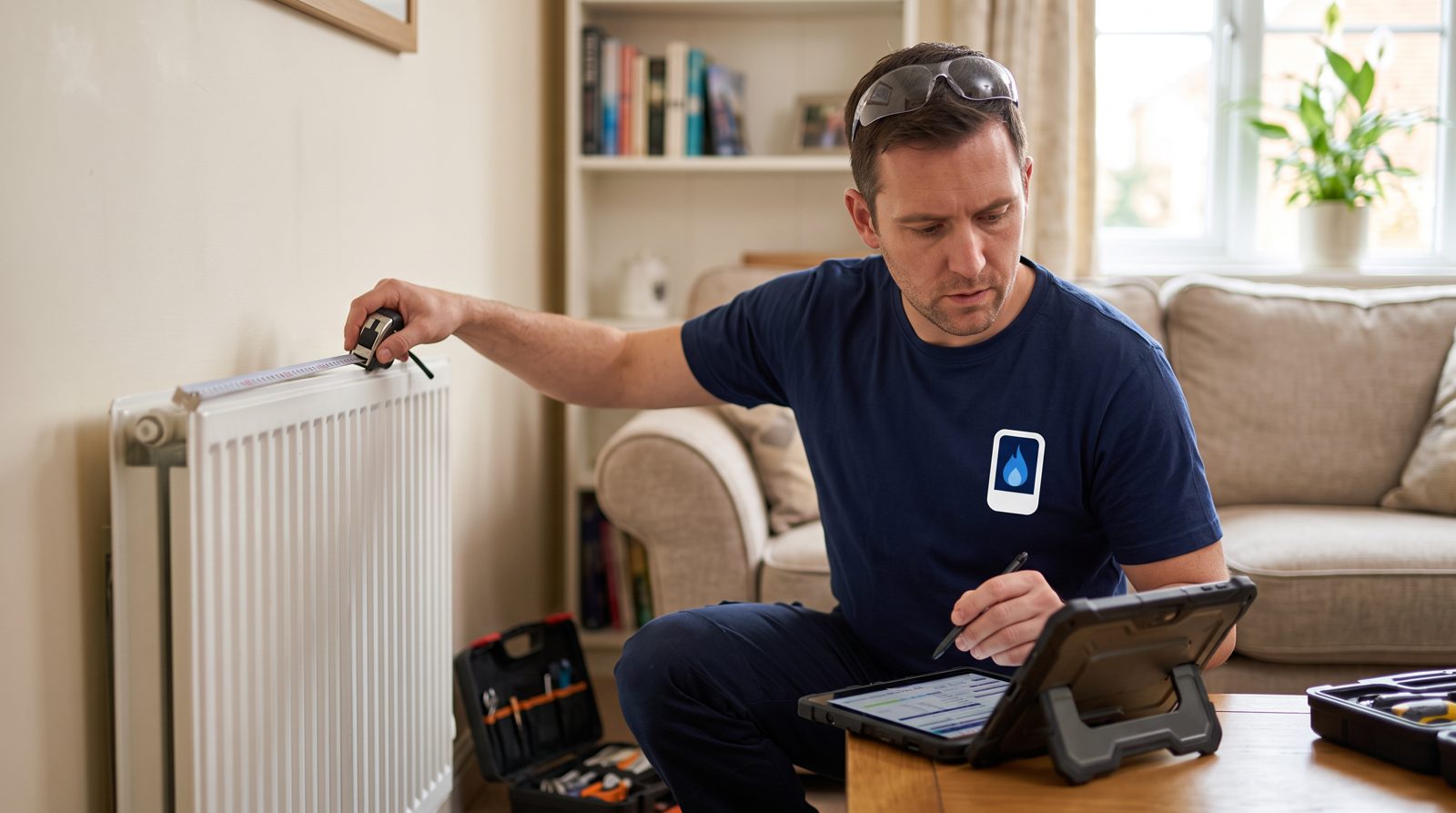
A proper installer calculates this from the property itself: its size, age, insulation and radiators. The result surprises people. A typical well-insulated three-bedroom house often needs only 8 to 12kW to stay warm, which is why a 15 to 18kW system boiler is usually plenty even where a 30kW combi would be fitted in the same house.
Rules of thumb (and their limits)
As a starting point only:
| Home | Combi | System / heat-only |
|---|---|---|
| 1-2 bed flat or house, 1 bathroom | 24-27kW | 12-15kW |
| 3-4 bed house, 1-2 bathrooms | 28-34kW | 15-18kW |
| 4+ bed house, 2+ bathrooms | 35kW+, or consider a cylinder | 18-24kW |
These are honest ballparks, not a specification. Two identical-looking houses can need different boilers because of insulation, radiator sizes, mains pressure or how the family uses hot water. The only sizing worth paying for is one based on a survey of your actual property.
Why oversizing wastes money
“Get a bigger one to be safe” feels sensible and is usually wrong, for three reasons.
Short cycling. An oversized boiler cannot turn itself down far enough to match a mild day’s demand, so it fires, overshoots, shuts down, cools, and fires again, over and over. Every one of those cycles wastes fuel and wears components. It is the boiler equivalent of driving everywhere in first gear.
Lost condensing efficiency. Modern boilers earn their high efficiency by running long, low and cool enough to condense the water vapour in their flue gases. A boiler that is too big runs hot and short, and rarely spends time in that efficient zone. You paid for efficiency you never receive.
Higher purchase price for nothing. Bigger boilers cost more to buy. If the extra output is never used, that money bought wear and higher bills.
Undersizing has costs too (lukewarm showers, a house slow to warm), which is exactly why the answer is measurement rather than nerves in either direction. If your current boiler struggles, it is also worth ruling out other causes first; a sludged system or failing part can mimic an undersized boiler, and a boiler servicing visit or boiler repairs call-out is far cheaper than an unnecessary upgrade.
How DCI Boilers can help
DCI Boilers sizes every installation from a proper survey. Our Gas Safe registered and OFTEC registered engineers measure your mains flow and pressure, assess the property’s heat loss and your hot water habits, and recommend a specific output, not a guess with a safety margin bolted on. You get a fixed upfront price for your gas boiler replacement, up to 12 year manufacturer warranties, and a boiler that is the right size rather than the biggest one that fits on the wall. We cover the whole of Cornwall and Devon, and if your system runs on oil we handle oil boiler replacement too. A correctly sized gas boiler replacement costs less to buy and less to run, every year you own it.
Need help now? Call DCI Boilers on 07888 862 603 or get a free quote.
Frequently asked questions
Is a 24kW boiler big enough for a 3-bedroom house?
For heating, almost certainly. For hot water on a combi it depends on your bathrooms and mains flow: with one bathroom and a reasonable mains supply, a 24 to 28kW combi usually serves a three-bedroom house well. A survey confirms it in half an hour.
Do more radiators mean I need a bigger combi?
Rarely. A combi’s headline output exists for hot water, and even a modest combi has ample capacity for an ordinary home’s radiators. Radiator count matters far more when sizing heat-only and system boilers.
Can a boiler be too big for a house?
Yes. An oversized boiler short cycles, wears itself out faster and spends less time in its efficient condensing range, so it costs more to buy and more to run. Bigger is not safer; correctly sized is safer.
What information do you need to size my boiler?
The property itself tells most of the story: bedrooms, bathrooms, insulation, radiators, and a measured mains flow rate and pressure. We gather all of it on a free survey visit, then quote a fixed price for the right boiler.