
A straightforward like-for-like boiler swap usually takes one day. Moving the boiler to a new location, or converting from a conventional system to a combi, typically takes two to three days. Changing fuel type, such as oil to gas, can take three days or more once the extra work around the boiler is counted. Your installer should tell you the expected duration before the job starts, not partway through it.
The honest variable is not the boiler itself, which comes off the wall and goes on the wall fairly quickly. It is everything around it: pipework, flues, tanks, gas supply and the condition of your existing system. Here is what drives the timescale, and what actually happens on the day.
Straight swap: usually one day
If your new boiler is the same type as the old one, going in the same place, this is the quickest job there is. Old boiler out, new boiler in, pipework adapted to fit, flue replaced, system flushed and refilled, controls set up and the whole thing commissioned and demonstrated. A competent installer will have your heating and hot water back on the same evening.
A few things can nudge a swap into a second day: an awkward flue run, a gas supply pipe that needs upsizing to feed the new boiler (common when replacing much older models), or a system so sludged it needs a deeper clean than a standard flush.
Relocating the boiler: one to two days
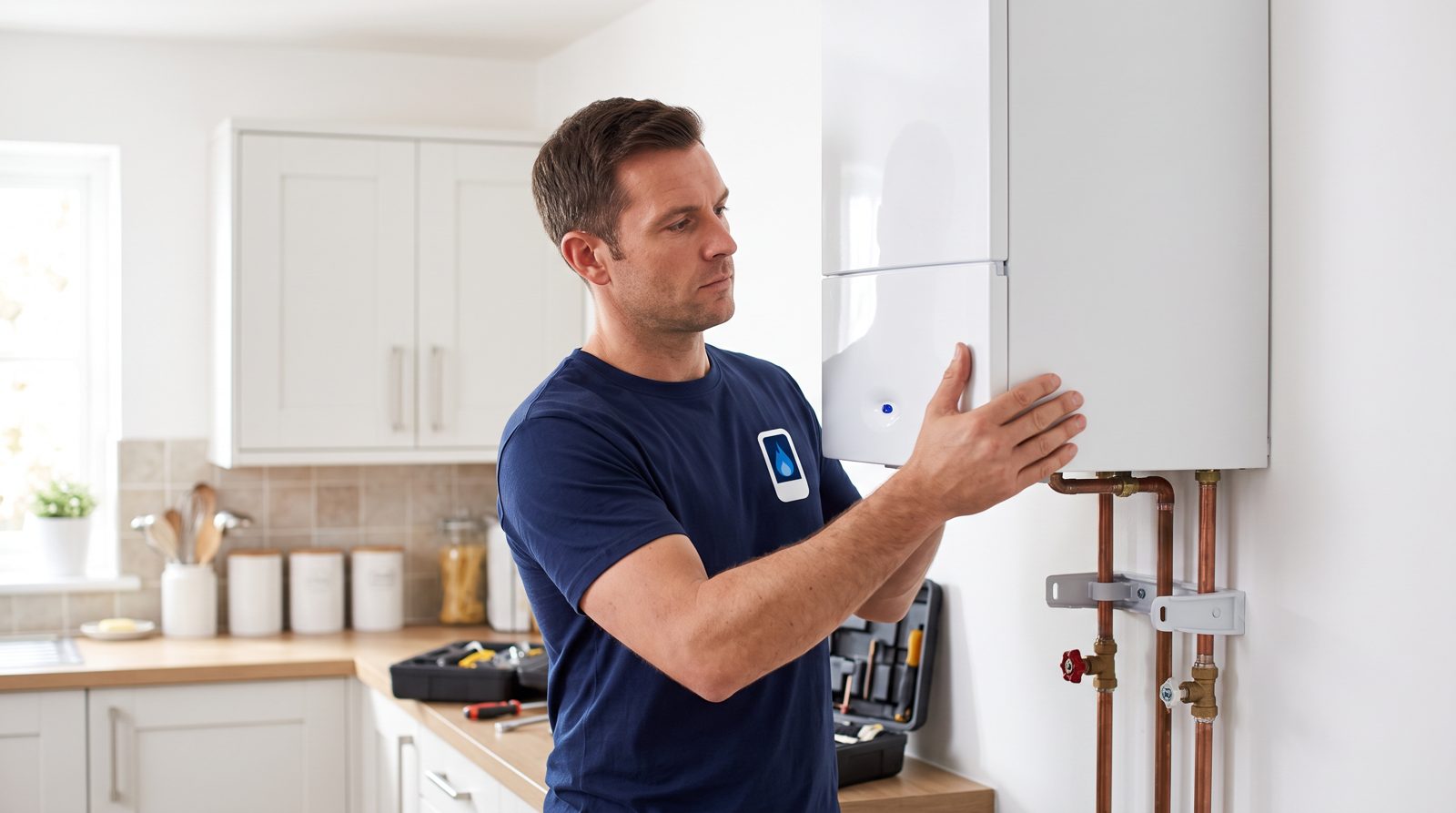
Moving the boiler, say from an airing cupboard to the kitchen or garage, adds pipework and a new flue position, and sometimes carpentry or making good. Most relocations complete inside two days. It is worth doing at replacement time if the current position has always been awkward, because it will never be cheaper to move than while everything is already open.
System conversion: two to three days
Converting from a conventional tanks-and-cylinder setup to a combi is the most common bigger job. It involves removing the cylinder and loft tanks, rerouting hot and cold water pipework to run from the mains, upgrading the gas run if needed, and thoroughly cleansing the radiator circuit before the new boiler is connected. Two days is typical, three is not unusual in a larger or older property. The reverse conversion, adding a cylinder to move from a combi to a system boiler, sits in the same range.
If you are unsure which route your home should take, that decision comes before any talk of timescales. It is the main thing we assess when quoting a gas boiler replacement, and the survey is free.
Fuel change: three days or more
Swapping fuel type is the biggest version of the job. Moving from oil to gas involves the new gas boiler plus arranging a gas connection if the property does not have one, and decommissioning the oil tank and line. Moving from an old back boiler or warm air unit to a modern system involves significant pipework and often radiator changes. These jobs are entirely routine for experienced heating services engineers, but they take the time they take, usually three days or more, and any external work such as a new gas supply runs to the utility company’s timetable rather than the installer’s. If you are staying on oil, a like-for-like oil boiler replacement is far simpler and usually fits inside a day or two.
What happens on install day
A typical first day runs like this:
- Protection down first. Dust sheets through the work areas and the route to the van.
- Water and heating off, system drained. Expect to be without heating and hot water during the working day. On multi-day jobs, a good installer aims to give you hot water back overnight wherever possible, and will warn you if not.
- Old equipment out. Boiler off the wall, plus tanks and cylinder if it is a conversion. The old kit leaves with the installer.
- New pipework, flue and boiler in. The bulk of the day. This includes any gas supply upgrade and the condensate drain.
- System cleanse and filter. The radiator circuit is flushed and treated with inhibitor, and a magnetic filter fitted, which protects the new boiler and is usually a warranty condition.
- Commissioning. The engineer fires the boiler, checks gas rate and combustion with an analyser, balances radiators, sets up the controls and completes the paperwork, including notification for the warranty and Building Regulations.
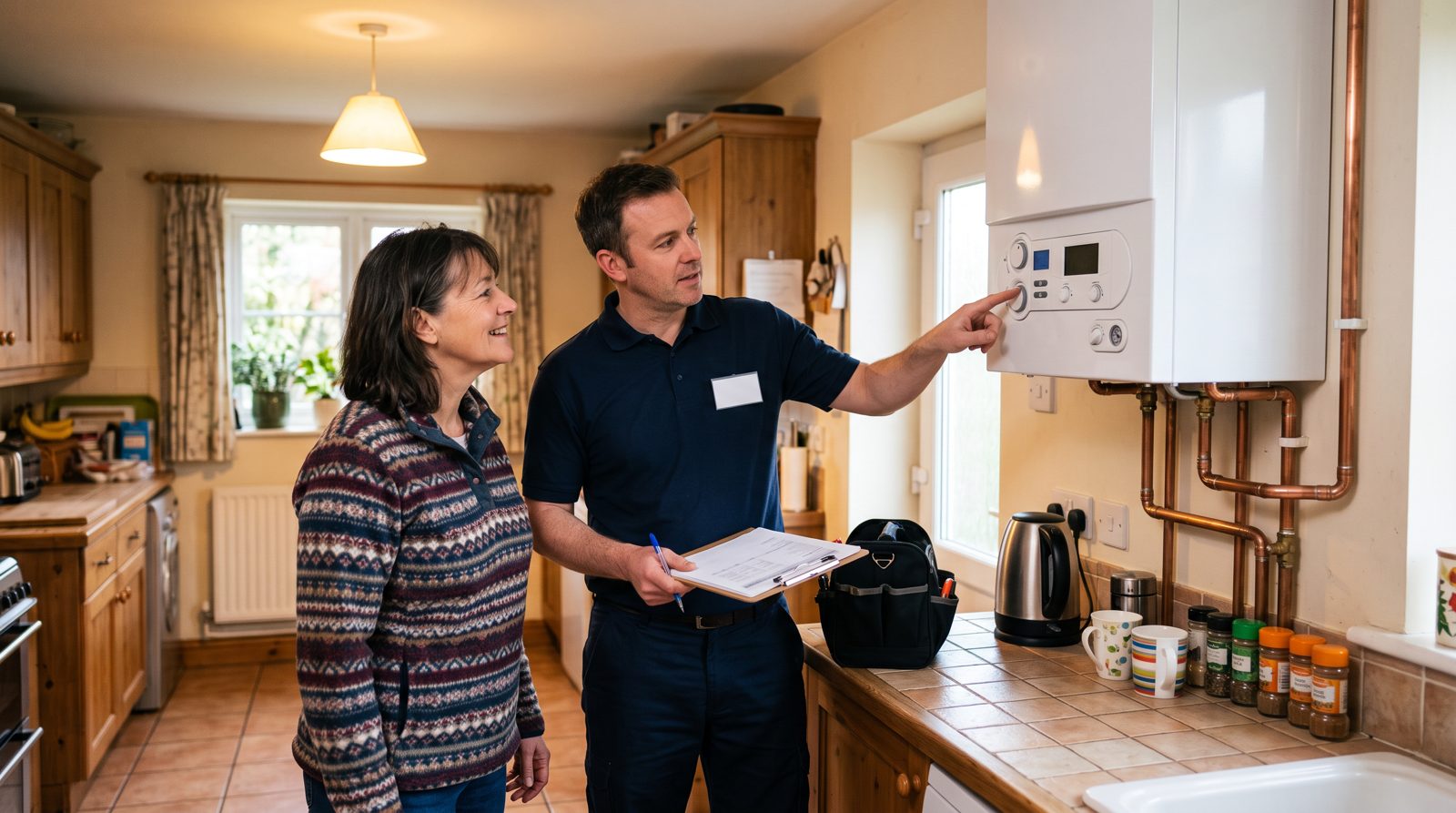
- Handover. You get a walkthrough of the controls, the pressure gauge and what to do if anything looks wrong, plus the documentation.
Noise and disruption are modest: some drilling for the flue, water drained and refilled, engineers in and out. You do not need to move out, and you do not need to empty the room beyond clearing access to the boiler and tanks.
How DCI Boilers can help
DCI Boilers fits new boilers across Cornwall and Devon, from same-day straight swaps to full conversions and fuel changes, with Gas Safe registered and OFTEC registered engineers. Every gas boiler replacement starts with a free survey, and the fixed upfront quote tells you both the price and the expected duration before we book anything, so there are no surprises on either front. New boilers come with up to 12 year manufacturer warranties, and if your old one has died completely we run 24/7 emergency call-outs to keep you going until installation day.
Need help now? Call DCI Boilers on 07888 862 603 or get a free quote.
Frequently asked questions
Will I be without heating and hot water during the installation?
During the working day, yes, that is unavoidable while the system is drained. On a one-day swap you will have both back the same evening. On longer jobs we plan the work to restore hot water overnight wherever the system allows, and we will tell you in advance if a night without is likely.
Can a new boiler really be fitted in one day?
Yes, if it is a like-for-like swap in the same position. The one-day figure assumes the gas supply and flue arrangements are suitable; if either needs upgrading, the survey will pick that up and the quote will say so.
Does the time of year affect how quickly I can get a boiler fitted?
Winter is every installer’s busiest season, so lead times stretch exactly when breakdowns peak. If your boiler is elderly, arranging a replacement in the warmer months means shorter waits and no cold house while you wait.
Do I need to prepare anything before install day?
Very little. Clear access to the boiler, the loft hatch if tanks are coming out, and somewhere for the engineers to park. Move anything fragile away from the work areas, and expect the water to be off for spells during the day.