
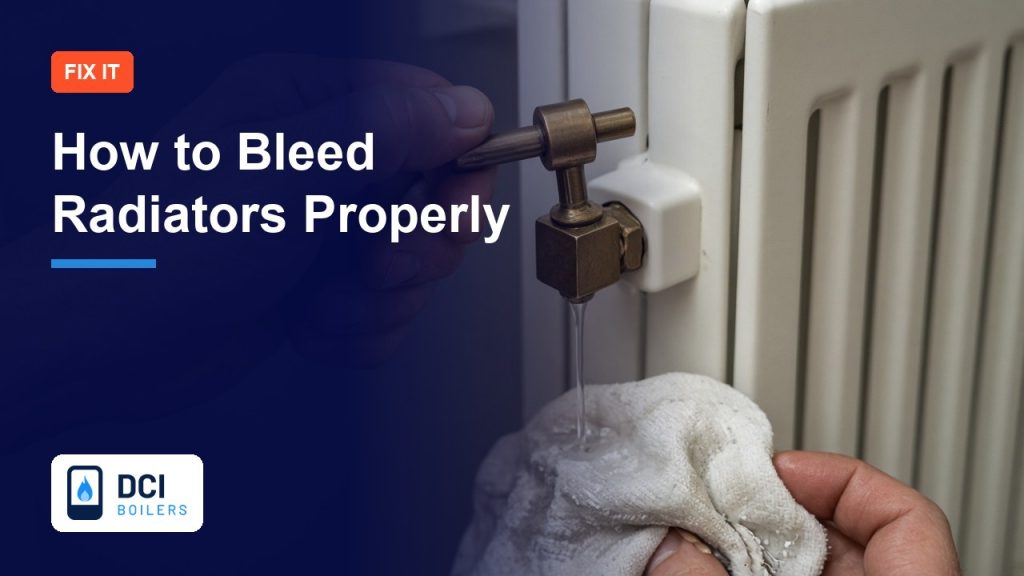
If a radiator is hot at the bottom but cold at the top, trapped air is sitting where hot water should be, and bleeding it out is the fix. To bleed a radiator, you turn the heating off, open the small bleed valve at the top corner with a radiator key, let the air hiss out until water appears, then close the valve again. It takes a couple of minutes per radiator, and the difference in heat output can be immediate.
Air gets into heating systems in small amounts all the time, through tiny amounts drawn in at joints, fresh water added at top-ups, and chemical reactions inside the system itself. Because air rises, it collects at the high points, which is why the cold patch is always at the top of the radiator and why upstairs radiators tend to suffer first.
Bleeding is safe, easy and well worth doing every autumn before the heating season starts. There is one follow-up job people forget (checking the boiler pressure afterwards) and one warning sign worth knowing about, which is air that keeps coming back. We will cover both below.
What you will need
- A radiator key. A pound or two from any DIY shop or supermarket. Some modern radiators accept a flat-blade screwdriver instead.
- An old cloth or towel. To catch the inevitable dribble of water.
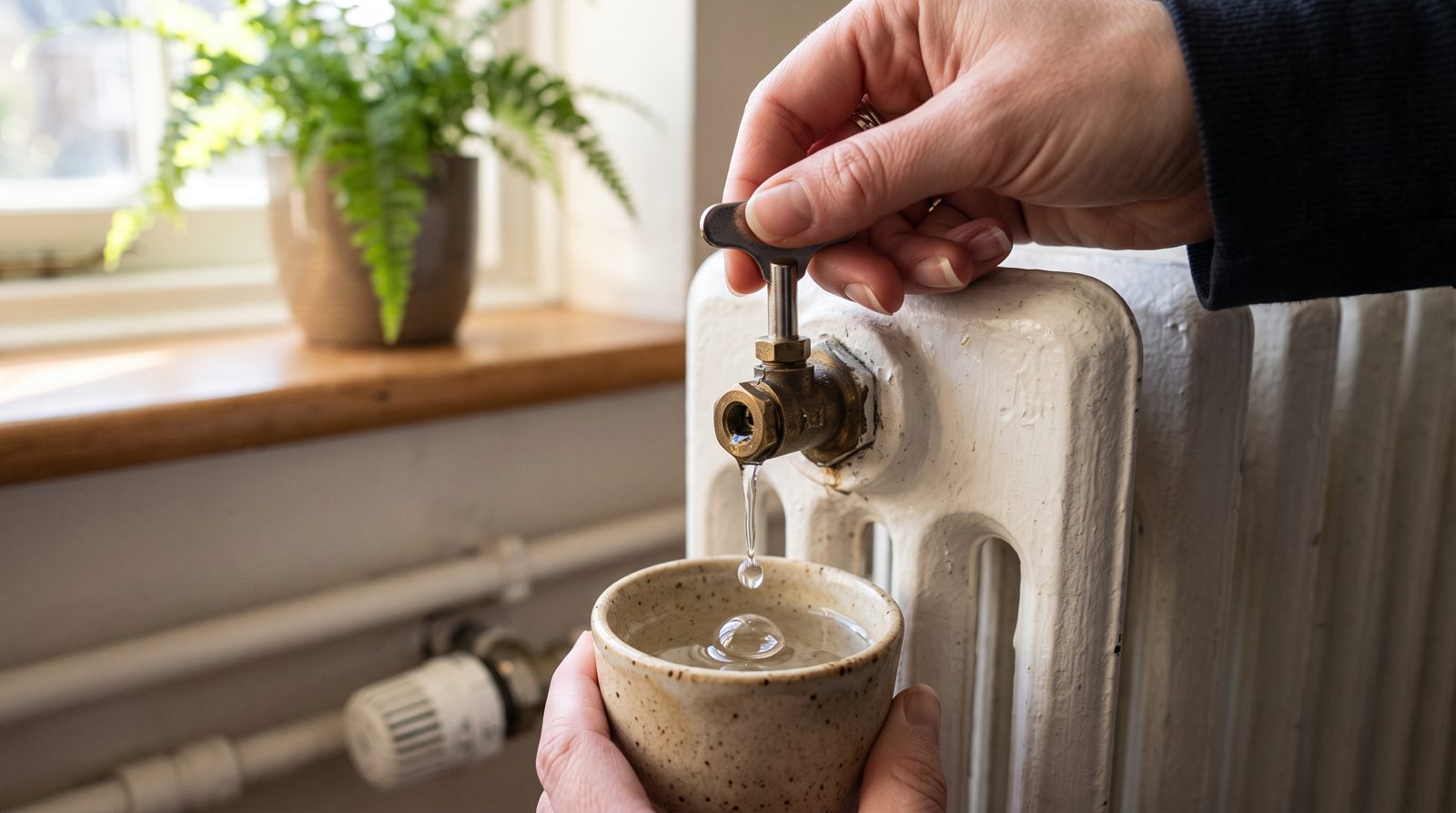
- A small container. A jug or bowl held under the valve saves your carpet. Heating water is often black with sludge, and it stains.
How to bleed radiators: step by step
- Run the heating first, then turn it off. A quick run tells you which radiators have cold spots at the top. Then switch the heating off and let the radiators cool. Bleeding with the pump running can draw more air in, and the water inside is hot enough to scald.
- Start with the ground floor radiator furthest from the boiler. Work your way towards the boiler, then do upstairs the same way. Air rises, so this order chases it out most efficiently.
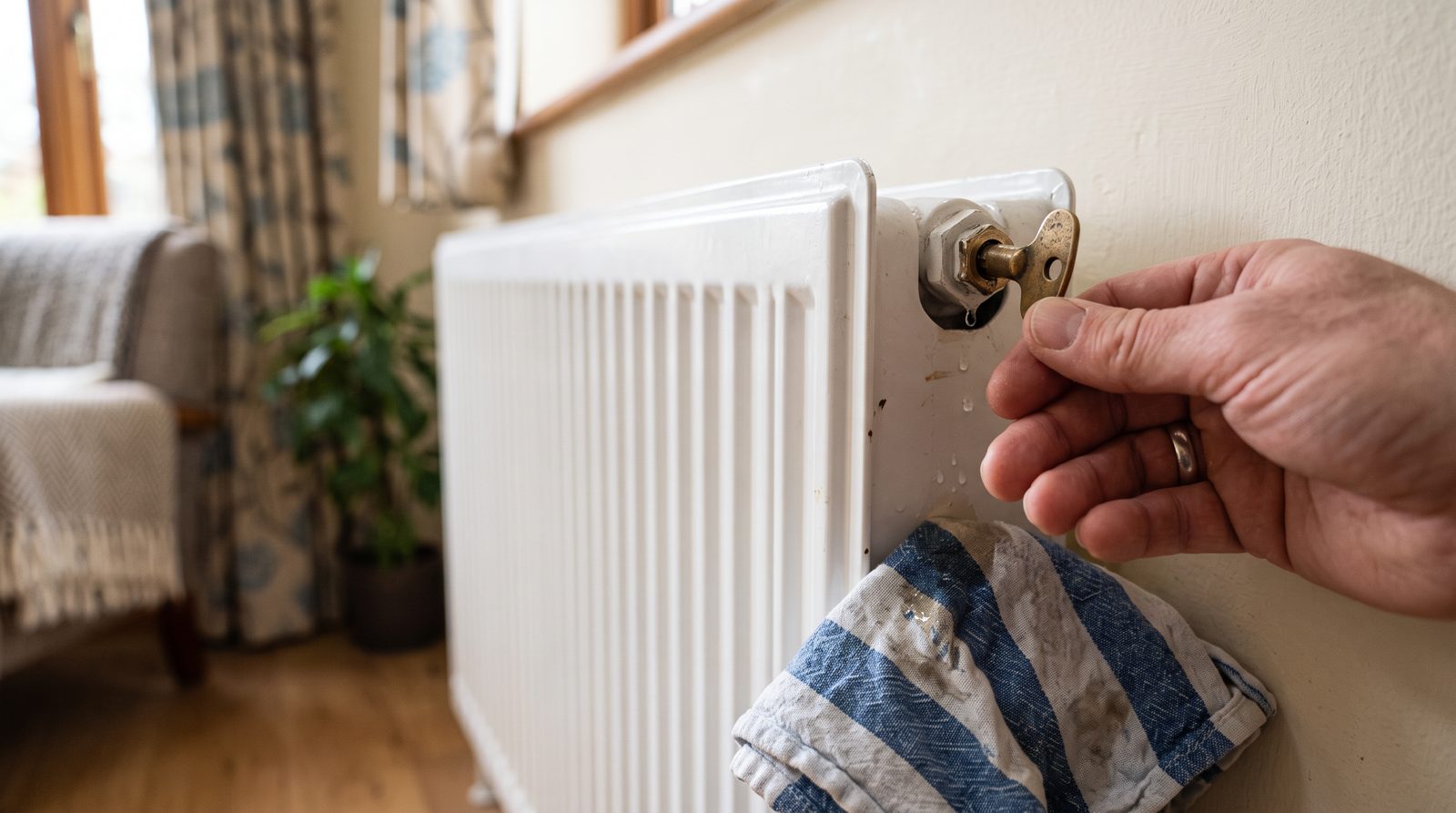
- Find the bleed valve. It is the small square-topped valve at one top corner of the radiator, often inside a hexagonal collar.
- Fit the key and turn anticlockwise, about a quarter to half a turn. Hold the cloth beneath it. You should hear a hiss as the air escapes. There is no need to open it further, and never remove the valve entirely.
- Wait for water. When the hissing stops and a steady dribble of water appears, the air is out. Close the valve clockwise, snug but not forced.
- Repeat on each radiator that needs it, then wipe everything down and check for weeps from the valves you opened.
The step everyone forgets: repressurise the boiler
The air you released was taking up space in a sealed system, so once it is gone the system pressure drops. Check the gauge on the boiler: if it has fallen below about 1 bar, the boiler may lock out and refuse to fire. Top the system back up to between 1 and 1.5 bar using the filling loop underneath the boiler. Our guide on how to repressurise a boiler walks through it step by step, and it takes five minutes.
Then run the heating and enjoy the results. Radiators that heat evenly top to bottom, rooms that reach temperature faster, and a system that is no longer wasting energy pushing water past pockets of air.
Why bleeding fixes cold spots (and when it will not)
Trapped air blocks hot water from filling the top of the radiator, so the metal there stays cold while the bottom cooks. Bleeding removes the air and lets water fill the whole panel again. Simple.
But not every cold radiator is an air problem, and the pattern tells you which is which:
- Cold at the top: trapped air. Bleeding fixes it.
- Cold at the bottom or in the middle: sludge. Corroded metal and debris settle low in the radiator where bleeding cannot touch them. That radiator, and often the whole system, needs flushing.
- One radiator cold all over: usually a stuck thermostatic valve or a system balancing issue rather than air.
- Every radiator lukewarm: look at the boiler, the pump or the system pressure, not the radiators.
When air keeps coming back
Bleeding the same radiator every few weeks is not normal maintenance, it is a symptom. A healthy sealed system should need bleeding no more than once or twice a year. Air that keeps returning usually means one of these:
- A small leak letting water out and air in, often somewhere you cannot see. Falling boiler pressure alongside the air is the giveaway.
- Corrosion inside the system. The reaction between water, steel radiators and sludge produces hydrogen gas, which collects like air. If the gas that comes out lights with a pop (do not test this yourself) or the water runs black, corrosion is well underway and the system needs treatment.
- A faulty component such as a passing air vent or a pump drawing air in at a worn seal.
These are exactly the things an annual boiler servicing visit is designed to catch. An engineer can check the inhibitor levels protecting your system, test for leaks, and advise whether a chemical clean or power flush would restore performance. If constant air has been quietly corroding an older system for years, we will also give you an honest view on whether boiler repairs or a gas boiler replacement is the wiser money.
How DCI Boilers can help
DCI Boilers keeps heating systems healthy across Cornwall and Devon. Book boiler servicing with our Gas Safe and OFTEC registered engineers and we will bleed and balance the radiators, check the pressure and inhibitor, and catch small problems before winter finds them for you, all with fixed upfront pricing. Radiators still cold after bleeding, or air returning within weeks? We will trace the real cause and put it right.
Need help now? Call DCI Boilers on 07888 862 603 or get a free quote.
Frequently asked questions
How often should I bleed my radiators?
Once a year, ideally in autumn before the heating season, plus any time you notice cold spots at the top of a radiator. Needing to bleed more often than that suggests a leak or corrosion issue worth investigating.
Do I bleed radiators with the heating on or off?
Off, and ideally cooled down. With the heating on, the pump can draw more air into the system as you bleed, and the water escaping the valve is hot enough to scald.
Why is my radiator still cold after bleeding?
If the cold patch is at the bottom or middle, the culprit is sludge rather than air, and the radiator needs flushing. A radiator cold all over usually has a stuck valve or a balancing problem. Both are quick diagnoses for an engineer.
Do I need to top up the boiler pressure after bleeding radiators?
Usually, yes. Releasing air lowers the pressure in a sealed system, so check the gauge afterwards and top up to between 1 and 1.5 bar if it has dropped. Otherwise the boiler may lock out.