
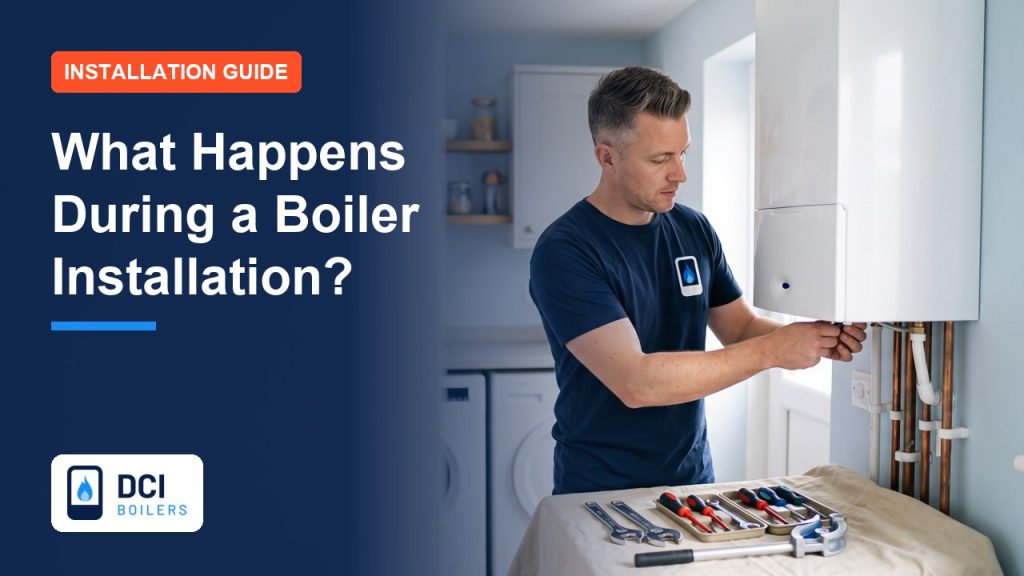
A boiler installation follows the same broad pattern in almost every home. An engineer surveys the property and agrees the plan, the old boiler is drained and removed, the new one is fitted and connected, the system is flushed and refilled, and then everything is tested, commissioned and signed off. A straightforward swap, where the new boiler goes in the same place as the old one, is usually done in a single day. A change of position or a change of boiler type takes longer.
Knowing the order of events takes a lot of the worry out of the day. You will know when the heating goes off, when the water comes back on, what the engineer needs from you and what paperwork you should be holding at the end. This guide walks through each stage as it happens on a typical DCI Boilers job in Cornwall and Devon.
Before the day: the survey
A proper installation starts with a survey, either in person or from photographs and a conversation for simpler swaps. The engineer confirms the type of boiler you have now, where the flue comes out, how the gas or oil supply reaches the boiler, the state of the pipework and radiators, and where the condensate pipe can drain. They will also ask about your hot water habits, such as how many bathrooms you have and whether two showers run at once, because that decides the size of boiler you need.
The survey is also the moment to raise anything you have been putting up with. Cold radiators upstairs, a shower that runs lukewarm and a noisy pump are all easier to sort out while the system is open. A good survey ends with a written quote that lists the boiler model, the controls, any extras such as a magnetic filter, and a fixed price, so there are no surprises on the day. You can get a free quote from us at any time.

Step 1: protecting your home and shutting down the old system
On the day, the engineer lays dust sheets from the door to the boiler and along any route where pipework will be worked on. The gas or oil supply is isolated, the electrics to the boiler are switched off and the heating system is drained down. If you have a hot water cylinder that is being removed, that is drained too. From this point you have no heating or hot water until the new boiler is commissioned, so it helps to have a kettle filled and, in winter, a spare heater for the room you use most.
Step 2: removing the old boiler
The old boiler is disconnected from its pipework, flue and electrics and lifted off the wall. Old flues are removed and the hole in the wall is either reused for the new flue or made good. Floor-standing boilers and back boilers take a little longer to strip out, and a back boiler behind a fireplace may need the fire surround removed. Everything comes away with the engineer at the end of the job.
Step 3: fitting the new boiler
The new boiler is mounted on its bracket, levelled and connected. This is where the difference between a like-for-like swap and a bigger job shows. In a swap, the existing pipework is adapted to the new boiler’s connections. In a relocation, new gas, water, condensate and flue runs are installed first. The engineer fits the flue through the wall or roof with the correct fall so condensate drains back into the boiler, and makes sure the terminal sits the required distance from windows, doors and boundaries.
Most good installations include a magnetic system filter on the return pipe, which catches the metal sludge that would otherwise settle in the new heat exchanger. If new heating controls were quoted, the thermostat and any radiator valves are fitted at this stage too.
Step 4: flushing and refilling the system
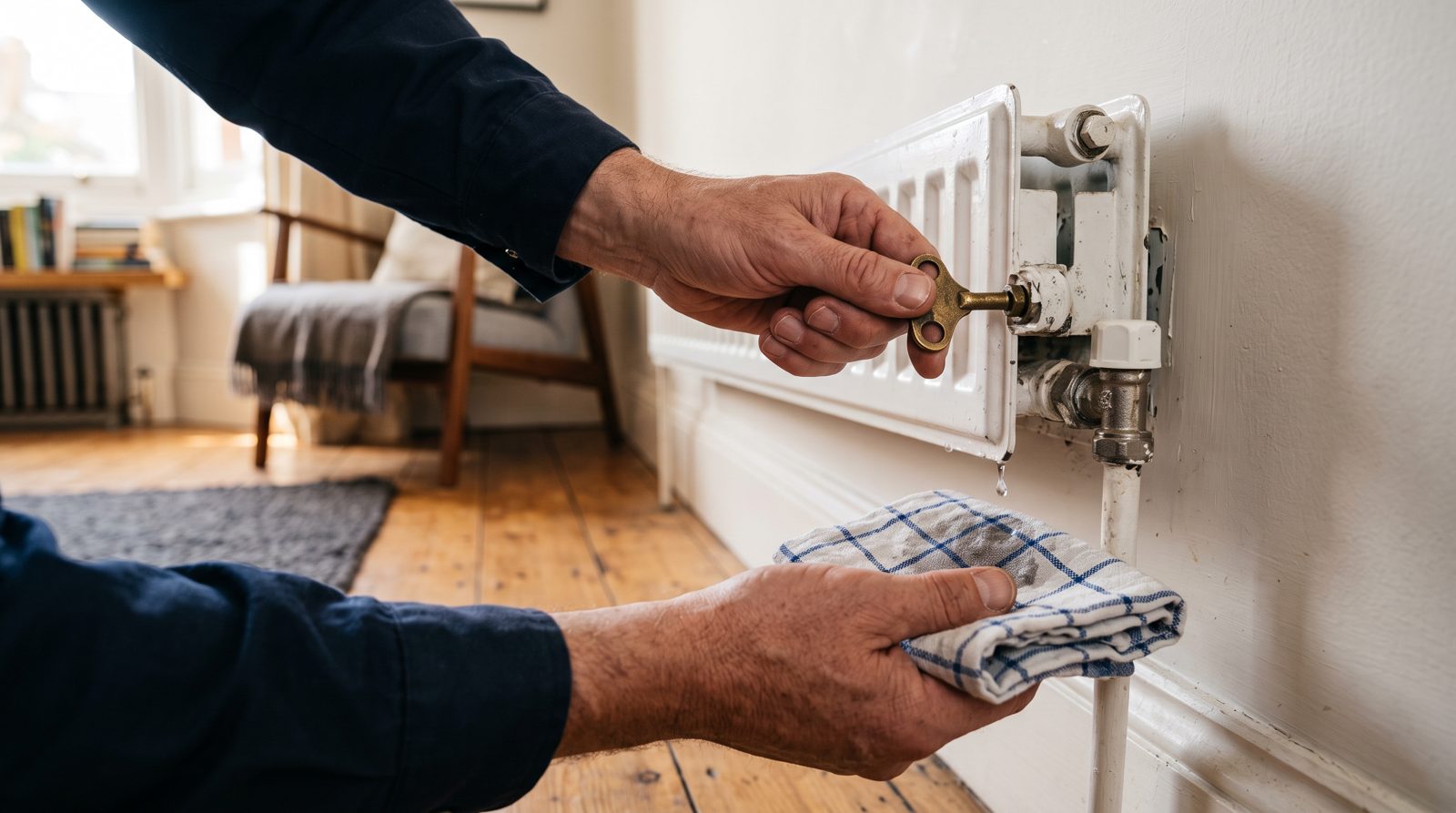
Before the new boiler is fired up, the pipework and radiators are flushed to clear the debris and sludge that builds up in an older system. Depending on what the survey found, this is either a chemical clean with a cleanser left to circulate, or a full power flush with a pump. The system is then refilled, inhibitor is added to protect the metal inside the boiler and radiators, and every radiator is bled and balanced so they all heat evenly.
Step 5: commissioning and testing
Commissioning is the part that separates a professional installation from a quick fit. The engineer checks the gas or oil supply pressure, tests for leaks, fires the boiler and uses a flue gas analyser to confirm the combustion figures are within the manufacturer’s range. Hot water flow and temperature are checked at the taps, the heating is run up to temperature, and the controls are programmed. On a gas boiler this work must be done by a Gas Safe registered engineer. On an oil boiler it should be an OFTEC registered engineer.
Step 6: the handover and your paperwork
The final half hour is spent with you. The engineer shows you how the controls work, how to read the pressure gauge and top the system up, what the condensate pipe does and what to do if the boiler shows a fault code. You should leave the handover with the manufacturer’s manual, a completed Benchmark commissioning checklist inside it, and the warranty registration confirmed. Within a few weeks a Building Regulations compliance certificate arrives from Gas Safe or OFTEC, which you will need if you ever sell the house. Keep all of it together. It also makes your first annual boiler servicing appointment easier, because the engineer can see exactly what was fitted and when.
How long does it all take?
A like-for-like combi swap in the same position is normally a one-day job, with the heating back on by the evening. Converting from a conventional or system boiler to a combi, moving the boiler to a new room, or installing a new oil boiler with a new tank can take two to three days. The survey should give you a realistic estimate rather than a hopeful one.
How DCI Boilers can help
DCI Boilers installs gas and oil boilers across Cornwall and Devon, with Gas Safe and OFTEC registered engineers, fixed upfront pricing and manufacturer warranties of up to 12 years. Every installation is surveyed properly, flushed properly and commissioned properly, and you get the paperwork to prove it. If your boiler is due for retirement, our gas boiler replacement and oil boiler replacement pages explain what we fit and why.
Need help now? Call DCI Boilers on 07888 862 603 or get a free quote.
Frequently asked questions
Do I need to be home during a boiler installation?
Someone needs to let the engineer in and be there for the handover at the end, but you do not need to hover all day. Many customers work from another room or pop out once the engineer is settled.
Will there be a lot of mess?
There is some dust and water when the old boiler and flue come out, which is why dust sheets go down first. A good engineer leaves the area clean and takes the old boiler and packaging away.
What happens if a problem is found on the day?
Occasionally an engineer finds corroded pipework or a flue route that does not meet current rules. A reputable installer explains the problem and the options before doing anything that changes the price.
Can the boiler be installed in a different room?
Yes, if a suitable flue position, gas or oil supply and drain for the condensate are available. A relocation is a longer job and needs a survey to confirm the route.