

Yes, a boiler installer needs access to every radiator in the house. Each one has to be bled when the system is refilled, most need balancing so they heat evenly, and during a flush the engineer works through them one at a time to clear sludge. Radiator valves are also checked and often replaced while the system is drained. A radiator behind a sofa, under a pile of laundry or inside a built-in cover slows the job and can leave you with cold spots once the engineer has gone.
This catches people out because it is easy to think of a boiler installation as something that happens in one cupboard. In reality the boiler is one end of a system that runs through every room, and the new boiler will only perform as it should if the whole system is clean, full of water and balanced. Here is what the engineer actually does at each radiator and how to prepare.
What happens at each radiator during an installation
Draining down
Before the old boiler comes off, the system is drained. Air needs to get in for water to get out, so the engineer opens the bleed valve on the highest radiators. On a house with radiators upstairs that means being able to reach the top corner of each one.
Flushing
A new boiler on a dirty system is a short-lived boiler. Depending on what the survey found, the engineer either circulates a chemical cleanser through the system or connects a power flushing pump. With a power flush, each radiator is isolated and flushed in turn, sometimes with the engineer tapping the panel to loosen settled sludge. Radiators that are cold at the bottom before the installation get particular attention.
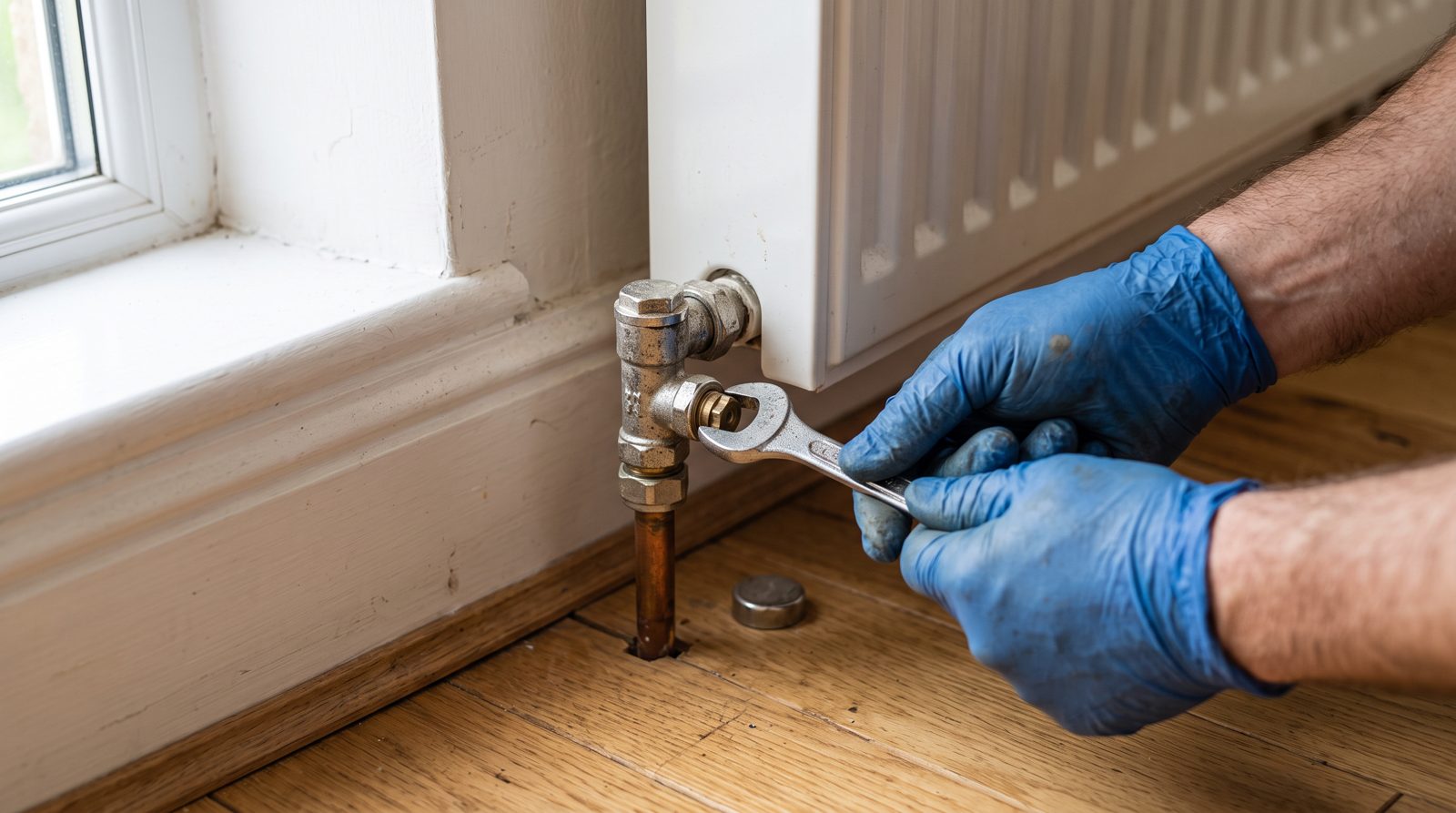
Bleeding
Once the new boiler is in and the system refilled, every radiator is bled from the top of the house down to release trapped air. Air left in the system causes gurgling, cold tops on radiators and, on a combi, repeated pressure loss as the air works its way out. The engineer then tops the boiler pressure back up.
Balancing
Balancing sets the lockshield valve on each radiator so hot water is shared fairly around the house instead of racing to the nearest radiators and leaving the far ones lukewarm. The engineer runs the heating, checks the temperature drop across each radiator and adjusts the valves. It takes a while and it is the step most often skipped by installers in a hurry, which is why so many houses have a freezing back bedroom.
Valves and TRVs
While the system is drained, it is the cheapest possible moment to replace tired radiator valves or fit thermostatic radiator valves. The engineer checks each valve for weeping and stiffness and will flag any that should be swapped.
What “access” actually means
The engineer needs to reach both valves at the bottom corners of the radiator and the bleed point at one top corner. In practice that means:
- furniture pulled far enough away that the engineer can kneel at both ends
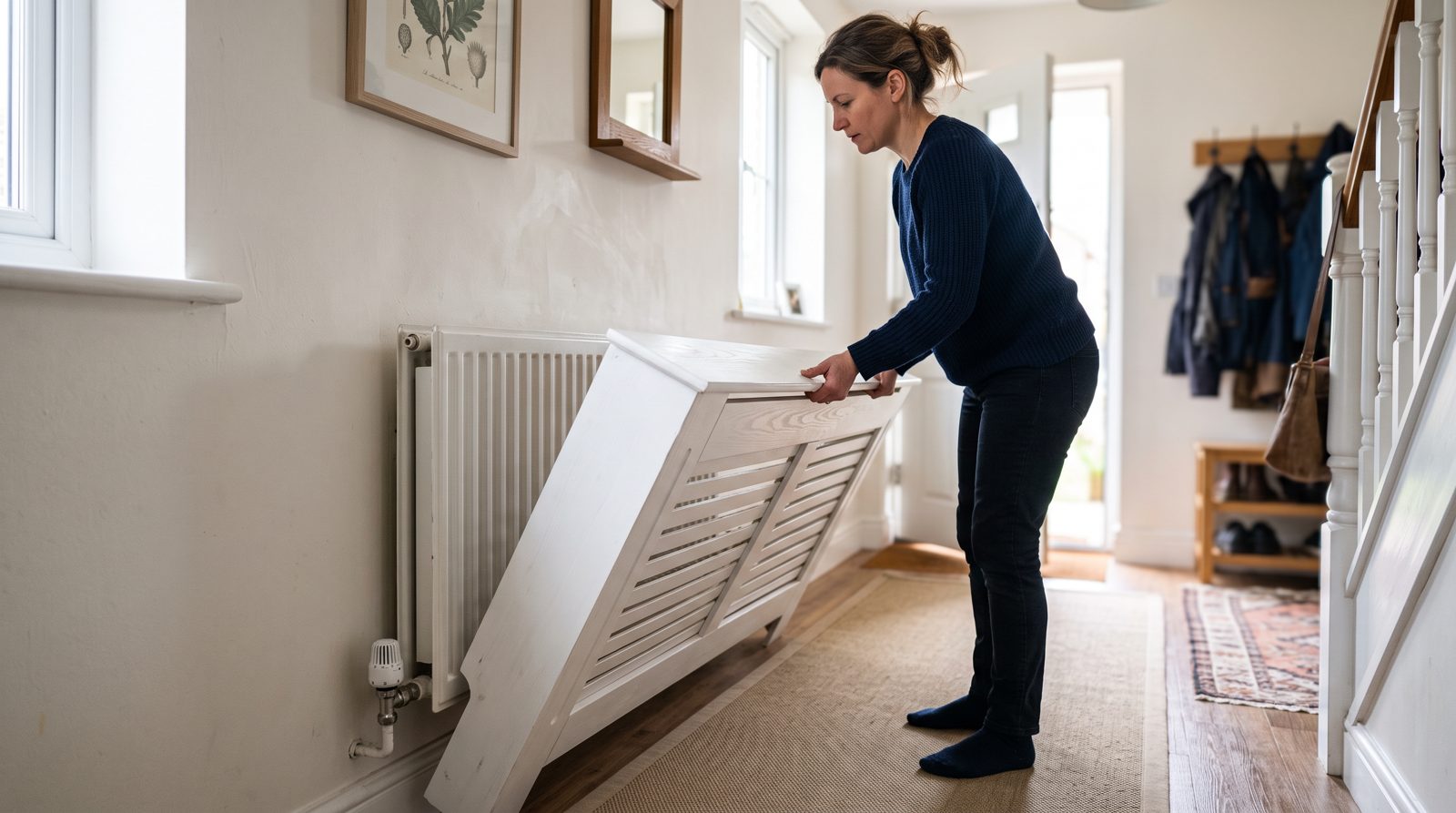
- radiator covers removed or at least opened, and anything stored on top or inside taken out
- towel rails clear of towels
- curtains lifted or tied back where they hang over the valves
- a clear route through each room, with rugs lifted if they sit over the pipes
Locked rooms, a tenant’s bedroom or a converted loft with a difficult hatch should all be mentioned at the survey so the engineer can plan around them.
What if a radiator cannot be reached?
If a radiator is genuinely inaccessible on the day, the engineer will do what they can from the rest of the system, but that radiator may keep its sludge, its air and its old valve. Expect it to be the one that stays cold, and expect a return visit to sort it out. It is far better to move the wardrobe the night before.
Do radiators get checked during a boiler service?
A routine boiler servicing visit focuses on the boiler itself: combustion, safety devices, seals, the flue and the condensate trap. The engineer will usually check the system pressure and ask whether any radiators are misbehaving, but a full bleed and balance of every radiator is an installation task, or a separate job if a house has developed cold spots. If your radiators are cold at the bottom, mention it when you book; that is a sign the system needs a clean, not just a service.
How DCI Boilers can help
DCI Boilers treats a new boiler as a whole-house job. Across Cornwall and Devon our Gas Safe and OFTEC registered engineers flush, bleed and balance every radiator as part of a gas boiler replacement or oil boiler replacement, and we tell you at the survey exactly which rooms we will need to get into. If your radiators are the problem rather than the boiler, our heating services cover flushing, valves and replacements.
Need help now? Call DCI Boilers on 07888 862 603 or get a free quote.
Frequently asked questions
Do I need to take radiator covers off before the engineer comes?
Yes, or at least make them easy to remove. The engineer needs both bottom valves and the top bleed point.
Will the engineer move my furniture?
Most engineers will shift a chair, but heavy furniture and anything fragile should be moved by you beforehand.
Do all radiators need bleeding after a new boiler?
Yes. Refilling the system introduces air, and every radiator is bled from the top floor down before the boiler is commissioned.
What is balancing and why does it matter?
Balancing adjusts the lockshield valves so hot water reaches every radiator evenly. Without it the radiators nearest the boiler are hot and the furthest stay cool.