
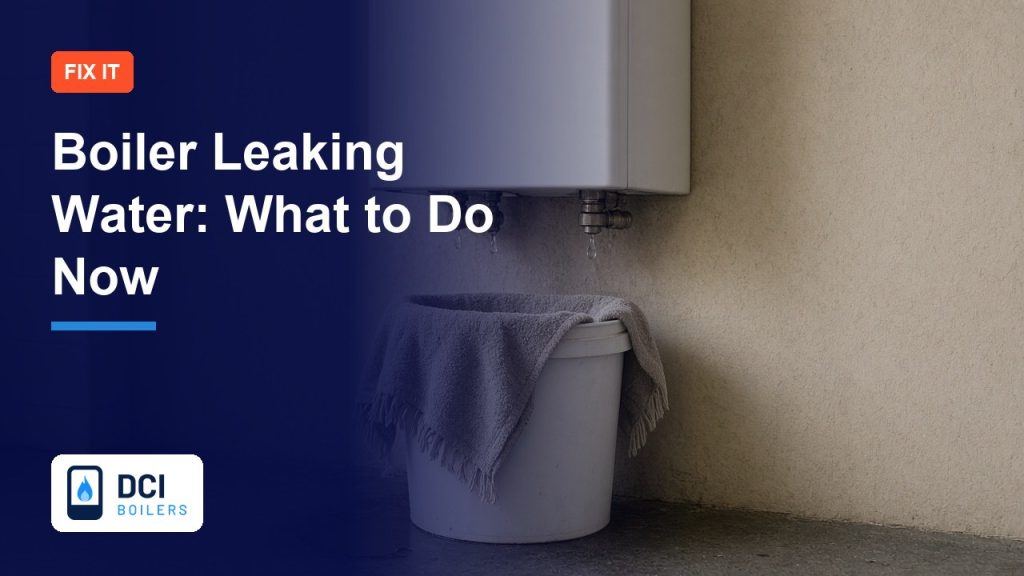
A boiler leaking water needs acting on straight away, but there is no need to panic. First, switch the boiler off. Second, turn off the water supply to it. Third, move anything electrical away from the drips and put a container underneath. Those three steps make the situation safe in under two minutes, and everything after that can happen calmly. Water and gas appliances are a combination that deserves respect, but a leaking boiler handled promptly rarely turns into anything worse than a repair bill.
What you should never do is shrug at a small drip and carry on. A leak inside or beneath a boiler drips onto electrics, corrodes components, and quietly drops your system pressure until the boiler locks out anyway. Small leaks become big ones, and the water damage to floors, ceilings and kitchen units routinely costs more than the fix would have.
Here is exactly what to do right now, what is likely causing it, and when to pick up the phone for an emergency boiler call-out.
What to do right now, step by step
- Switch the boiler off. Use the on/off switch or the fused spur on the wall beside it. This stops the boiler heating and pumping water around the fault.
- Turn off the water feed. If you can see an isolation valve on the cold pipe beneath the boiler, turn it a quarter turn so the screw slot sits across the pipe. If not, turn off the main stopcock, usually under the kitchen sink.
- Contain the water. Towels and a washing-up bowl under the boiler, and move anything valuable out of the way. If water is coming through a ceiling below, pierce a small hole in the bulge with a screwdriver over a bucket to let it drain in a controlled way rather than collapsing the plasterboard.
- Keep electricity away from the water. If water is running near sockets, the boiler’s spur or any appliance, switch those circuits off at the consumer unit.
- Do not touch anything inside the boiler. The casing stays on. Everything behind it, gas and electrics included, is legally a job for a Gas Safe registered engineer only.
- Call an engineer. Describe where the water is coming from and how fast. A photo helps. DCI Boilers answers 24/7 across Cornwall and Devon.
One important note: if you smell gas at any point, stop everything, avoid switches and naked flames, open doors and windows, get everyone out and call the National Gas Emergency line on 0800 111 999 before anything else.
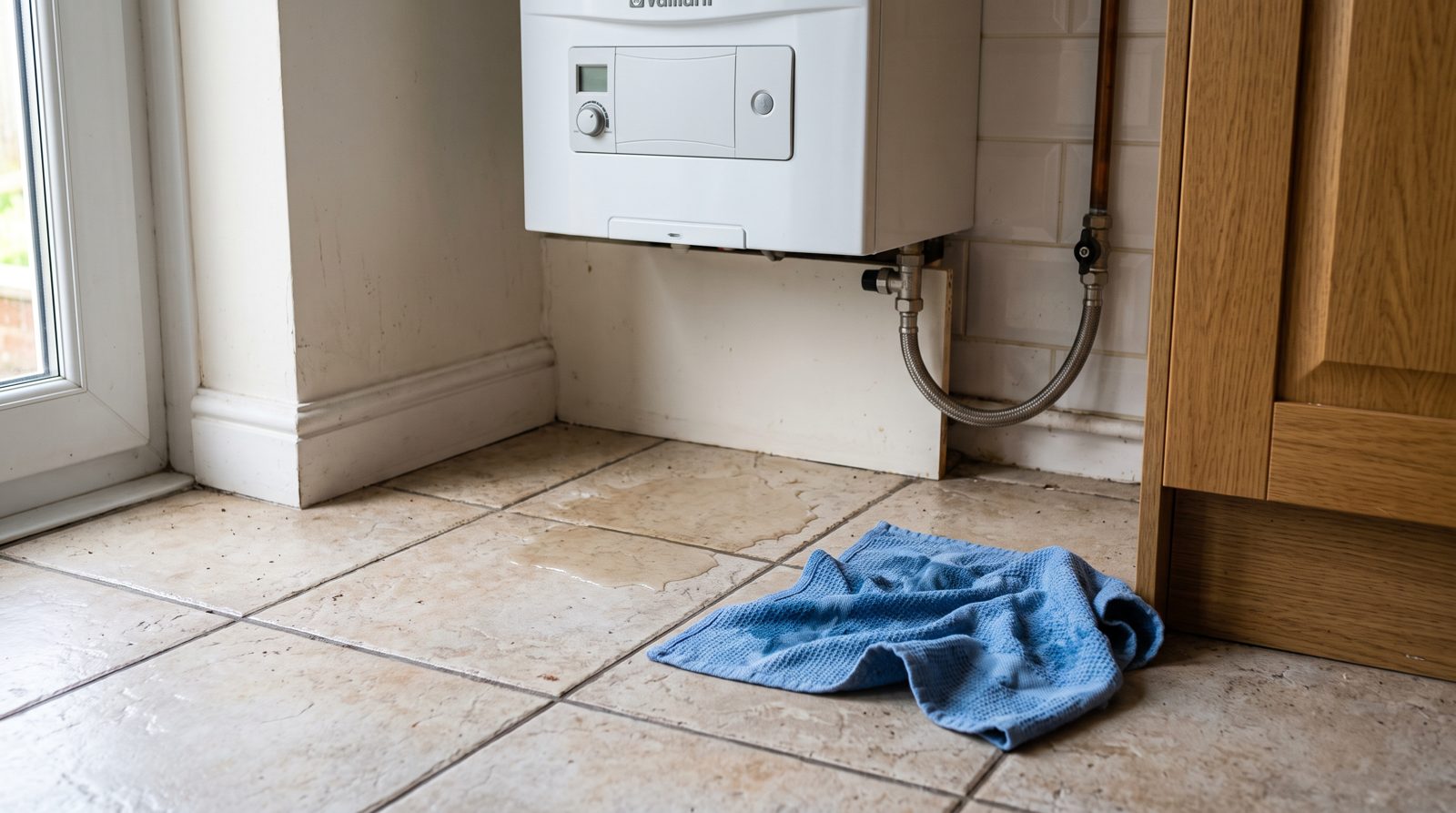
Why is my boiler leaking water?
Leaks nearly always come from one of a few places, and where the water appears is a decent clue.
A failed internal seal or pump
Rubber seals and pump gaskets harden with age and heat, then weep. This is the most common cause on boilers over five or six years old, and it usually shows as a steady drip from underneath the casing. The parts themselves are often inexpensive, caught early.
Pressure too high
If system pressure creeps towards 3 bar, the pressure relief valve does its job and discharges water through the copper pipe on your outside wall. Constant dripping out there points to overpressure, a valve that no longer seals, or a failed expansion vessel. Check your gauge: 1 to 1.5 bar cold is healthy.
Corrosion in the heat exchanger or pipework
Years of sludge and oxygen in the system eat away at metal from the inside until a pinhole opens up. A corroded heat exchanger is serious, and on an older boiler it is often the point where a repair stops making financial sense and a gas boiler replacement becomes the smarter spend.
Poorly made joints
If the boiler or nearby pipework was fitted or disturbed recently and has started leaking at a connection, a joint was not made properly. This is usually a quick fix for an engineer.
Condensate, not a leak at all
Modern condensing boilers produce acidic waste water by design, which leaves through a plastic condensate pipe. If that pipe is cracked, blocked or has frozen in winter, its water can back up and appear as a leak. It still needs fixing, the condensate is mildly acidic, but it is a plumbing job rather than a boiler failure.
Why you should never ignore a leaking boiler
- Water and electrics share the same box. Drips land on circuit boards, and a ruined PCB is one of the priciest parts in the boiler.
- Corrosion accelerates. Damp components rust, and every top-up of fresh water feeds internal corrosion and sludge.
- Pressure keeps falling. The boiler will lock out more and more often until it will not run at all, usually on the coldest week of the year.
- Property damage multiplies. Kitchen units, flooring and ceilings soak up water quietly. The repair that would have cost a call-out fee becomes an insurance claim.
A leak never improves on its own. Even a drip you can barely see deserves a professional eye, and an annual boiler servicing visit is the best way to catch tired seals and creeping corrosion before water ever reaches the floor.
How DCI Boilers can help
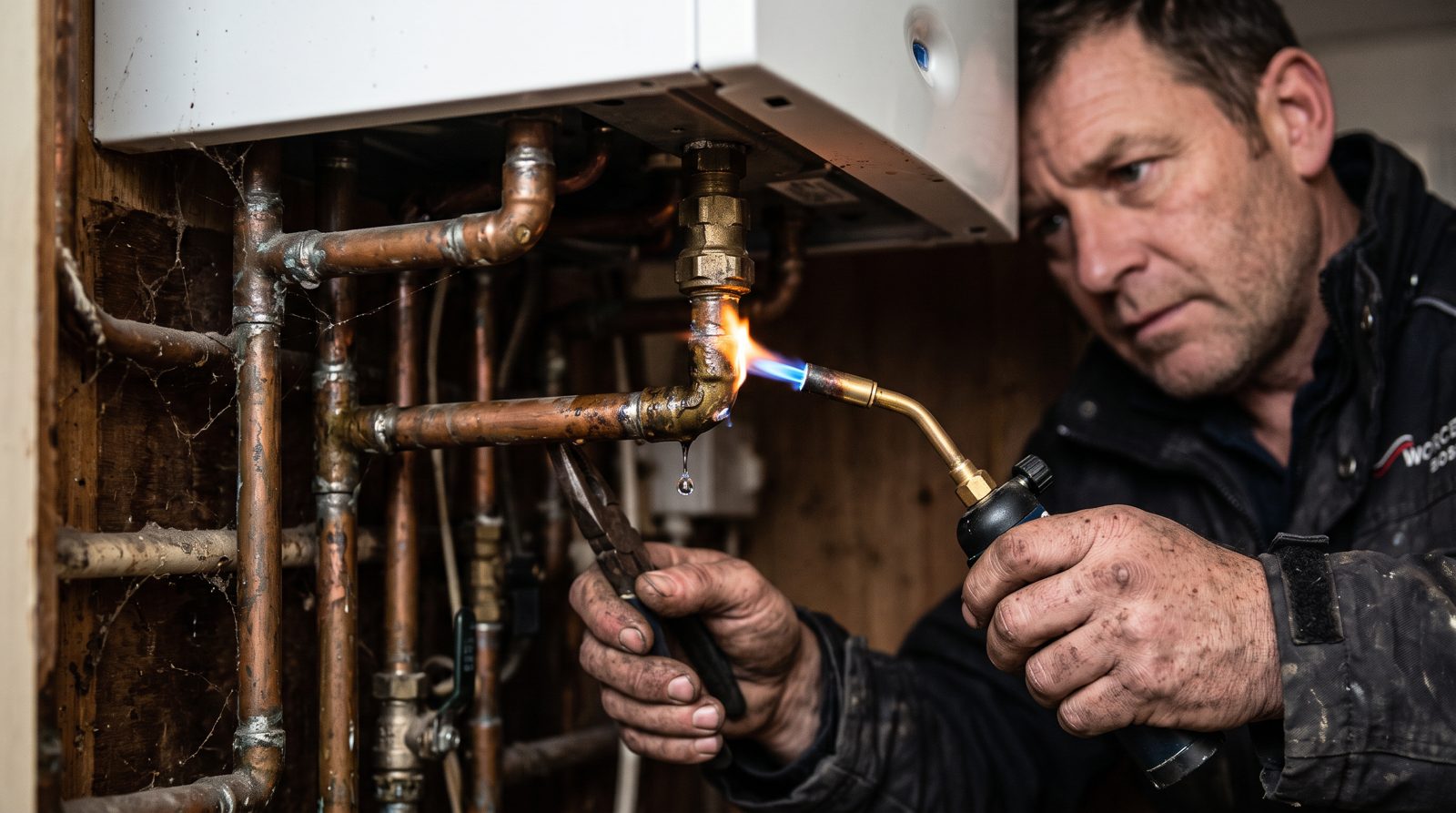
DCI Boilers provides a 24/7 emergency boiler call-out service across Cornwall and Devon, so a leaking boiler on a Sunday night is exactly the kind of job we exist for. Our Gas Safe and OFTEC registered engineers will make the boiler safe, find the true source of the leak and quote a fixed upfront price for the repair before starting work. For slower drips and follow-up work, our boiler repairs team covers the whole region, and leaks are something of a speciality of ours.
Need help now? Call DCI Boilers on 07888 862 603 or get a free quote.
Frequently asked questions
Is a leaking boiler dangerous?
It can be. The water itself is the smaller worry; the risk is water reaching electrical components, and long-term corrosion weakening the boiler. Switch the boiler off, isolate the water and have it inspected. If you ever smell gas, leave the house and call 0800 111 999.
Can I still use my boiler if it is only dripping slightly?
We would not recommend it. Running the boiler pushes hot pressurised water through the failing part and makes it worse, while drips find their way onto the electronics. Switch it off and get it looked at, small leaks are the cheap ones to fix.
How much does it cost to fix a leaking boiler?
It depends on the source. As a rough guide, a failed seal or valve is often somewhere in the £100 to £350 range, while a corroded heat exchanger costs considerably more and may not be worth doing on an old boiler. The honest answer is a free fixed quote once the leak is diagnosed.
Who do I call for a boiler leaking water at night or on a weekend?
Call DCI Boilers on 07888 862 603. We run 24/7 emergency call-outs across Cornwall and Devon, and we will talk you through making things safe while an engineer is on the way.