
A boiler losing pressure is one of the most common heating problems in UK homes, and in most cases it has a simple explanation. Sealed heating systems rely on a set amount of water held under pressure. If that pressure drops below around 1 bar, many boilers lock out and refuse to fire, leaving you with cold radiators and no hot water. The usual culprits are a small leak somewhere in the system, air that has been bled out of the radiators, or a fault inside the boiler itself, most often the expansion vessel or the pressure relief valve.
The good news is that a one-off pressure drop is rarely serious. You can usually top the system back up yourself in a few minutes using the filling loop. The time to pay attention is when the pressure keeps falling. A boiler that needs repressurising every few days is telling you that water is escaping somewhere, and that is worth investigating before it causes damage.
This guide walks through what the pressure gauge is telling you, the safe checks you can make yourself, and the signs that it is time to book boiler repairs with a professional.
What should boiler pressure be?
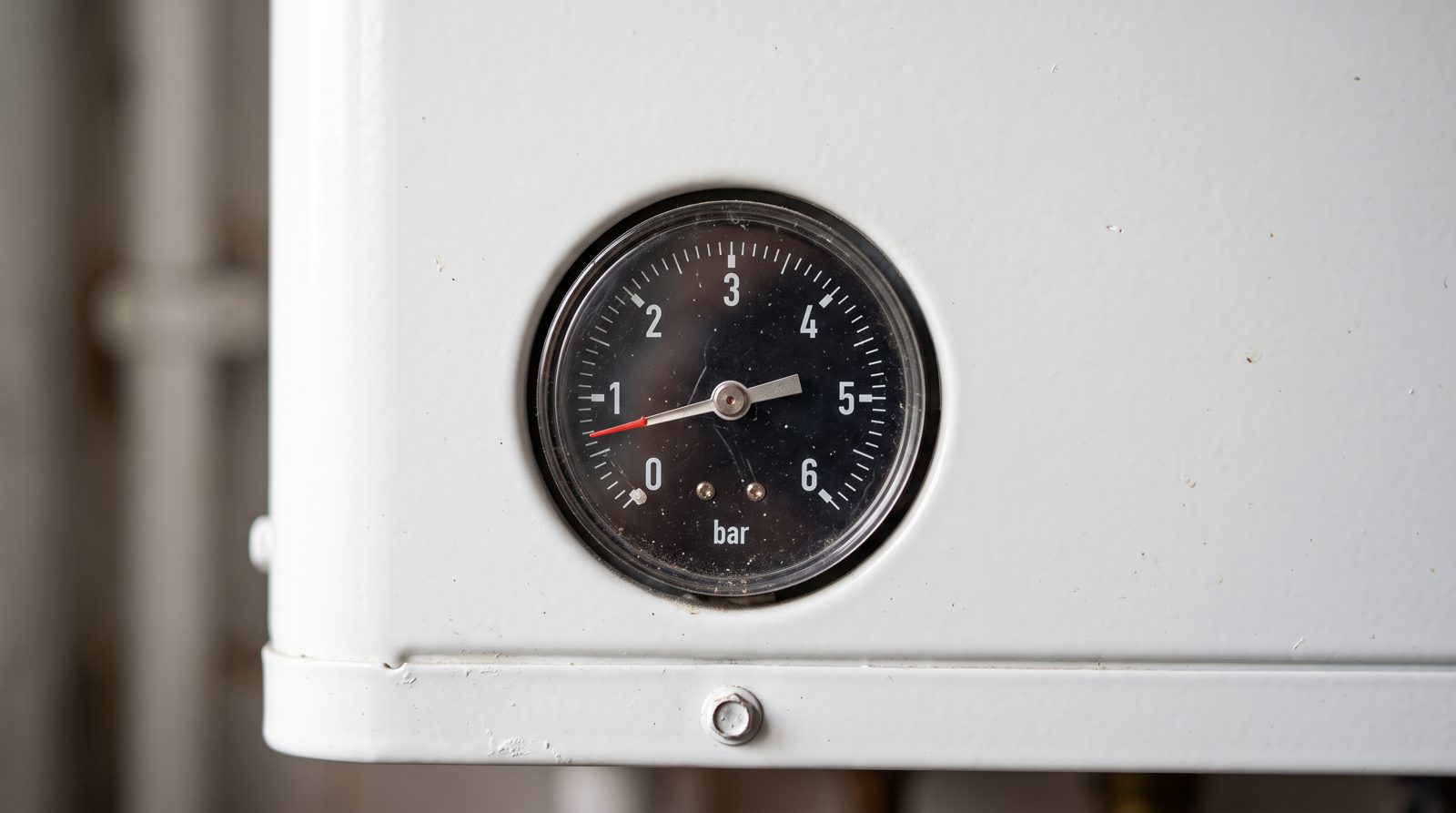
Look at the pressure gauge on the front or underside of your boiler. Some models have a traditional dial, others show a digital reading. As a general rule:
- 1 to 1.5 bar when the system is cold is the healthy range for most boilers.
- Below 1 bar and the boiler may lock out or display a low pressure fault code.
- Up to about 2 bar when the heating is running is normal, because water expands as it heats.
- Consistently near or above 3 bar is too high and the pressure relief valve may start discharging water outside.
Your boiler manual gives the exact figures for your model, and many gauges mark the healthy zone in green.
Why is my boiler losing pressure?
Water does not vanish from a sealed system on its own. These are the causes we find most often in Cornwall and Devon homes.
A leak somewhere in the system
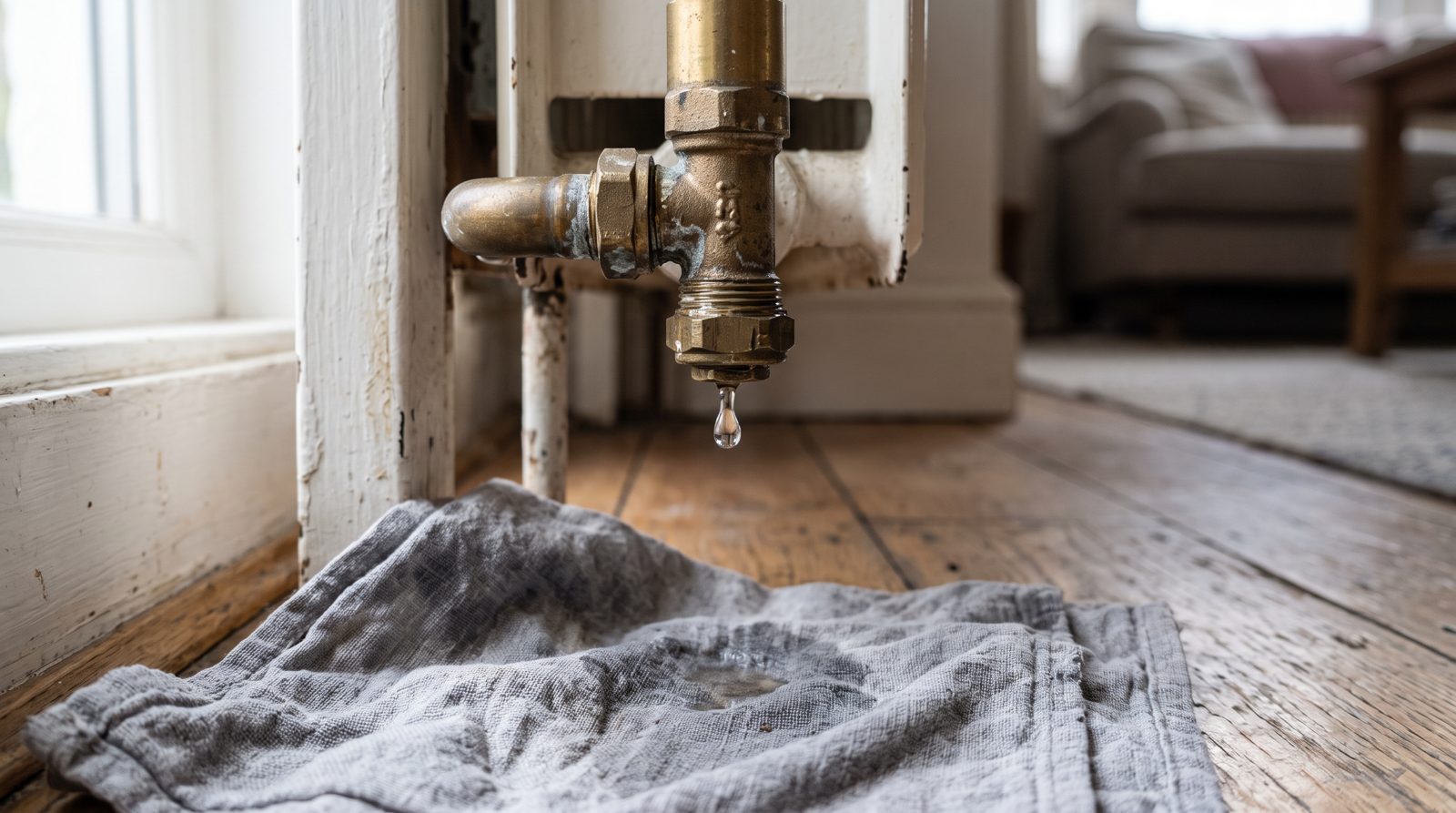
This is the most common cause. It might be a weeping radiator valve, a pinhole in a pipe under the floor, or a joint that has worked loose. Heating leaks are often tiny and slow, so check around radiator valves, visible pipework and under the boiler for damp patches, staining or salt-like deposits. A leak hidden under a solid floor or behind a wall shows no surface signs at all, which is where professional leak detection equipment earns its keep.
Recently bled radiators
Bleeding a radiator releases air from the system, and the pressure drops as a result. This is completely normal. Just top the pressure back up afterwards. If cold spots keep returning, annual boiler servicing will usually get to the bottom of it.
A failed expansion vessel
The expansion vessel is a small tank inside the boiler that absorbs the natural expansion of water as it heats. Over time the air charge inside it can seep away, or the internal diaphragm can split. The classic sign is pressure that swings wildly, shooting up towards 3 bar when the heating runs, then dropping low again once it cools, often with the relief valve dumping water outside in between. An expansion vessel cannot be fixed from outside the boiler. Recharging or replacing it is a job for a qualified engineer.
A passing pressure relief valve
The pressure relief valve is a safety device that releases water if pressure climbs too high. Once it has operated, grit can stop it sealing again, so it lets water dribble away constantly. Look at the small copper pipe that runs from the boiler through the outside wall. If it drips even when the system pressure is normal, the valve is likely passing and needs replacing.
Safe checks you can do yourself
Before you call anyone, run through these steps. None of them involve opening up the boiler.
- Read the gauge cold. Let the heating cool right down, then note the pressure. That is your true baseline.
- Look for visible leaks. Check every radiator valve, visible pipe run and the area beneath the boiler for damp or staining.
- Check the overflow pipe outside. Dripping from the copper discharge pipe points to a relief valve or expansion vessel problem.
- Top up once and monitor. Repressurise to around 1.2 bar, then write down the reading each morning for a week.
If the pressure holds steady after one top-up, it was probably a one-off, perhaps air working its way out of the system. If it falls again within days, something is genuinely wrong.
What never to do
Never remove the boiler casing, and never attempt to adjust or repair anything inside it. That includes the expansion vessel, the pressure relief valve and any gas components. Work on a gas boiler is illegal unless carried out by a Gas Safe registered engineer, and for good reason. Repeatedly topping up a leaking system is also worth avoiding as a long-term habit. Fresh water brings fresh oxygen and minerals into the system, which accelerates corrosion and sludge, quietly shortening the life of your boiler and radiators.
When to call an engineer
Book a professional visit if any of these apply:
- The boiler needs repressurising more than once every few weeks.
- Pressure swings high when the heating runs, then drops low afterwards.
- The external discharge pipe drips constantly.
- You can see water leaking from the boiler itself.
- You suspect a hidden leak under floors or behind walls.
A persistent pressure loss will not fix itself, and left alone it can lead to water damage, a corroded system and eventually a boiler beyond economical repair. If an older boiler is losing pressure and racking up repair bills, it may be worth weighing up a gas boiler replacement instead, which comes with up to 12 year manufacturer warranties.
How DCI Boilers can help
DCI Boilers carries out boiler repairs across Cornwall and Devon, from Saltash to Plymouth and beyond. Our Gas Safe and OFTEC registered engineers will find the real reason your boiler is losing pressure, whether that is a hidden leak, a tired expansion vessel or a passing relief valve, and fix it properly with fixed upfront pricing. No guesswork and no surprise bills.
Need help now? Call DCI Boilers on 07888 862 603 or get a free quote.
Frequently asked questions
Is it safe to use my boiler if it keeps losing pressure?
Low pressure itself is not dangerous, and most boilers simply lock out to protect themselves. The risk is the underlying cause. A leak can damage your home, and repeated top-ups corrode the system, so get it investigated rather than living with it.
How often should I need to top up my boiler pressure?
Rarely. A healthy sealed system might need a small top-up once or twice a year, typically after bleeding radiators. Anything more frequent than every few weeks suggests a leak or an internal boiler fault that needs attention.
How much does it cost to fix a boiler losing pressure?
It depends entirely on the cause. Replacing a radiator valve is a small job, while an expansion vessel or hidden leak takes longer. As a rough guide, minor repairs often fall somewhere between £100 and £400, but the honest answer is a free fixed quote, which is exactly what we provide before any work starts.
Can I just keep topping the pressure up instead of repairing it?
You can for a short while, but it is a false economy. Every top-up introduces fresh water, oxygen and minerals that corrode radiators and clog the system with sludge. Fixing the fault is almost always cheaper than the damage that follows.