
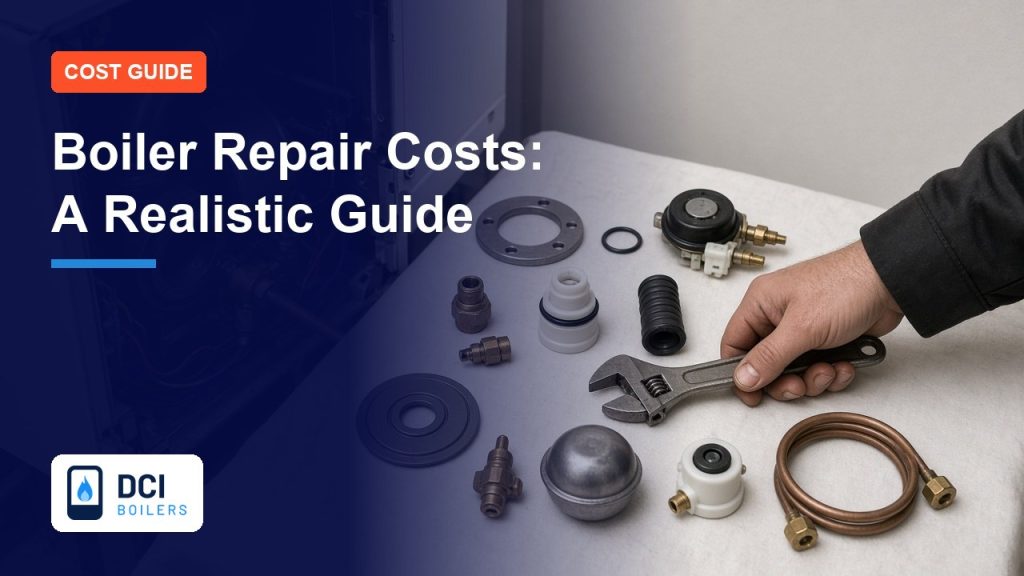
As a rough guide, most UK boiler repairs cost somewhere between £100 and £500. Small fixes such as a pressure fault, a frozen condensate pipe or a replacement thermostat sit at the bottom of that range. Bigger jobs involving major components like a heat exchanger can run higher, sometimes high enough that replacement becomes the smarter spend.
The frustrating truth is that nobody can give you an exact repair price over the phone, because the fault has to be diagnosed first. What a good company can do is be upfront about how pricing works, quote a fixed figure once the fault is found, and never start work you have not agreed to. That is how DCI Boilers handles boiler repairs across Cornwall and Devon.
Here is a realistic picture of what common faults tend to cost, and how to make the repair-or-replace decision without being pressured either way.
Common boiler faults and rough cost bands
Treat these as broad estimates rather than quotes. Parts prices vary by boiler brand and age, and every figure below includes labour:
| Fault | Rough band | Notes |
|---|---|---|
| Frozen condensate pipe | £100 to £150 | A classic cold-snap breakdown, quick to thaw and cheap to prevent with insulation |
| Loss of pressure / small leak | £100 to £250 | Often a valve, a weeping joint or the filling loop |
| Thermostat or controls fault | £100 to £250 | Sometimes the fix is a new thermostat rather than boiler work at all |
| Ignition or electrode fault | £150 to £300 | Common on both gas and oil boilers |
| Fan replacement | £200 to £350 | A frequent failure on older combis |
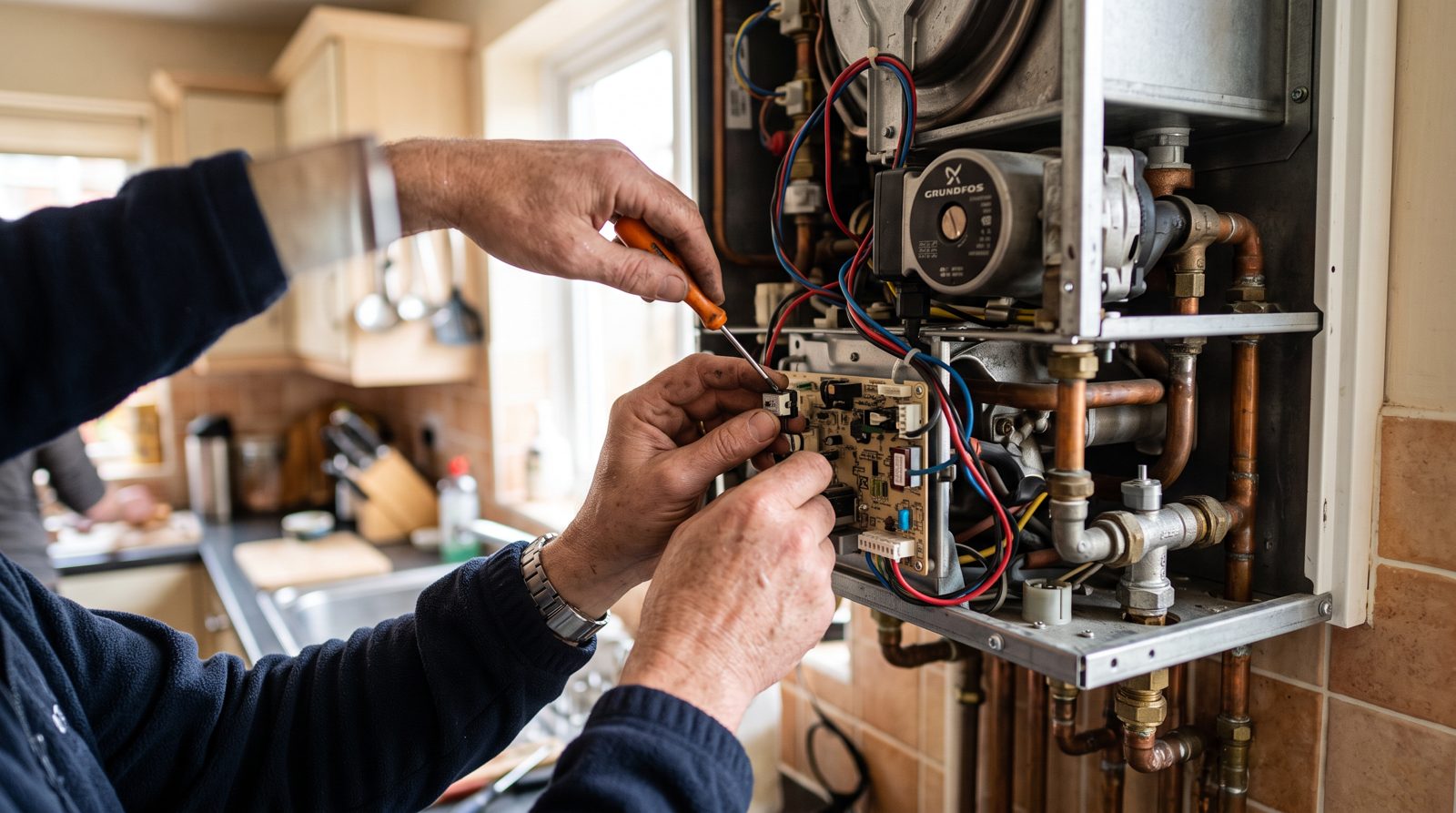
| Pump replacement | £200 to £400 | Usually announced by grumbling noises before it fails outright |
| Diverter valve | £200 to £400 | The classic “heating works but no hot water” fault on combis |
| Printed circuit board (PCB) | £300 to £550 | One of the priciest single parts |
| Heat exchanger | £400 upwards | On an older boiler this is usually the replacement conversation |
Two things push a repair towards the top of its band: the age of the boiler (parts for older models cost more and take longer to source) and whether the fault has caused secondary damage. A slow leak left for months, for example, can corrode more than the part that caused it.
Repair or replace? An honest framework
This is the question behind every big repair quote, and the answer does not have to be guesswork. Weigh up four things:
- Age. Under ten years old, repair is almost always right. Past twelve to fifteen years, every big repair deserves the replacement comparison, because other components are ageing too.
- Warranty. If the boiler is still under manufacturer warranty and has been serviced annually, the repair may cost you nothing. This is one of the strongest arguments for keeping up boiler servicing every year.
- Repair history. One breakdown in a decade is bad luck. The third callout in two winters is a pattern, and money spent patching a failing boiler is money not spent on its successor.
- The size of this repair. A useful rule of thumb: when a single repair approaches a large fraction of the cost of a new boiler, on a boiler already old and inefficient, replacement usually wins. A new boiler brings a fresh warranty of up to 12 years and better efficiency, so the true cost gap is smaller than the invoice suggests.
A trustworthy engineer will lay this out plainly rather than steering you to the bigger ticket. If replacement is genuinely the better value, we will say so and explain why. Our guides to gas boiler replacement and oil boiler replacement cover what that involves for each fuel.
Why fixed pricing matters most on repairs
Repairs are where open-ended hourly billing hurts homeowners. You are stressed, the house is cold, and every extra hour on the clock is money you did not budget. The fault might take 40 minutes to fix or four hours, and with hourly billing that risk is entirely yours.
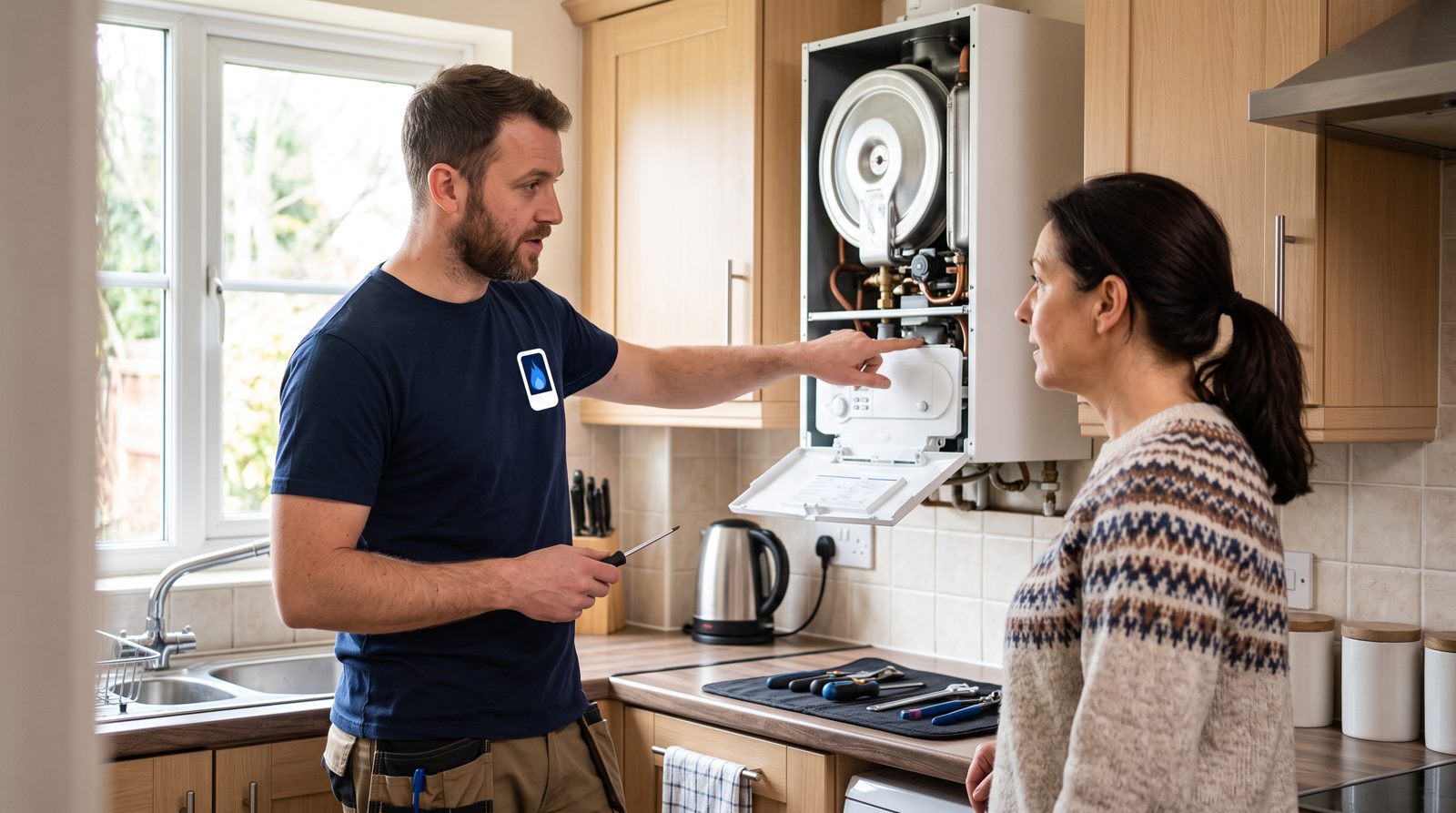
Fixed pricing flips that. The engineer diagnoses the fault, tells you exactly what is wrong, and quotes one figure for the complete fix. If the job turns out harder than expected, that is the company’s problem, not yours. You can say yes or no with a real number in front of you, which is the only fair way to make the decision. That is how every DCI Boilers repair works: diagnosis first, fixed quote second, work only after you agree.
What to do while you wait
A few faults are worth knowing about before the engineer arrives. If your pressure gauge reads low, topping up via the filling loop may restore heating temporarily. If a cold snap has stopped a condensate pipe, gently thawing the exposed section with warm (never boiling) water can bring a boiler back to life. And if you ever smell gas, do not touch the boiler at all: call the National Gas Emergency line on 0800 111 999, ventilate the house and leave it to the professionals.
If you have no heating or hot water and cannot wait for a routine appointment, DCI Boilers runs a 24/7 emergency boiler call-out service across Cornwall and Devon.
How DCI Boilers can help
DCI Boilers carries out boiler repairs on gas and oil boilers across Cornwall and Devon, from our base near Saltash. Our engineers are Gas Safe and OFTEC registered, every repair is quoted at a fixed price before work starts, and if replacement is honestly the better option we will tell you and price both. From a one-off fault to full heating services, the number we agree is the number you pay.
Need help now? Call DCI Boilers on 07888 862 603 or get a free quote.
Frequently asked questions
Do you charge a call-out fee to diagnose the fault?
Pricing is always explained clearly before we book you in, and any repair is quoted as a fixed figure once the fault is diagnosed. You will never find work done and billed that you did not agree to first.
Is my boiler repair covered by the warranty?
If the boiler is within its manufacturer warranty period and has been serviced every year by a registered engineer, many faults are covered. Check your paperwork, and if you are unsure, tell us the boiler’s make, model and age when you call and we will help you work it out.
How quickly can a boiler be repaired?
Many common faults are fixed in a single visit, because engineers carry frequently needed parts. If a part has to be ordered, a good company will tell you the expected timescale straight away and, in cold weather, advise on keeping warm in the meantime.
Why does my boiler keep breaking down?
Repeat breakdowns usually point to an underlying cause: sludge in the system, a failing component stressing others, or simply age. An engineer can identify the root cause rather than treating each symptom, and annual servicing prevents a large share of breakdowns from ever happening.