
A conventional boiler (also called a regular or heat-only boiler) works with a hot water cylinder and one or two tanks in the loft. A combi boiler replaces all of that with a single unit that heats water on demand from the mains. If your home still has tanks in the loft and a cylinder in the airing cupboard, you have a conventional system, and sooner or later you will face the question of whether to keep it or convert.
The honest answer is that combis are the better fit for most modern households, but not all of them. There are homes, and plenty of them in Cornwall and Devon, where keeping a conventional setup is genuinely the smarter move.
This guide explains the difference, what a conversion involves, and when we would advise against one.
How the two systems differ
A conventional boiler does one job: it heats water. That hot water goes to your radiators and to a cylinder, which stores hot water for your taps. The system is fed by a cold water storage tank in the loft, with a smaller feed and expansion tank alongside it, and gravity does much of the work. Many older systems also rely on a separate external pump.
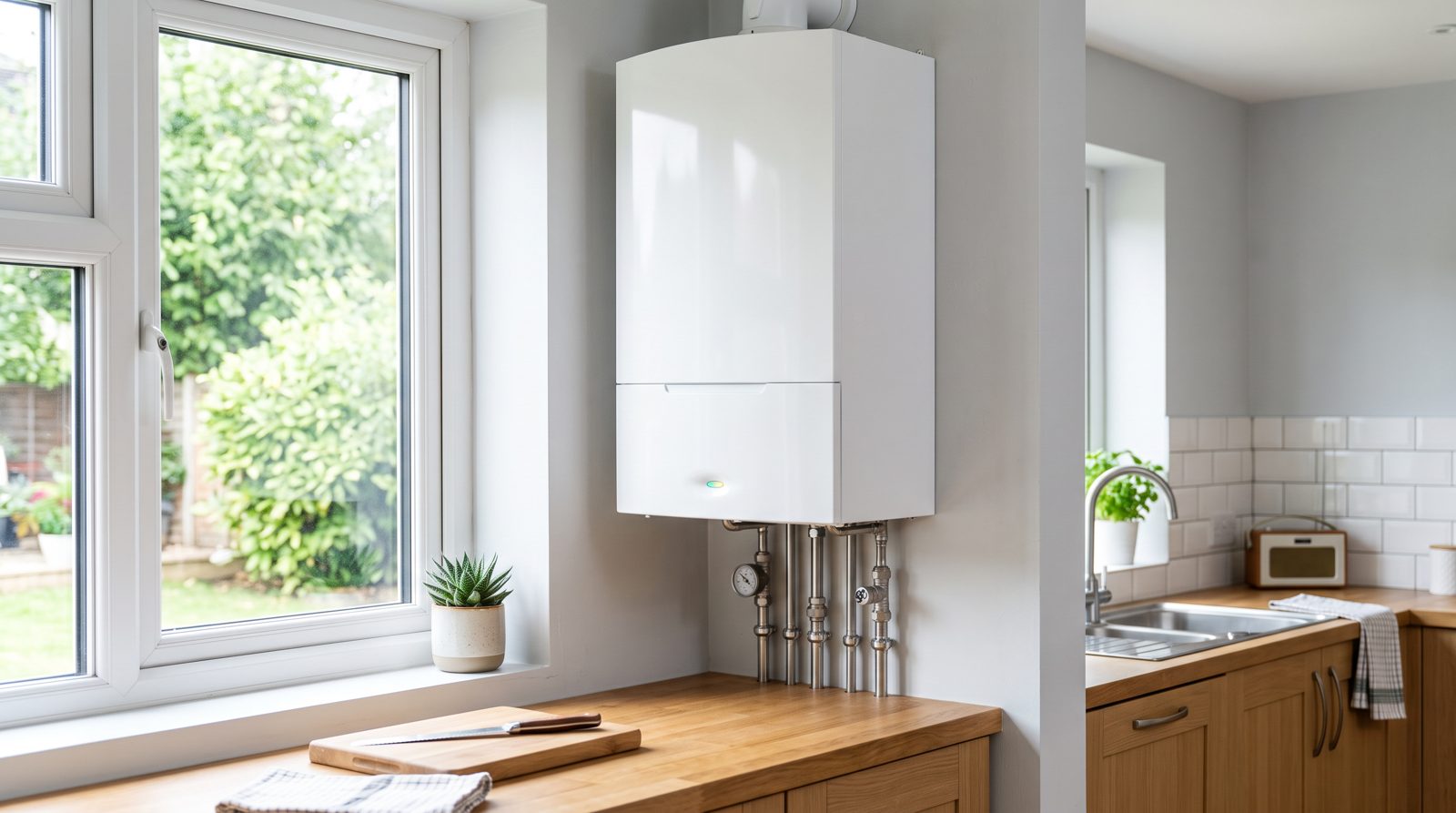
A combi boiler needs none of that. It takes cold water straight off the mains, heats it instantly when you open a tap, and runs the radiators from a sealed, pressurised loop. No loft tanks, no cylinder, no gravity.
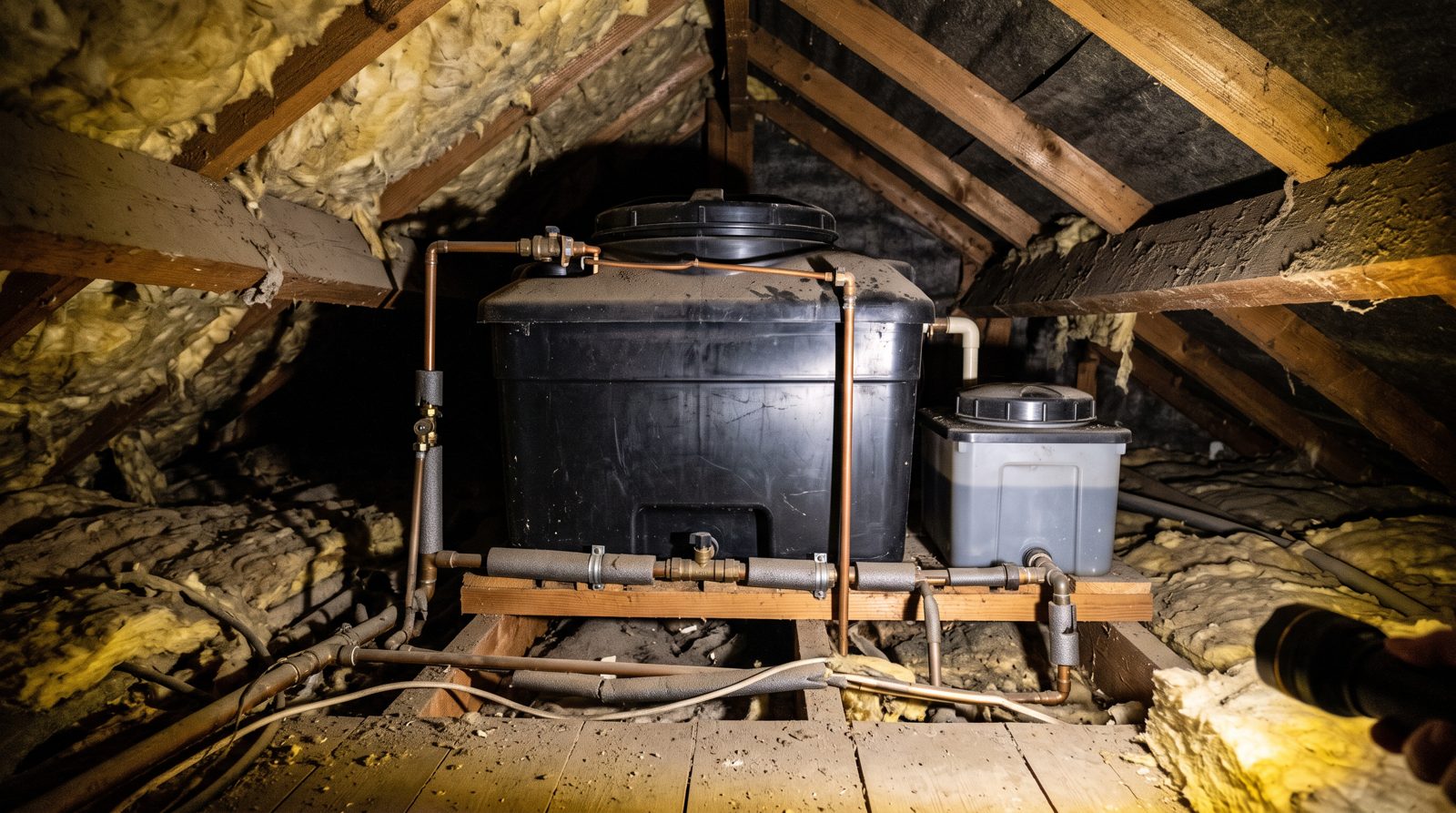
What tanks-in-the-loft setups mean in practice
Conventional systems have real drawbacks that owners tend to live with until something goes wrong:
- Low pressure at the taps. Gravity-fed hot water is only as strong as the height of the loft tank above the outlet. Upstairs showers are often weak without a pump.
- Hot water can run out. Once the cylinder is empty, you wait for it to reheat.
- Frost risk. Tanks and pipes in a cold loft can freeze in a hard winter, and a split tank makes an impressive mess of the ceilings below.
- More parts to fail. Ball valves, overflows, pumps and cylinder thermostats all age, and each is a call-out waiting to happen.
- Heat losses. Older cylinders, especially poorly lagged ones, leak heat all day.
Against that, conventional systems have quiet virtues. They deliver hot water to several outlets at once without complaint, they keep working (via the immersion heater) when the boiler fails, and they are tolerant of the low mains pressure found in some older and rural properties.
Converting from conventional to combi
Converting is routine work for a good installer, but it is a bigger job than a straight swap. It typically involves:
- Removing the cylinder and both loft tanks
- Rerouting hot and cold pipework to run from the mains and the new boiler
- Upgrading the gas supply pipe to the boiler if the existing one is undersized, which is common
- A thorough flush of the radiator circuit, because sludge from an old open-vented system will shorten the life of a new boiler
- Fitting a condensate drain, a new flue and a system filter
Expect a conversion to take longer than a like-for-like swap, usually two to three days rather than one. The reward is freed-up space in the loft and airing cupboard, mains-pressure hot water, and a system with far fewer parts to maintain. If you are considering a gas boiler replacement, the survey should always test your mains flow and pressure first, because a combi on a weak main is a downgrade, not an upgrade.
When keeping a conventional boiler makes sense
We would honestly advise keeping (and simply renewing) a conventional or heat-only boiler when:
- Your mains supply is poor. If the incoming flow rate cannot support a combi, the gravity-fed system with its stored water may actually serve you better.
- Your household uses lots of hot water at once. Big families, multiple bathrooms, back-to-back showers: stored hot water handles this better than on-demand heating.
- Your radiator pipework is old and fragile. Converting to a sealed, pressurised system puts old joints and buried pipes under higher pressure than they have ever seen. Sometimes they object. On a very old system it can be kinder to stay open-vented.
- You want backup. An immersion heater in the cylinder means a boiler breakdown does not leave you without hot water while you wait for boiler repairs.
- Budget is tight right now. A like-for-like heat-only replacement is a smaller, cheaper job than a full conversion, and a modern heat-only boiler is still a huge efficiency step up from a 20 year old one.
A middle path worth knowing about: a system boiler keeps the cylinder but removes the loft tanks, giving you stored hot water on a sealed system. For many larger homes it is the best of both.
How DCI Boilers can help
DCI Boilers installs, services and repairs all three boiler types across Cornwall and Devon, with Gas Safe registered and OFTEC registered engineers covering gas and oil systems alike. If you are weighing a conversion, we will survey the property properly, measure the mains, look at your pipework and usage, and give you a straight recommendation with a fixed upfront price. Sometimes that means a full gas boiler replacement and conversion to a combi; sometimes it means telling you to keep your cylinder. New boilers come with up to 12 year manufacturer warranties, and quotes are free.
Need help now? Call DCI Boilers on 07888 862 603 or get a free quote.
Frequently asked questions
Can any home be converted from a conventional boiler to a combi?
Most can, but not all should. The deciding factors are your mains water supply, the condition of the existing pipework and how much hot water your household uses at once. A proper survey settles it, and ours are free.
What happens to the loft tanks after a combi conversion?
They are drained, disconnected and removed, along with the cylinder. You get the loft space and airing cupboard back, and there is no longer any stored water in the roof to freeze or leak.
Is a conventional boiler less efficient than a combi?
The boilers themselves are similarly efficient these days; both are condensing appliances. The difference is the system around them. Stored hot water loses some heat from the cylinder, while a combi heats only what you use. In practice a modern boiler of either type will comfortably outperform anything more than 15 years old.
How long does a conversion take?
A straight like-for-like swap is usually done in a day. A conversion from conventional to combi, with tanks out and pipework rerouted, typically takes two to three days depending on the property.