
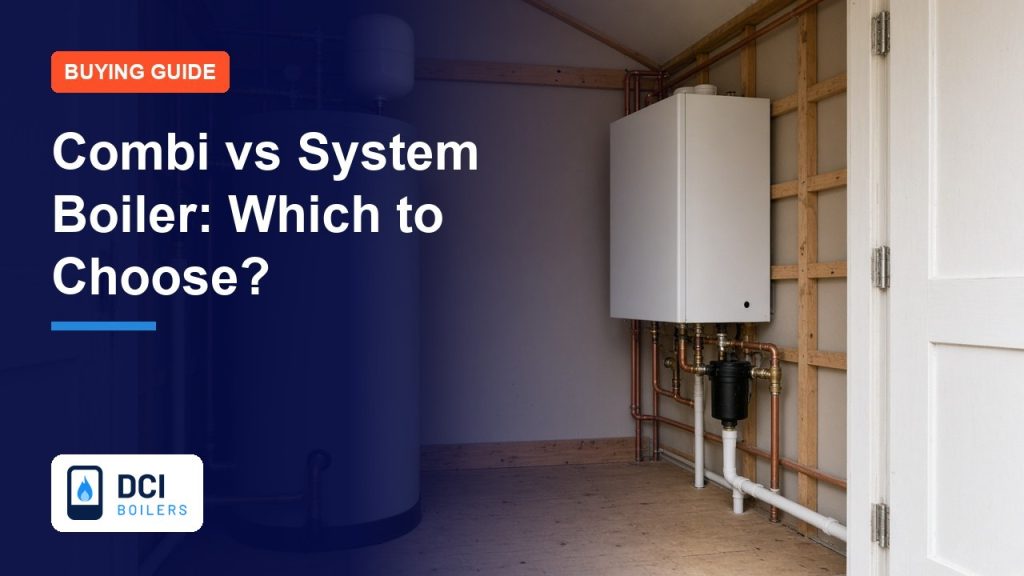
The short answer to the combi vs system boiler question is this: a combi suits smaller homes with one bathroom and decent mains pressure, while a system boiler suits larger homes where two or more showers or taps need hot water at the same time. The right choice comes down to how your household actually uses hot water, not which boiler is “best” in the abstract.
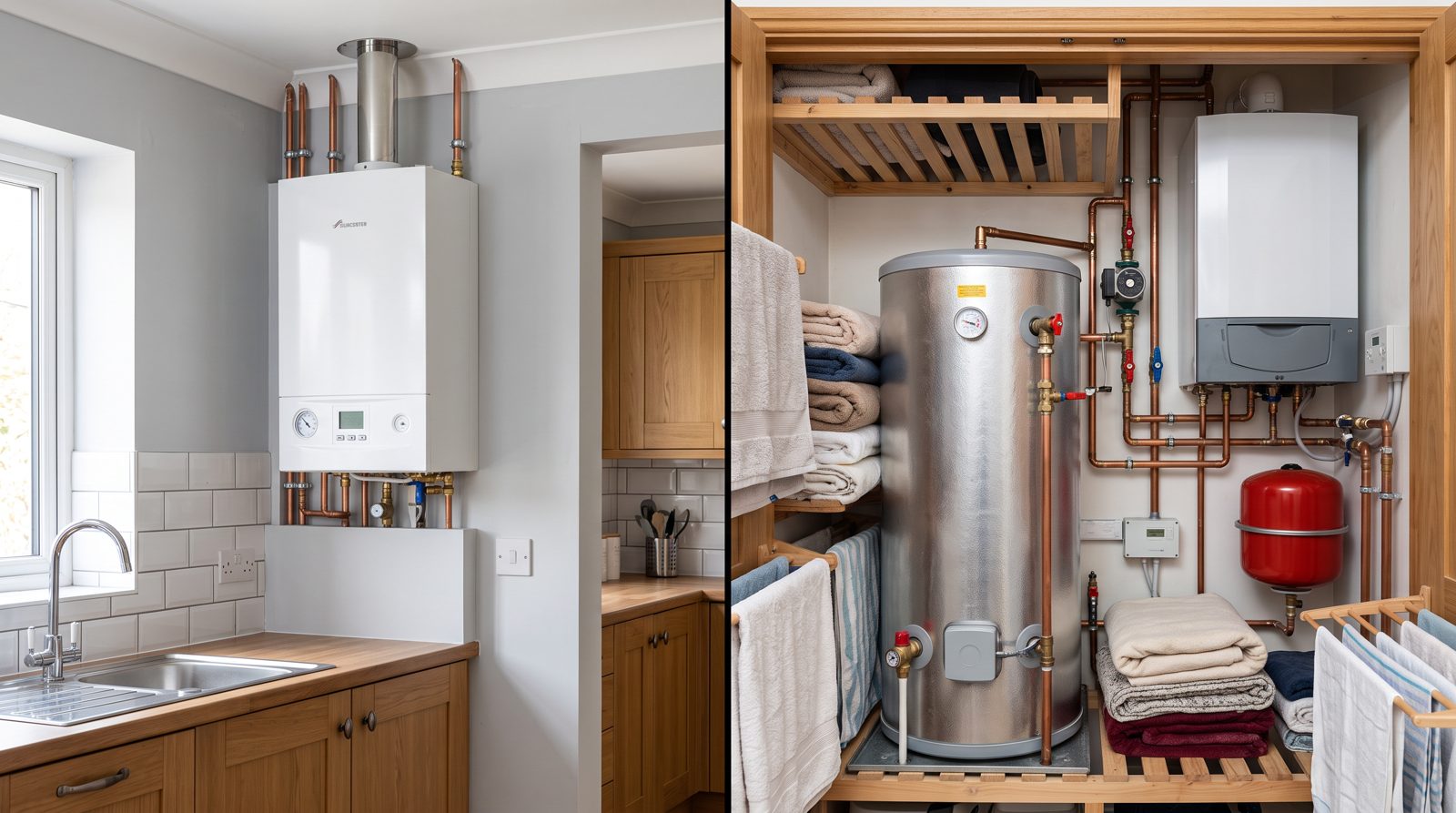
Both are modern, efficient, sealed-system boilers. The difference is where your hot water comes from. A combi heats water on demand as it flows through the boiler. A system boiler heats a cylinder of stored hot water, ready and waiting.
Here is how to decide between them, honestly, including the trade-offs installers do not always mention.
What each boiler actually does
A combi boiler is one unit that does everything. Turn on a hot tap and it heats mains water instantly on its way to the tap. No cylinder, no tanks, no stored water.
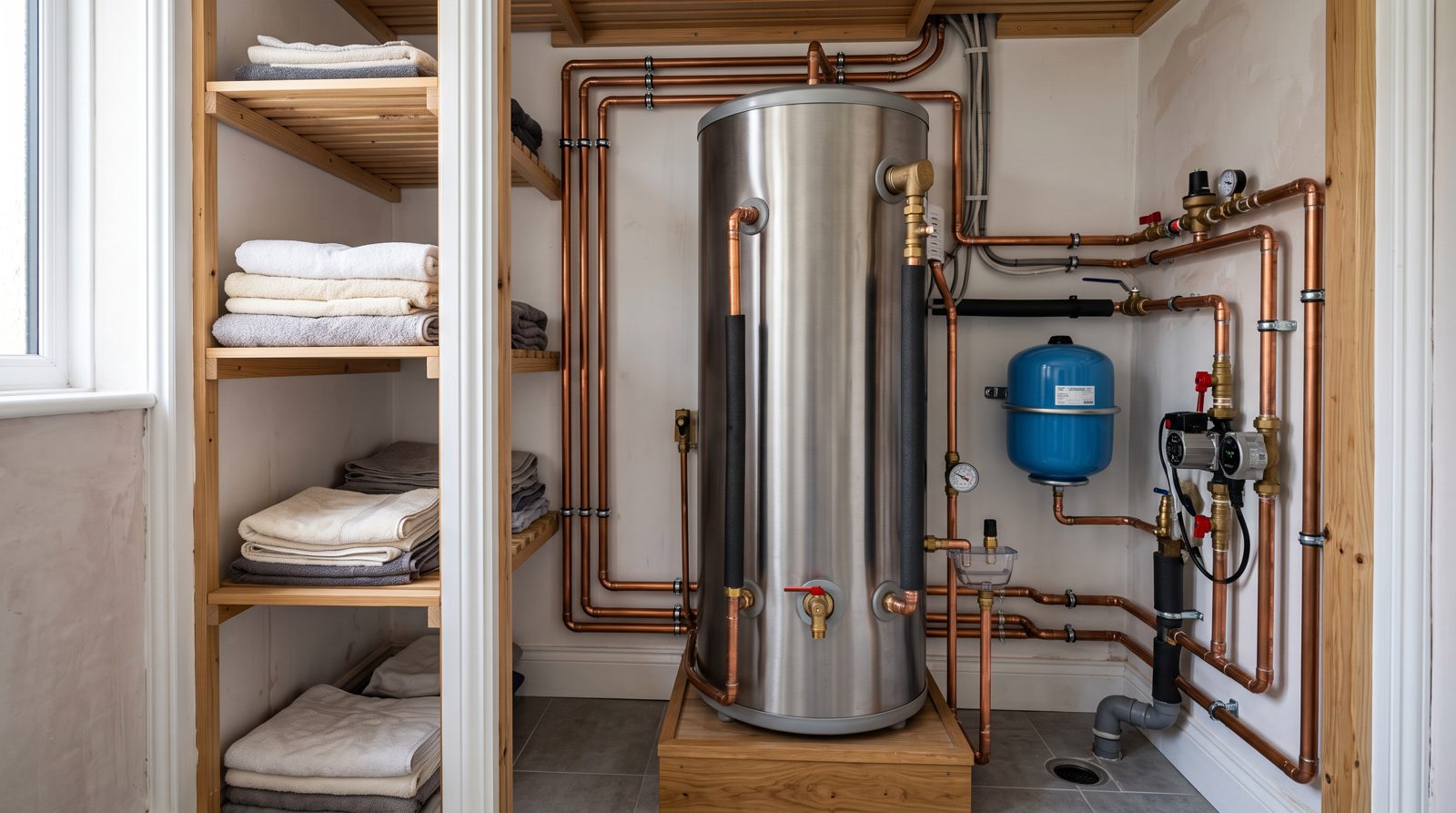
A system boiler heats your radiators the same way, but sends hot water to an insulated cylinder (usually in an airing cupboard). Your taps and showers draw from that cylinder. The main components of the heating system, such as the pump and expansion vessel, are built into the boiler, so unlike an old conventional setup there are still no tanks in the loft.
Hot water demand: the deciding factor
This is where most decisions should start. Think about your busiest half hour of the day.
If one person showers while another washes up, a combi will share its output between the two, and both will notice. The shower cools or weakens, the tap slows. For a couple or a small family with one bathroom, this hardly ever matters. For a household of five with two bathrooms and a 7am rush, it matters every single day.
A system boiler sidesteps the problem entirely. The cylinder holds a large volume of already-hot water, so two showers and the kitchen tap can all run at once, each at full flow, until the cylinder runs low. A properly sized cylinder rarely runs out in normal use, and it reheats in well under an hour.
Bathrooms: a simple rule of thumb
- One bathroom: a combi is almost always the sensible choice.
- Two bathrooms: it depends. If they are rarely used at the same time, a strong combi on a good mains supply can cope. If both showers run every morning, lean towards a system boiler.
- Three or more bathrooms: a system boiler with a cylinder, nearly every time.
Mains pressure: the factor people forget
A combi is entirely dependent on your incoming mains water. If the flow rate at your stopcock is poor, a combi will deliver poor showers no matter how powerful the boiler is. This catches people out in older properties, rural spots and homes at the end of long supply pipes, which is common enough across Cornwall and Devon.
A system boiler is more forgiving here. An unvented cylinder still uses mains pressure, but because the water is already hot and stored in volume, the experience at the tap is usually better on a marginal supply. Any installer worth their salt will measure your actual flow rate and pressure before recommending either. We do this as standard on every gas boiler replacement survey, because sizing a boiler without measuring the mains is guesswork.
The honest trade-offs
Where the combi wins:
- Cheaper and simpler to install, with less pipework and no cylinder to buy
- Saves the airing cupboard space entirely
- No stored water means no heat lost from a cylinder overnight
- Hot water never “runs out” in the way a cylinder can
Where the system boiler wins:
- Multiple outlets at once, all at full performance
- Better real-world showers on weaker mains supplies
- An immersion heater in the cylinder gives you backup hot water if the boiler ever fails
- Pairs well with solar panels and future heating upgrades, because the cylinder can take heat from more than one source
Where each loses: the combi struggles with simultaneous demand and offers no backup if it breaks down, so boiler repairs become urgent rather than inconvenient. The system boiler costs more to install, gives up a cupboard, and loses a little heat from the cylinder even with modern insulation.
Switching from one to the other
Swapping like for like is always the simplest job. Converting from a system boiler to a combi means removing the cylinder and rerouting pipework; converting the other way means finding space for a cylinder. Both are perfectly routine for a competent installer, but they add time and cost to the job, so the decision deserves to be made properly rather than by default.
How DCI Boilers can help
DCI Boilers installs both combi and system boilers across Cornwall and Devon, with Gas Safe registered and OFTEC registered engineers. We start with a proper survey: we measure your mains flow and pressure, count bathrooms, ask how your household really uses hot water, and only then recommend a boiler. You get a fixed upfront price for your gas boiler replacement, up to 12 year manufacturer warranties on the boilers we fit, and a straight answer if the boiler you had in mind is not the right one for your home.
Need help now? Call DCI Boilers on 07888 862 603 or get a free quote.
Frequently asked questions
Is a system boiler more expensive than a combi?
Usually, yes, because you are also buying and plumbing in a hot water cylinder. As a rough guide the difference is in the hundreds rather than the thousands, but every home is different, which is why we quote fixed prices after a survey rather than off a price list.
Can I replace my system boiler with a combi?
In most homes, yes. The cylinder is removed and the hot water pipework is rerouted to the new boiler. Whether you should depends on your bathrooms and mains supply. If two showers run at once in your house, keeping a cylinder is often the wiser move.
Does a system boiler waste energy keeping water hot?
Modern cylinders are very well insulated, so standing losses are small, but they are not zero. A combi only heats what you use. For low-usage households that tips the balance towards a combi; for busy households the convenience of stored hot water usually outweighs it.
What if my mains pressure is poor?
Then a combi is likely to disappoint, and we would say so before fitting one. Options include a system boiler with a cylinder or, in some cases, improving the incoming supply. It is exactly what we check first on a survey, and the advice costs nothing.