

The mains cold water is usually only turned off for short periods during a boiler installation, typically while the engineer connects the new boiler to the cold supply and when a cylinder or tank is being removed. Hot water and heating are off for most of the day, because the boiler that provides them is being replaced. On a straightforward swap you can expect cold water at the kitchen tap for nearly all of the day and hot water back on by the evening.
Knowing which supply goes off and when makes the day easy to plan around. This guide covers each one in turn, explains why a combi conversion is different, and lists the handful of things worth doing before the engineer arrives.
Cold water: off in short bursts
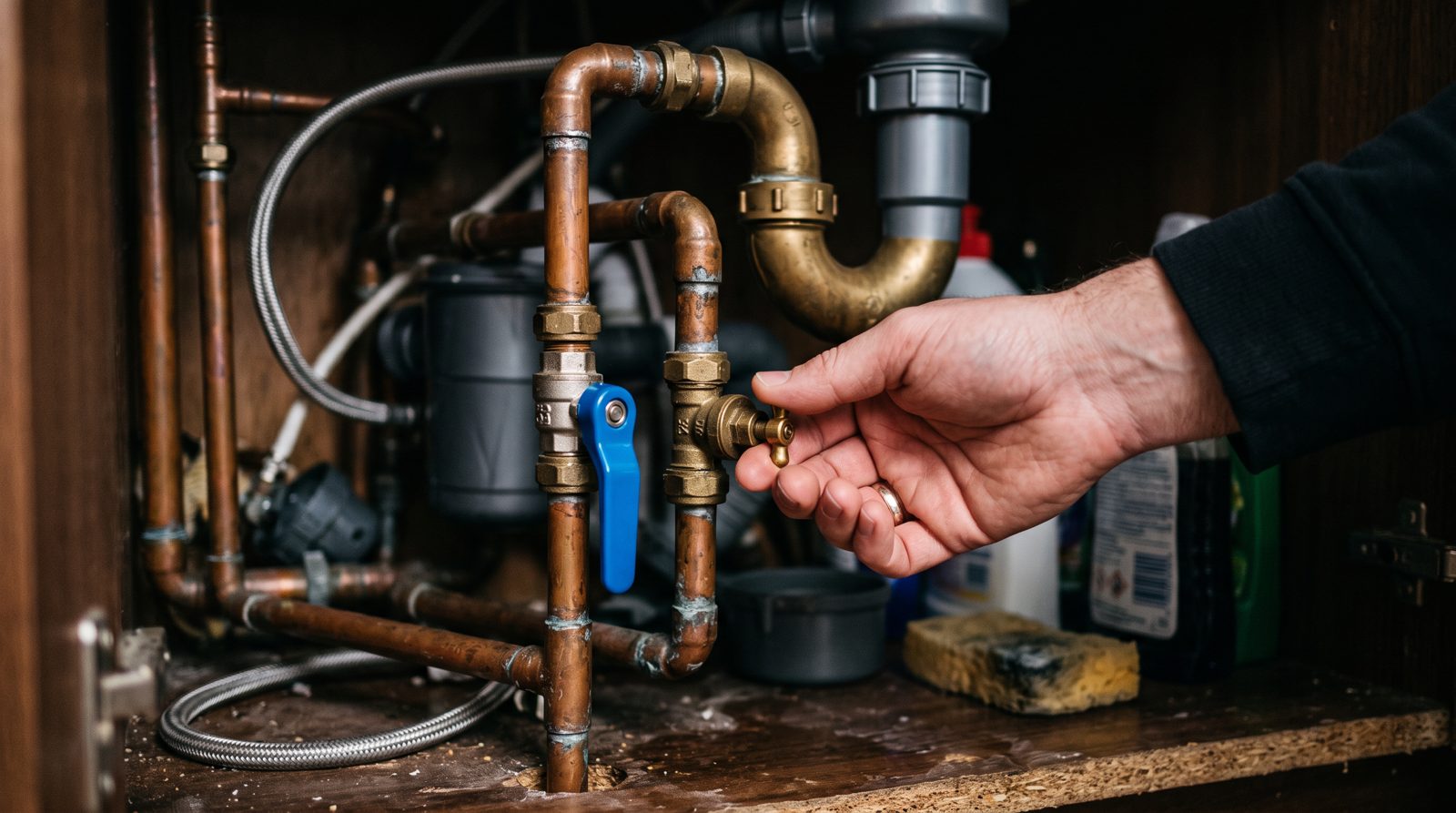
The engineer needs to isolate the cold feed to the boiler to disconnect the old one and connect the new one. If the boiler has its own isolation valve, which most modern installations do, the rest of the house keeps its cold water throughout. If not, the main stopcock is turned off for the few minutes it takes to fit an isolation valve, and then turned back on. Either way, the kettle and the toilet are rarely out of action for long.
The exception is a conversion from a conventional system to a combi, where the cold water storage tank in the loft is removed. The stopcock stays off while the tank is drained and disconnected and the pipework is re-routed to the mains. That can be an hour or two, usually in the morning.
Hot water: off for most of the day
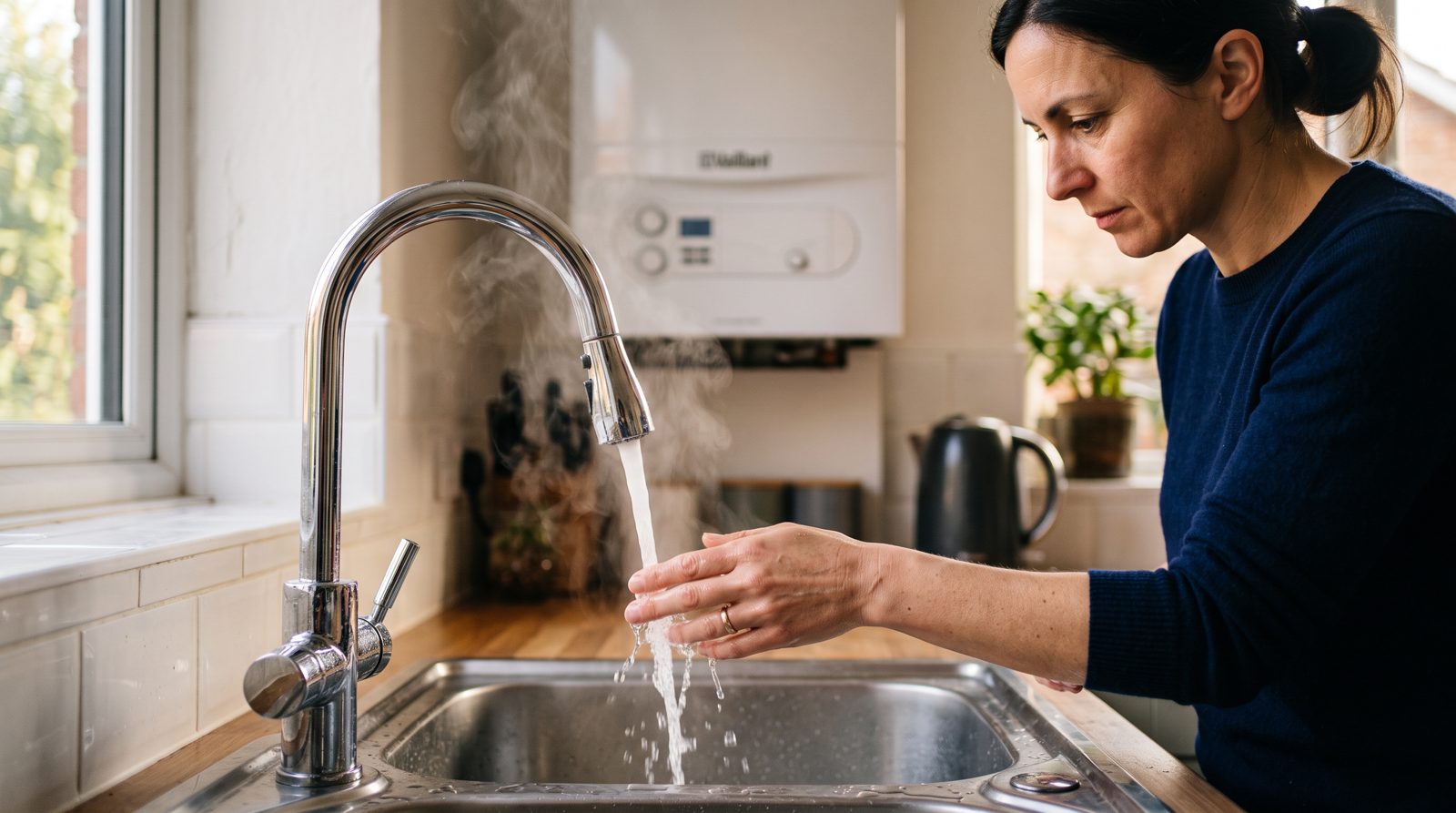
On a combi, hot water comes straight from the boiler, so there is none from the moment the old boiler is drained until the new one is commissioned, normally late afternoon. On a system or conventional boiler with a cylinder, the cylinder keeps whatever hot water is in it, so you may have a warm tap for a while on the morning of the job, but the engineer will not be able to reheat it until the new boiler is running. Shower before the engineer arrives and the day passes without much notice.
Heating: off for the day
The heating system is drained to remove the old boiler and flush the pipework, so the radiators are cold until the system is refilled and the new boiler fires. In summer that is irrelevant. In winter, a plug-in electric heater in the room you use most makes the day comfortable. The engineer will get the heating running as one of the last steps, and will usually leave it on so you can check every radiator warms up.
Gas or oil: off until commissioning
The gas supply to the boiler is isolated at the start, and if the meter has to be worked on the whole supply may be off for a while, which affects a gas hob or fire. On an oil system the fuel line is closed at the tank or the boiler. Both are restored and tested during commissioning, and a gas engineer will check for leaks and confirm the working pressure before leaving.
Electricity: only the boiler’s own circuit
The boiler runs from a fused spur, which is switched off during the work. The rest of the house’s electricity is unaffected, unless the engineer needs to install a new spur for a relocated boiler, in which case the consumer unit may be switched off briefly.
How to plan the day
- Fill the kettle and a couple of jugs in the morning, just in case the stopcock goes off at an awkward moment.
- Shower and run the dishwasher or washing machine before the engineer arrives.
- Keep an electric heater to hand in winter.
- Tell the engineer if anyone in the house has a medical need for heat or water, so they can prioritise getting one supply back.
- Expect the engineer to run the heating and hot water before leaving, so you can see everything working.
Our guide to what happens during a boiler installation walks through the whole day in order.
Two-day jobs
On a conversion or relocation that runs over two days, most engineers aim to have hot water and heating working at the end of day one, even if some of the finishing work waits for day two. Ask at the survey what the plan is, so the overnight is not a surprise.
How DCI Boilers can help
DCI Boilers installs gas and oil boilers across Cornwall and Devon and plans each job so you are without water and heat for as little time as possible. Our Gas Safe and OFTEC registered engineers explain at the survey what will be off and when, and quote a fixed price for the whole job. Read more on our gas boiler replacement page, or if your boiler has already failed and you need heat back quickly, our emergency boiler call-out service is available around the clock.
Need help now? Call DCI Boilers on 07888 862 603 or get a free quote.
Frequently asked questions
Can I use the toilet during a boiler installation?
Almost always, yes. The cold water is only off briefly, and a toilet cistern holds a flush in reserve anyway.
How long will I be without hot water?
On a combi swap, from early morning until the new boiler is commissioned in the late afternoon. With a cylinder, whatever hot water is stored lasts until it is used.
Will the engineer turn my gas off?
The supply to the boiler is isolated for the whole job. The rest of the gas supply is normally unaffected unless work at the meter is needed.
Should I be worried about a day without heating in winter?
No. A single electric heater covers one room comfortably, and the engineer will have the heating running before they leave.