
A frozen condensate pipe is the single most common reason boilers stop working during a cold snap. The condensate pipe is the white or grey plastic pipe that carries waste water from a modern condensing boiler to a drain, and where it runs outside, the water in it can freeze solid. The boiler senses the blockage and shuts itself down, usually with a gurgling noise and a fault code, on precisely the morning you need heating most.
The fix is refreshingly simple. Pour warm (never boiling) water over the frozen section of pipe, reset the boiler, and in most cases the heating is back within minutes. No engineer, no parts, no bill.
Even so, a pipe that freezes once will freeze again unless you deal with the cause, and there are a couple of situations where the symptoms point to something else that genuine boiler repairs should handle. Here is how to identify the problem, thaw it safely, and stop it coming back.
What the condensate pipe does
Every modern condensing boiler squeezes extra heat from its flue gases, and doing so produces a couple of litres an hour of slightly acidic water called condensate. That water drains away through a plastic pipe, typically 21.5mm or wider, running from the bottom of the boiler to an internal drain, an outside gulley or a soakaway.
The weak point is any section that runs outside or through an unheated garage or loft. In freezing weather, condensate trickling through in small amounts can freeze layer by layer until the pipe blocks completely. The boiler cannot safely get rid of its waste water, so it locks out.
How to tell your condensate pipe has frozen
The signs are distinctive, especially when they arrive together during sub-zero weather:
- A gurgling or bubbling sound from the boiler or the flue as it tries and fails to drain.
- A fault code on the display. Common examples include EA on many Ideal models, D5 or similar drainage faults on others, and dedicated condensate warnings on newer boilers. Your manual will confirm.
- The boiler fires briefly then cuts out, over and over.
- It happened overnight in freezing weather. If the boiler was fine at bedtime and dead on a frosty morning, the condensate pipe is the prime suspect.
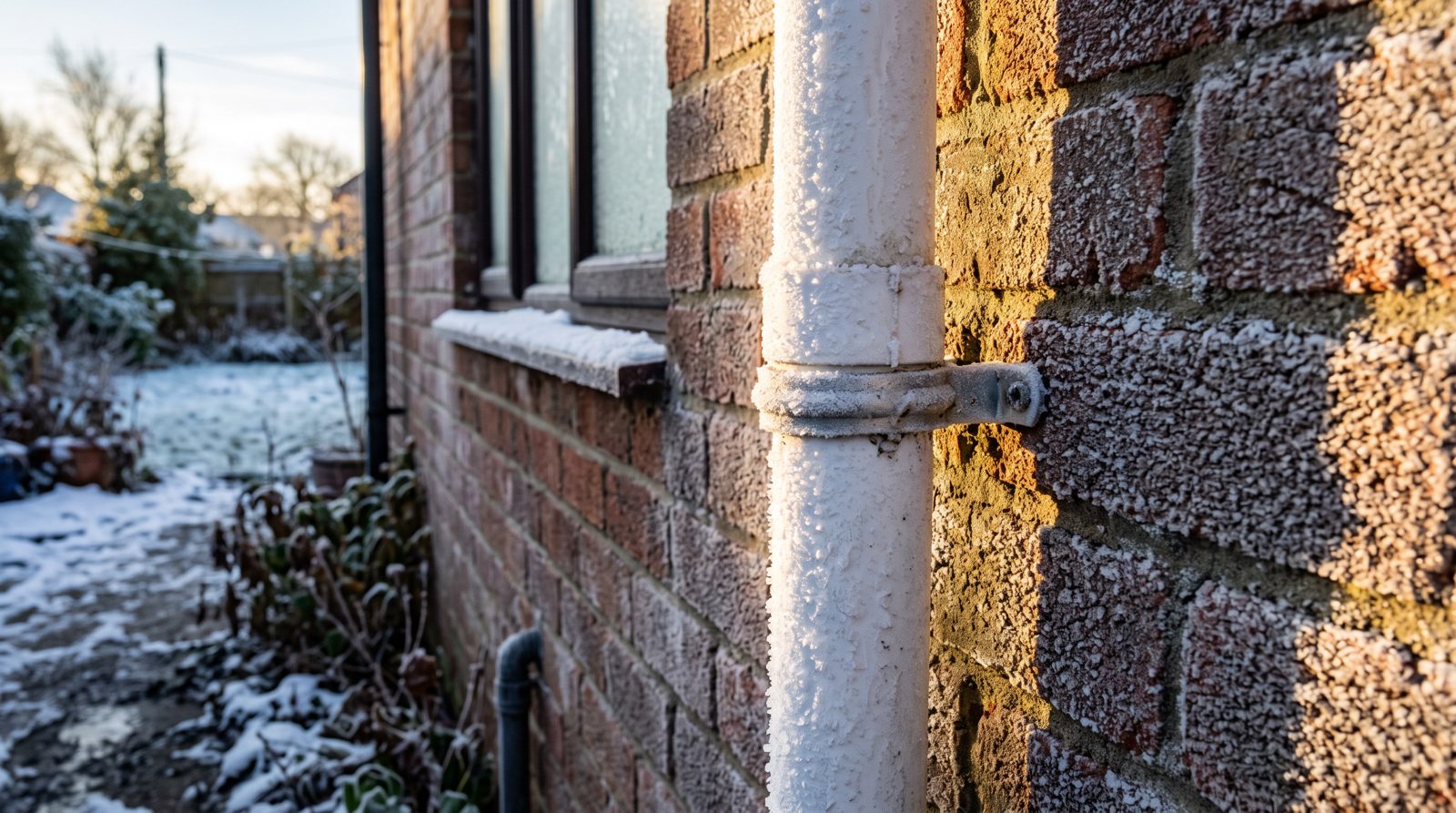
- Visible ice in or around the external pipe, particularly at the open end, at bends and at the drain.
If it is mild outside and none of the above fits, the problem is likely elsewhere. Low pressure, power and controls are the next things to check, and our guide to a combi boiler with no hot water runs through those in order.
How to thaw a frozen condensate pipe safely
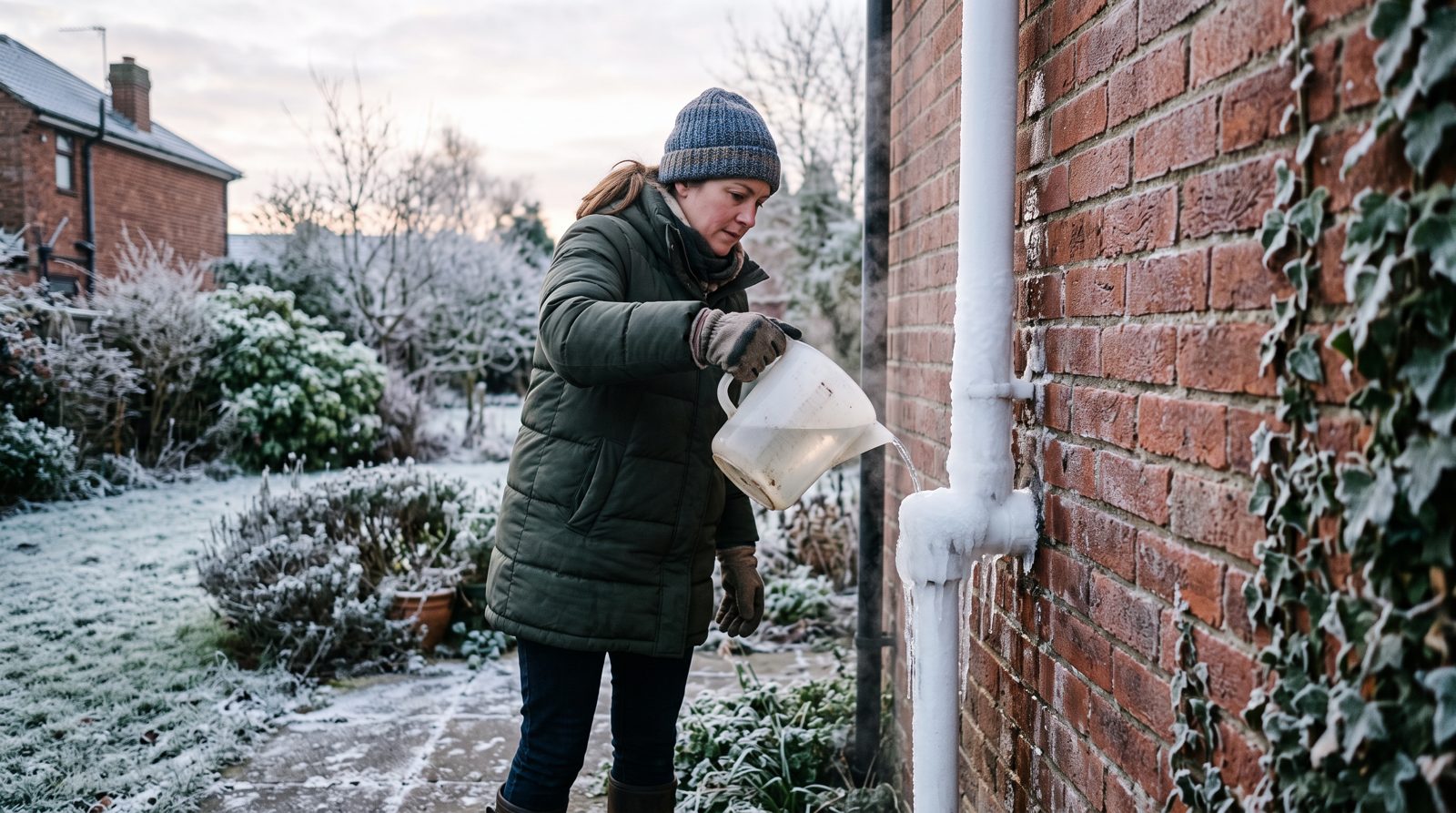
- Find the frozen section. Follow the plastic pipe from the boiler to where it exits the wall. The blockage is nearly always in the external run, usually at the open end, at elbows, or where the pipe sags.
- Warm some water. Hot tap water is ideal. Never use boiling water. Boiling water can crack or distort the plastic pipe, and it flash-freezes on the ground into an ice sheet under your feet.
- Pour it along the frozen section. A watering can makes this easy. Start at the open end and work back. A hot water bottle or a heat wrap held against the pipe works too, and is safer if the pipe is above head height. Do not climb ladders on icy ground for a high pipe; call us instead.
- Listen for the release. You will often hear the trapped water glug away as the ice clears.
- Reset the boiler. Press the reset button or follow the display instructions. The boiler should fire and stay lit.
- Repeat if needed. A long freeze may need more than one pass of warm water.
What not to do: no boiling kettles, no blowtorches or heat guns on plastic pipe, and no removing the boiler casing. If the boiler will not reset after the pipe is clearly thawed, stop there. Something else is wrong, and anything inside the boiler is a job for a Gas Safe registered engineer only.
How to stop it freezing again
Thawing gets you through the morning. Prevention gets you through the winter.
- Lag the external pipe. Waterproof foam insulation (Class O pipe lagging) on the entire outdoor run is the single best fix, and costs a few pounds per metre.
- Increase the fall. The pipe should slope steadily so condensate drains quickly rather than sitting in the pipe waiting to freeze. Sagging sections are freeze magnets.
- Upsize the pipe. Where an external run is unavoidable, upgrading it to 32mm or larger gives the condensate a bigger passage that takes far longer to block with ice.
- Shorten or reroute the external run. The gold-standard fix is terminating the condensate internally to a waste pipe, so nothing runs outside at all. Not every layout allows it, but it is worth asking about.
- In a severe cold snap, running the heating low and continuous overnight keeps condensate flowing and gives ice less chance to form.
These are quick jobs for an engineer, and we routinely sort lagging and pipework falls during annual boiler servicing so the problem never recurs.
How DCI Boilers can help
If your boiler is down in freezing weather and thawing the pipe has not brought it back, or you cannot safely reach the frozen section, DCI Boilers runs a 24/7 emergency boiler call-out service across Cornwall and Devon. Our Gas Safe and OFTEC registered engineers will get you warm again, then fix the cause properly, whether that is lagging and re-routing the condensate pipe or deeper boiler repairs, all with fixed upfront pricing.
Need help now? Call DCI Boilers on 07888 862 603 or get a free quote.
Frequently asked questions
Can I pour boiling water on a frozen condensate pipe?
No. Boiling water can crack or deform the plastic pipe and creates an ice sheet where it lands. Warm tap water is all you need, poured along the frozen section, or a hot water bottle held against the pipe.
Will a frozen condensate pipe damage my boiler?
Generally no. The boiler shuts down as a protection measure and restarts happily once the pipe is clear. The real cost of a frozen pipe is a cold house, which is why lagging the pipe afterwards is so worthwhile.
Why does my condensate pipe keep freezing?
Usually because the external run is unlagged, too narrow, too long or poorly sloped, letting condensate sit in the pipe in freezing air. Lagging, upsizing to 32mm and improving the fall are inexpensive fixes an engineer can do in a single visit.
How do I know it is the condensate pipe and not something else?
The combination to look for is freezing weather, a gurgling noise and a drainage-related fault code, with the boiler cutting out repeatedly. If it is mild outside, check the pressure gauge, power and controls first, as those are likelier culprits.