

Should your next heating system be a heat pump or a new boiler? The honest answer is that it depends on your house, not on which technology is winning the argument online. Heat pumps are excellent in the right property. Modern boilers remain the pragmatic choice in plenty of others. Anyone who tells you one answer fits every home in Cornwall and Devon is selling you something.
As heating engineers working across the South West, we see the full range: snug new-builds where a heat pump makes perfect sense, and draughty granite cottages where it would struggle without serious investment first. This guide sets out the real differences so you can make the call with clear eyes.
How the two systems differ
A boiler burns fuel to make a small amount of very hot water, quickly. It can blast radiators up to high temperatures and reheat a cold house fast. An air source heat pump works differently: it extracts heat from the outside air using electricity, delivering more heat energy than the electricity it consumes, but at lower temperatures and more gradually. A heat pump wants to run gently for long periods, keeping the house steadily warm, rather than firing hard twice a day.
That difference in temperature and rhythm drives everything else in this comparison. It is why insulation and radiator sizing matter so much more for a heat pump than for a boiler.
Insulation: the make-or-break factor
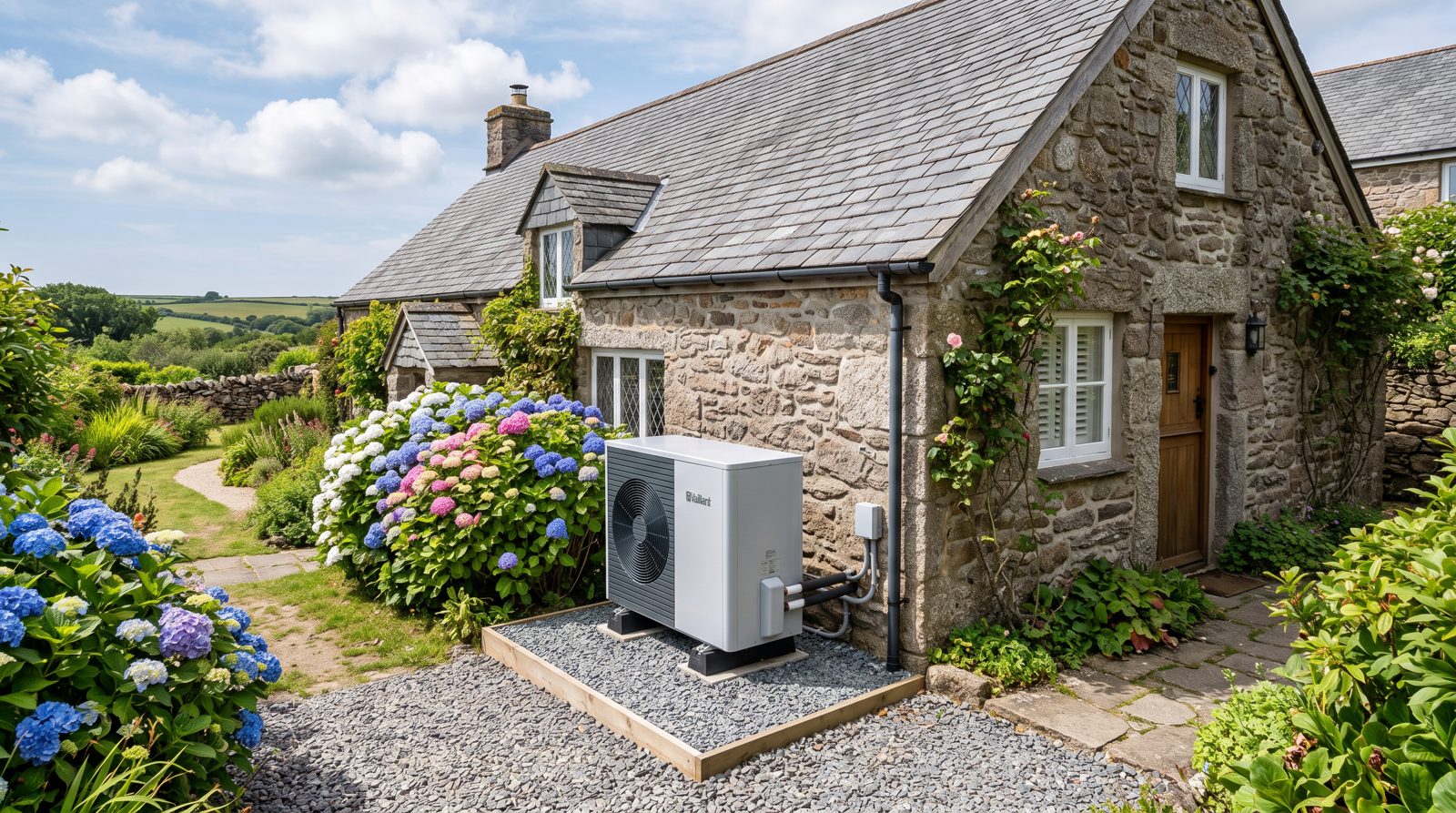
Because a heat pump delivers heat at lower temperatures, the house has to hold on to that heat. In a well-insulated home the gentle, continuous warmth of a heat pump is comfortable and efficient. In a leaky home the heat escapes as fast as the pump supplies it, the system works flat out, running costs climb and rooms never feel properly warm.
This is where the South West’s housing stock deserves an honest look. Cornwall and Devon have a lot of solid-wall granite and cob properties, many with limited loft insulation, single glazing or no cavity to fill. These homes can absolutely be made heat pump ready, but the insulation work often needs doing first, and it belongs in the budget. A boiler is far more forgiving of an imperfect building, because it can simply supply hotter water to compensate.
The useful question is not “are heat pumps any good” but “is my house, as it stands today, a good home for one”.
Radiators and hot water: what usually needs changing
Radiators sized for a boiler running hot are often too small for a heat pump running cooler. A proper heat pump installation therefore usually involves upsizing several radiators (or fitting underfloor heating, which suits heat pumps beautifully), and that adds cost and disruption. It is normal and expected, not a sign of a bad installer, but it belongs in your comparison.
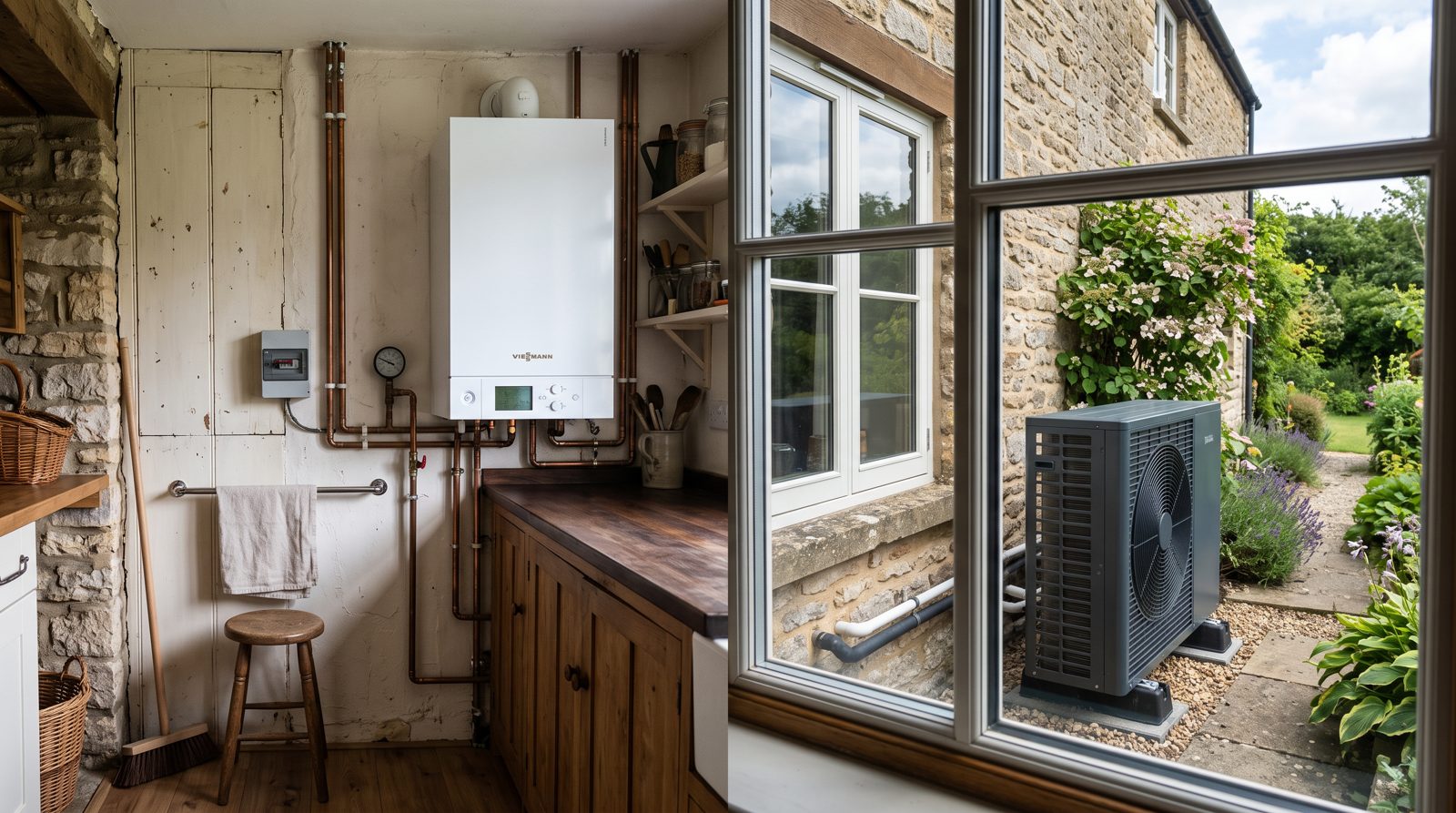
Hot water changes too. A heat pump needs a hot water cylinder, so if your home currently runs on a combi boiler with no cylinder, you will need to find space for one. Homes that already have a cylinder and decent radiators start several steps ahead.
Upfront cost vs running cost
On upfront cost, boilers win comfortably. A like-for-like boiler replacement is a fraction of the price of a full heat pump conversion once radiator upgrades, a cylinder and any insulation work are counted. The government’s Boiler Upgrade Scheme narrows the gap with a substantial grant towards a heat pump, and it is well worth checking on gov.uk, but even with the grant a conversion is typically the bigger spend.
Running costs are closer than the headline efficiency figures suggest, because electricity costs several times more per unit than mains gas in the UK. A heat pump’s efficiency advantage has to overcome that price gap. In a well-insulated home with a well-designed system, running costs can undercut a gas boiler, especially on a time-of-use electricity tariff. In a poorly insulated home, a heat pump can genuinely cost more to run than the boiler it replaced. For oil-heated homes the sums shift again, since heating oil prices swing around, and a heat pump displacing oil in a suitable property is often one of the stronger cases.
We deliberately are not quoting precise figures here, because fuel prices, tariffs, grants and your own house change the answer. Treat anyone’s confident universal number with suspicion, and get calculations done for your actual property.
When each one is the right call
A heat pump shines when: the home is well insulated or being renovated anyway, there is space for a cylinder and a suitably sized outdoor unit, the radiators are generous or underfloor heating is planned, and you are taking a long-term view, particularly with the grant reducing the upfront gap. New-builds and deep retrofits are its natural territory, and off-grid homes replacing expensive fuels can do well too.
A modern boiler is the pragmatic choice when: your existing boiler has failed and you need heat this week, the budget will not stretch to insulation plus radiators plus cylinder plus pump, the property is hard to insulate, or you are not planning to stay long enough to see the payback. Replacing an old boiler with a modern condensing model and good controls is itself a real efficiency upgrade, and it keeps the heat pump option open for a future date when the house is better prepared. For rural homes off the gas grid, a modern condensing oil boiler remains a sensible, economical option, and our oil boiler replacement service covers exactly that.
How DCI Boilers can help
DCI Boilers gives you the honest version of this conversation for your own house. We are Gas Safe and OFTEC registered engineers covering Cornwall and Devon, and we will tell you plainly whether your home is ready for a heat pump or whether a gas boiler replacement is the sensible move today, even when that answer earns us less. If a new boiler is right, we install leading brands with fixed upfront pricing and manufacturer warranties of up to 12 years on qualifying installations, and our boiler servicing keeps it running efficiently for the long haul. Whatever you decide, you will decide it with the facts straight, and a free fixed quote for the gas boiler replacement option to compare against.
Need help now? Call DCI Boilers on 07888 862 603 or get a free quote.
Frequently asked questions
Do heat pumps work in cold weather?
Yes. Modern air source heat pumps keep working well below freezing, and they are standard in far colder countries than ours, so Cornwall and Devon’s mild winters are no obstacle. Efficiency does dip on the coldest days, one more reason the system must be sized properly rather than optimistically.
Is it illegal to install a new gas or oil boiler now?
No. You can replace a gas or oil boiler today, and no ban on replacement boilers in existing homes is in force. Policy on future dates has shifted more than once, so check gov.uk for the current position, but nothing requires you to switch to a heat pump when your boiler fails.
Can I get a grant for a heat pump?
The Boiler Upgrade Scheme currently offers homeowners in England and Wales a grant towards a heat pump, claimed through an MCS certified installer. Eligibility has conditions, so check the current rules on gov.uk and never treat qualification as guaranteed until it is confirmed.
Should I wait for heat pumps to get cheaper, or replace my boiler now?
If your boiler is reliable, you have time to plan, insulate and choose. If it is on its last legs, a modern boiler now is a rational bridge: an immediate efficiency gain, with nothing stopping a heat pump conversion later once the house is ready.