
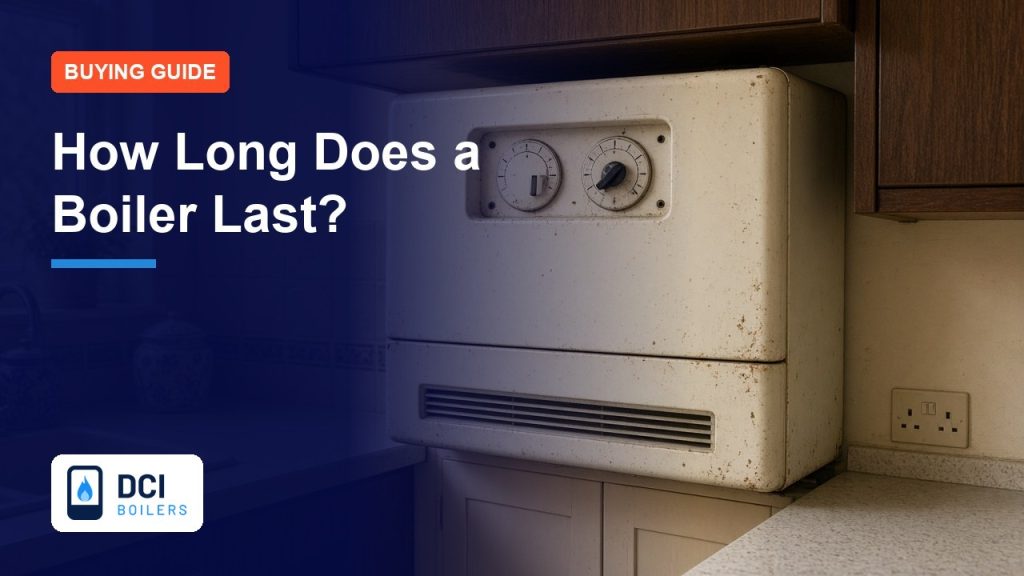
Most boilers last somewhere between 10 and 15 years. A well-maintained, well-installed boiler on a clean system can push past that; a neglected one on a sludged system can fail years earlier. Age alone is not the trigger to replace, but once a boiler passes the ten-year mark, every significant repair deserves a moment of honest arithmetic before you pay for it.
The good news is that boilers rarely die without warning. They decline, and the decline shows. Knowing the signs, and knowing how to weigh a repair bill against a replacement, saves you from the two classic mistakes: scrapping a boiler that had years left in it, and pouring repair money into one that did not.
What decides how long a boiler lasts
- Servicing. An annual boiler servicing visit is the single biggest factor. It keeps combustion clean and efficient, catches small faults early, and keeps the manufacturer warranty valid. Skipped services shorten lives and void warranties.
- Water quality. Sludge and scale in the radiator circuit are boiler killers. They clog heat exchangers and grind away at pumps. A system filter and proper inhibitor levels add years.
- Installation quality. A correctly sized, correctly commissioned boiler works gently. An oversized or badly set up one short cycles its way to an early grave.
- Usage. A boiler running a big busy household simply works harder than one in a small flat.
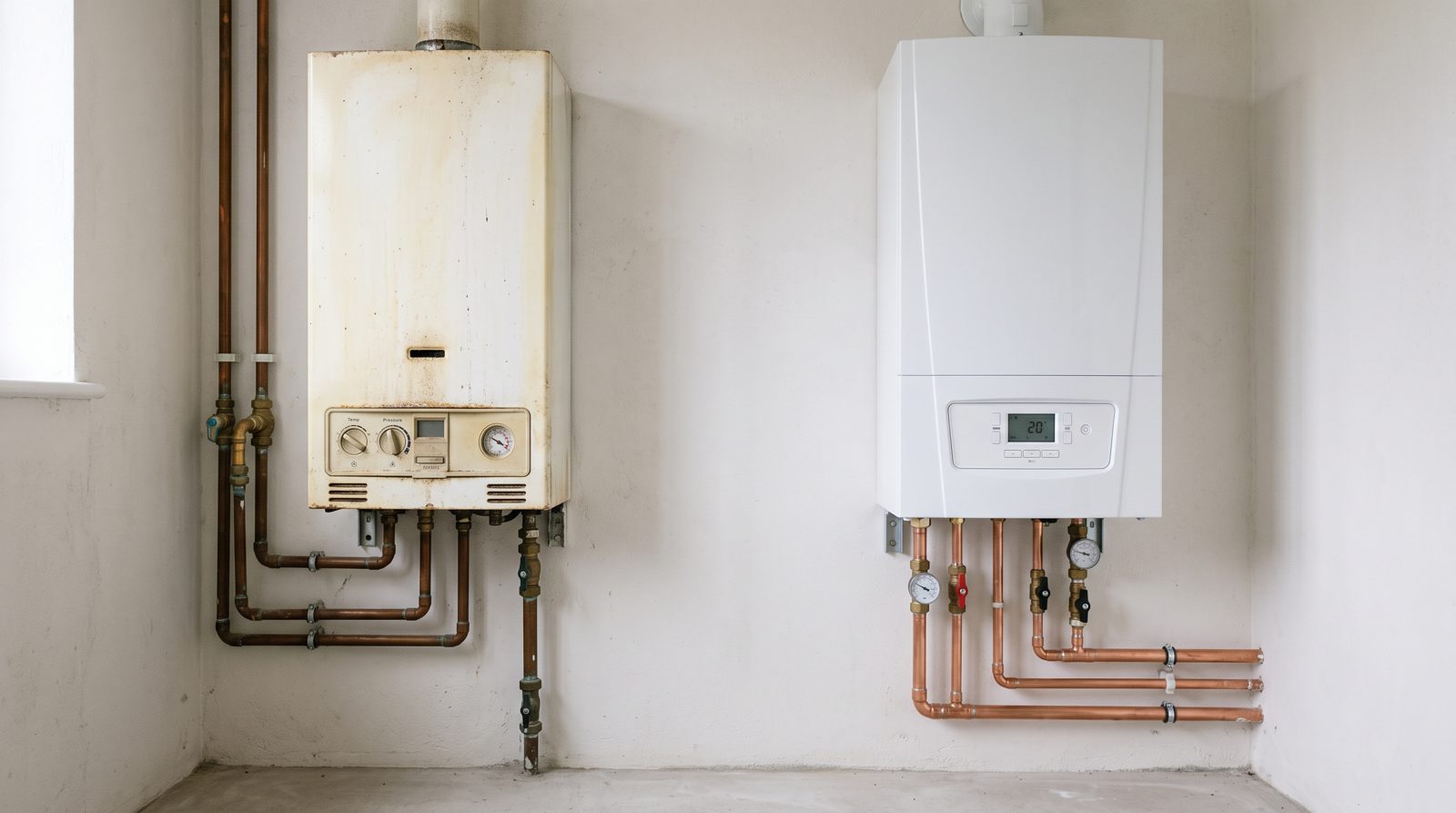
Warning signs your boiler is on the way out
No single one of these condemns a boiler, but two or three together, on an older unit, tell a clear story:
- Breakdowns are becoming a pattern. One fault in a decade is normal. Two or three call-outs in a couple of years means the failures are queueing up.
- Rising bills without a rate rise. Old boilers lose efficiency as components wear and heat exchangers foul, so the same warmth costs more gas.
- New noises. Banging, kettling (a rumbling like a boiling kettle), whining or clunking usually point to scale, sludge or a struggling pump.
- Slow or inconsistent heat. Radiators that take an age to warm, or hot water that fluctuates, suggest the boiler is no longer keeping up.
- Yellow or lazy flame, or soot marks. These need attention immediately, not eventually, as they can indicate incomplete combustion. Turn it off and call an engineer.
- Leaks and pressure loss. Repeatedly topping up the pressure means water is going somewhere it should not.
- Parts are getting hard to find. Once a model is long discontinued, spares get scarce and expensive, and one unobtainable part can end the story regardless of the rest.
The repair vs replace maths
There is a simple, honest way to think about a big repair quote. Weigh three things:
1. The repair cost against the boiler’s remaining life. A common rule of thumb: if a repair costs more than roughly half the price of a new boiler, and the boiler is over ten years old, replacement is usually the better spend. Paying a large sum to buy perhaps one or two more winters is poor value; the same money is a big chunk of a new boiler with up to a 12 year manufacturer warranty.
2. The pattern, not just this fault. A single failed part on an otherwise healthy eight-year-old boiler is nearly always worth fixing. A third fault in eighteen months on a fourteen-year-old boiler is the boiler telling you something. Add up what you have spent on boiler repairs in the last two years before approving the next one.
3. Running costs. A modern condensing boiler is meaningfully more efficient than one from the early 2000s, especially if the old one is worn. The saving on fuel will not pay for a new boiler overnight, but over its life it genuinely narrows the gap, and it starts the day the new one is commissioned.
What this maths never includes: panic. The worst time to make a replacement decision is mid-breakdown in January. If your boiler is in the warning-sign zone, get a replacement quote now, while it still works, so that if the day comes you are choosing calmly from a plan rather than urgently from a cold house.

Can you make an old boiler last longer?
Often, yes. Annual servicing, a system flush if sludge has built up, a magnetic filter, and correct inhibitor levels can add real years to a middle-aged boiler. What they cannot do is reverse a cracked heat exchanger or make discontinued parts exist. A good engineer will tell you plainly which side of that line your boiler is on.
How DCI Boilers can help
DCI Boilers services, repairs and replaces boilers across Cornwall and Devon, with Gas Safe registered and OFTEC registered engineers. If your boiler is misbehaving, we will diagnose it honestly: where a repair makes sense we will fix it, and where the sums point to replacement we will show you why, with a fixed upfront price for a gas boiler replacement so there are no surprises. New boilers we install come with up to 12 year manufacturer warranties, and we are available 24/7 if yours has already given up. If you are weighing up the decision, a free gas boiler replacement quote costs nothing and turns guesswork into numbers.
Need help now? Call DCI Boilers on 07888 862 603 or get a free quote.
Frequently asked questions
Should I replace a boiler that still works?
Not on age alone. A healthy, serviced 12-year-old boiler can carry on. Replace when the warning signs stack up: repeated faults, rising bills, scarce parts. The sensible middle step is getting a quote in advance so you can act quickly if it does fail.
How long do combi boilers last compared with other types?
Broadly the same, around 10 to 15 years with decent care. Lifespan has more to do with servicing, water quality and installation than with whether the boiler is a combi, system or heat-only model.
Does an annual service really make a difference?
Yes, on three counts: it keeps the boiler efficient, it catches small faults before they become failures, and it keeps the manufacturer warranty valid. Most warranties require an annual service, so skipping one can cost you the cover exactly when you need it.
My boiler is leaking. Repair or replace?
It depends entirely on what is leaking. A weeping valve or fitting is a routine repair. A leak from the heat exchanger on an older boiler is often terminal, because the part can cost a large share of a new boiler. Have it diagnosed before deciding anything.