

An oil boiler should be serviced once a year, every year, by an OFTEC registered technician. That is the manufacturer’s requirement, the warranty condition and the safety advice, and it applies whether the boiler is two years old or twenty. Some heavily used boilers, and some commercial installations, benefit from a check every six months, but for a typical home the rule is simple: one full oil boiler service every twelve months.
Oil boilers need this more than gas boilers do, and it is worth understanding why, because the reasons are exactly what goes wrong when the service gets skipped.
Why oil boilers need servicing more than most
Heating oil does not burn as cleanly as mains gas. Every hour of running deposits fine soot and combustion residue on the baffles and heat exchanger, and the burner nozzle, which atomises the oil into a fine spray, gradually wears and clogs. Oil also travels from an outdoor tank through a supply line and filter before it ever reaches the burner, and that journey introduces water, sludge and debris that gas systems never have to deal with.
None of this means oil boilers are unreliable. It means they are consumable-and-cleaning machines: give them a proper annual strip-down and they run beautifully for years. Leave them alone and the decline is slow, invisible and then suddenly expensive.
What happens if you skip a service
Your fuel bills creep up
Soot is an insulator. As it builds up on the heat exchanger, less of the heat from the flame reaches your water and more disappears up the flue. A worn nozzle makes the spray pattern ragged, so the oil burns less completely. The boiler still works, so nothing prompts you to act, but you quietly burn more oil for the same warmth all winter. Given what a tank of heating oil costs, the annual service has a habit of paying for itself.
Small faults become winter breakdowns
Most of the oil boiler failures we attend in January trace back to something a service would have caught in September: a fouled nozzle, a blocked filter, a tired flexible fuel line, sludge pulled through from the bottom of the tank. Boilers rarely fail on a mild afternoon. They fail on the coldest week of the year, when they are working hardest, and that is when everyone else’s has failed too and engineers are stretched. If yours does let go, our boiler repairs team covers Cornwall and Devon with 24/7 emergency boiler call-out cover, but we would far rather see you once a year in the warm months.
Safety risks build unseen
A poorly burning oil boiler can produce carbon monoxide, and blocked flues or leaking seals can let combustion gases where they should not be. The combustion analysis and flue checks in a proper service exist precisely to catch this. A carbon monoxide alarm near the boiler is essential too, but it is the backstop, not the substitute.
Your warranty can be voided
Manufacturer warranties, including the long ones of up to 12 years available on boilers we install, are conditional on documented annual servicing. Miss a year and a future claim can be refused, which turns a free repair under warranty into a bill. Keep the paperwork from every service; it also helps when you sell the house.
Do not forget the tank
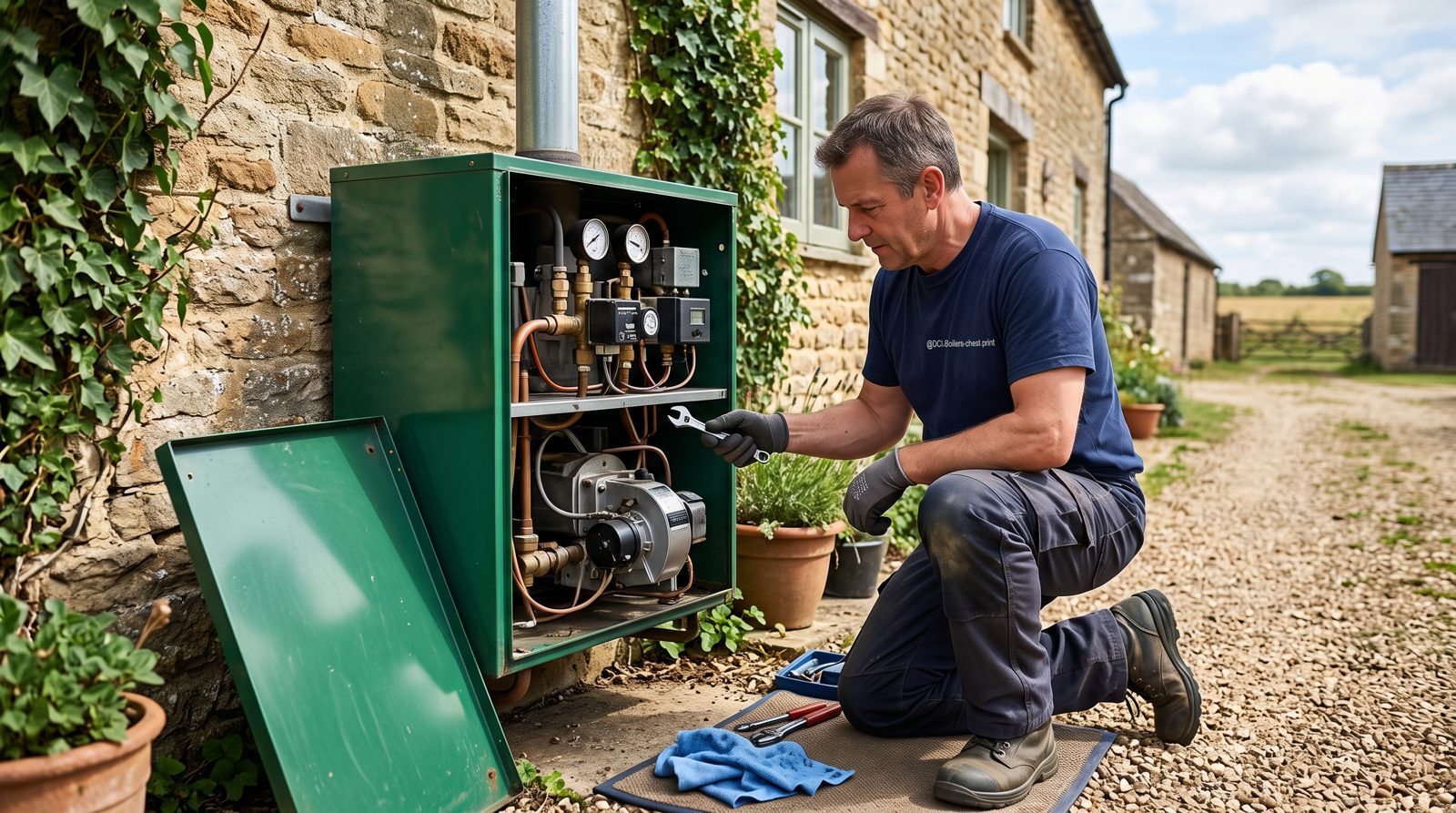
An oil heating system is more than the boiler, and a proper annual visit looks at the whole chain. The storage tank should be checked for cracks, bulging, rust and leaks, the gauge and vent checked, and the supply line and filters inspected. Water condenses inside oil tanks over time and sludge settles at the bottom; both eventually find their way to the burner if left unmanaged. Tank problems are also an environmental liability. A leaking tank can contaminate soil and watercourses, and clean-up costs dwarf anything a service would have cost. If your tank is decades old, ask for an honest opinion on its condition before winter rather than after.
When is the best time to book?
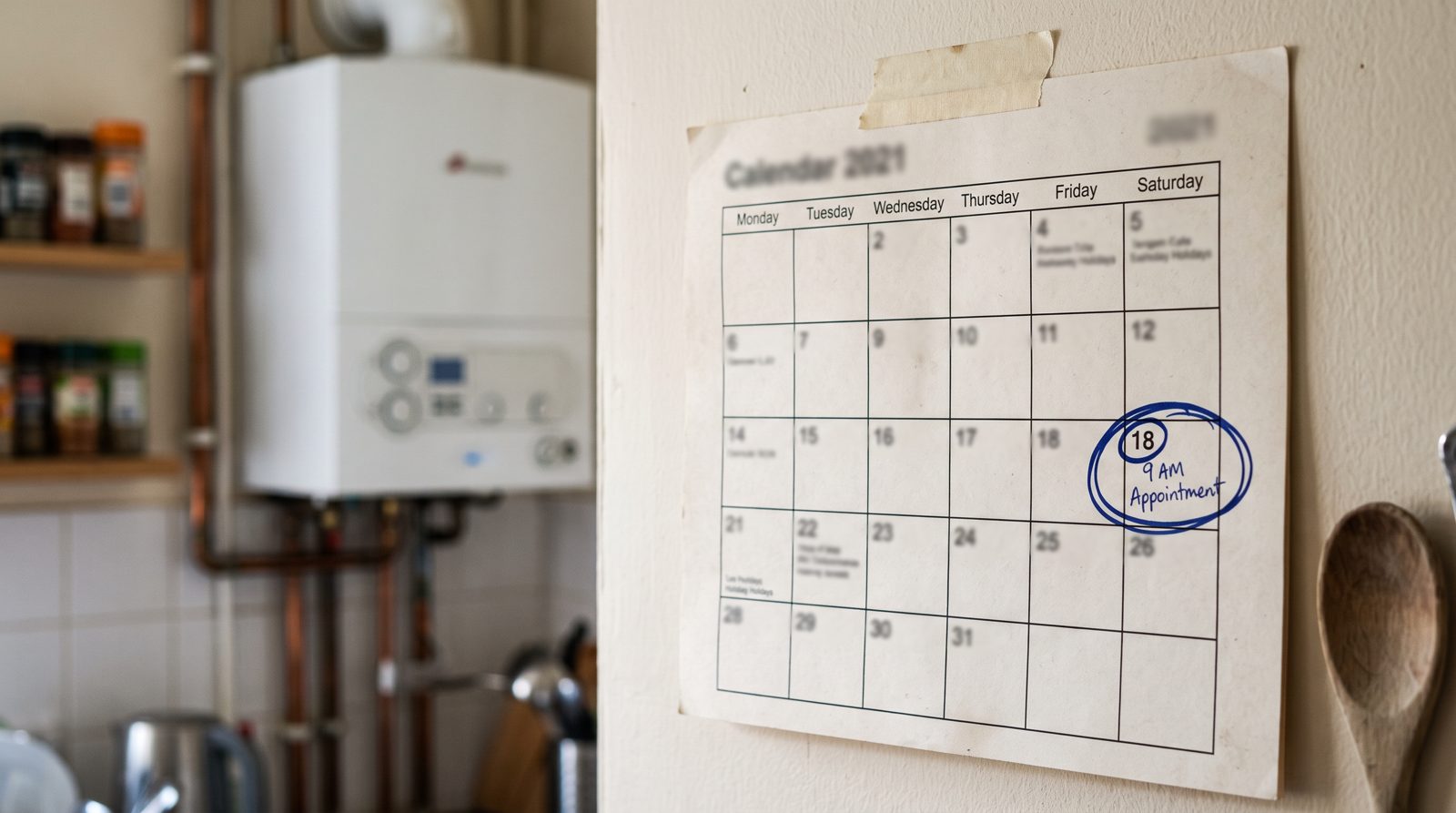
Late spring to early autumn. The boiler has just finished its hardest months, engineers have better availability, and any parts or tank issues can be sorted long before you depend on the heating again. Booking the service for the same month every year, and putting it in the calendar, is the easiest habit that keeps an oil boiler healthy. If yours has already gone more than a year, do not wait for a convenient season. Book it now; a late service is far better than another skipped one.
How DCI Boilers can help
DCI Boilers provides OFTEC registered boiler servicing across Cornwall and Devon, from our base near Saltash. A service with us is the full job: burner strip-down, new nozzle where needed, filters, combustion analysis and a proper look at your tank and fuel line, with fixed upfront pricing and a straight report on anything we find. If the boiler is beyond sensible repair we will say so honestly and talk you through oil boiler replacement options, never before.
Need help now? Call DCI Boilers on 07888 862 603 or get a free quote.
Want to know exactly what the visit involves? Read our step-by-step guide to what an oil boiler service includes, or book your annual boiler servicing visit today.
Frequently asked questions
How often should an oil boiler be serviced?
Once every twelve months, by an OFTEC registered technician. Annual servicing is the manufacturer’s requirement, keeps the warranty valid, maintains efficiency and catches wearing parts like the nozzle and filters before they cause a breakdown.
Can I service my own oil boiler?
You can keep an eye on the tank gauge and check for drips or unusual smells, but the service itself needs an OFTEC registered technician. It involves stripping the burner, setting combustion with an analyser and checking the flue, none of which can be done properly without training and equipment.
How long does an oil boiler service take?
Typically around an hour to an hour and a half for a straightforward domestic boiler. It can take longer if the boiler has missed services and needs extra cleaning, or if the tank and fuel line need attention.
What happens if an oil boiler is not serviced?
Efficiency falls as soot builds up, fuel bills rise, and small wearing faults develop into winter breakdowns. Skipped services can also void the manufacturer warranty and allow safety issues, such as poor combustion or flue problems, to go undetected.