
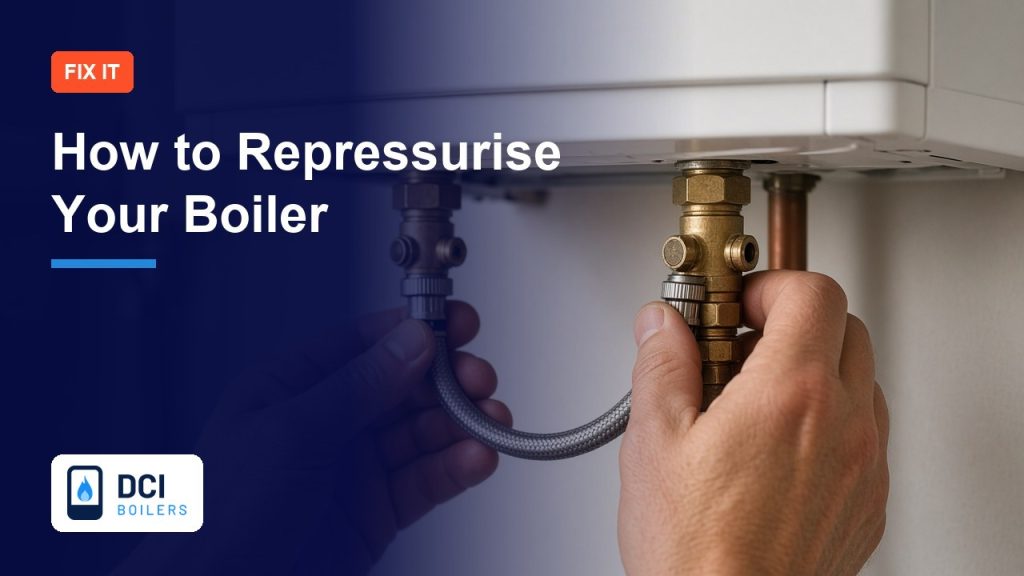
If your boiler is showing a low pressure warning, the fix is usually quick and you can do it yourself. To repressurise a boiler, you open the filling loop (a small braided hose or built-in valve underneath the boiler) to let fresh water into the heating system, watch the pressure gauge climb to between 1 and 1.5 bar, then close the valves again. The whole job takes about five minutes and needs no tools beyond your hands, though a cloth to catch drips is handy.
Modern combi and system boilers run on a sealed circuit of water. Over time a little pressure is lost naturally, especially after bleeding radiators, and the boiler may lock out or flash a fault code until pressure is restored. Topping up is normal home maintenance, in the same way you would top up washer fluid in a car.
That said, there are a couple of safety caveats worth knowing before you start, and one big warning sign to watch for afterwards. If your boiler needs repressurising again within days or weeks, water is escaping somewhere and you should book boiler repairs rather than keep topping up. Here is the full step-by-step.
Before you start: find the filling loop and gauge
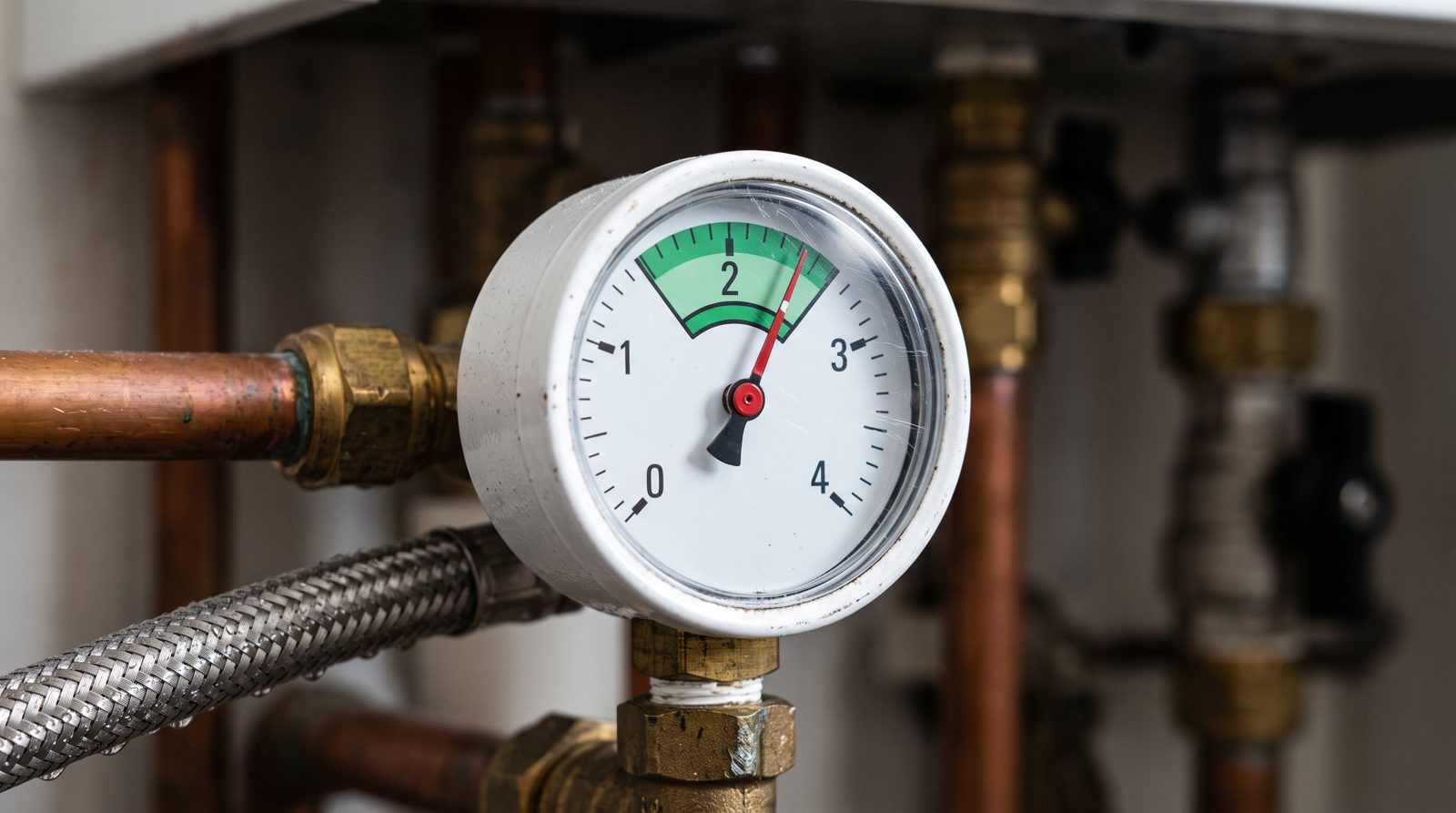
The pressure gauge is on the front or underside of the boiler, either a dial with a needle or a digital display. Most gauges mark the healthy zone in green.
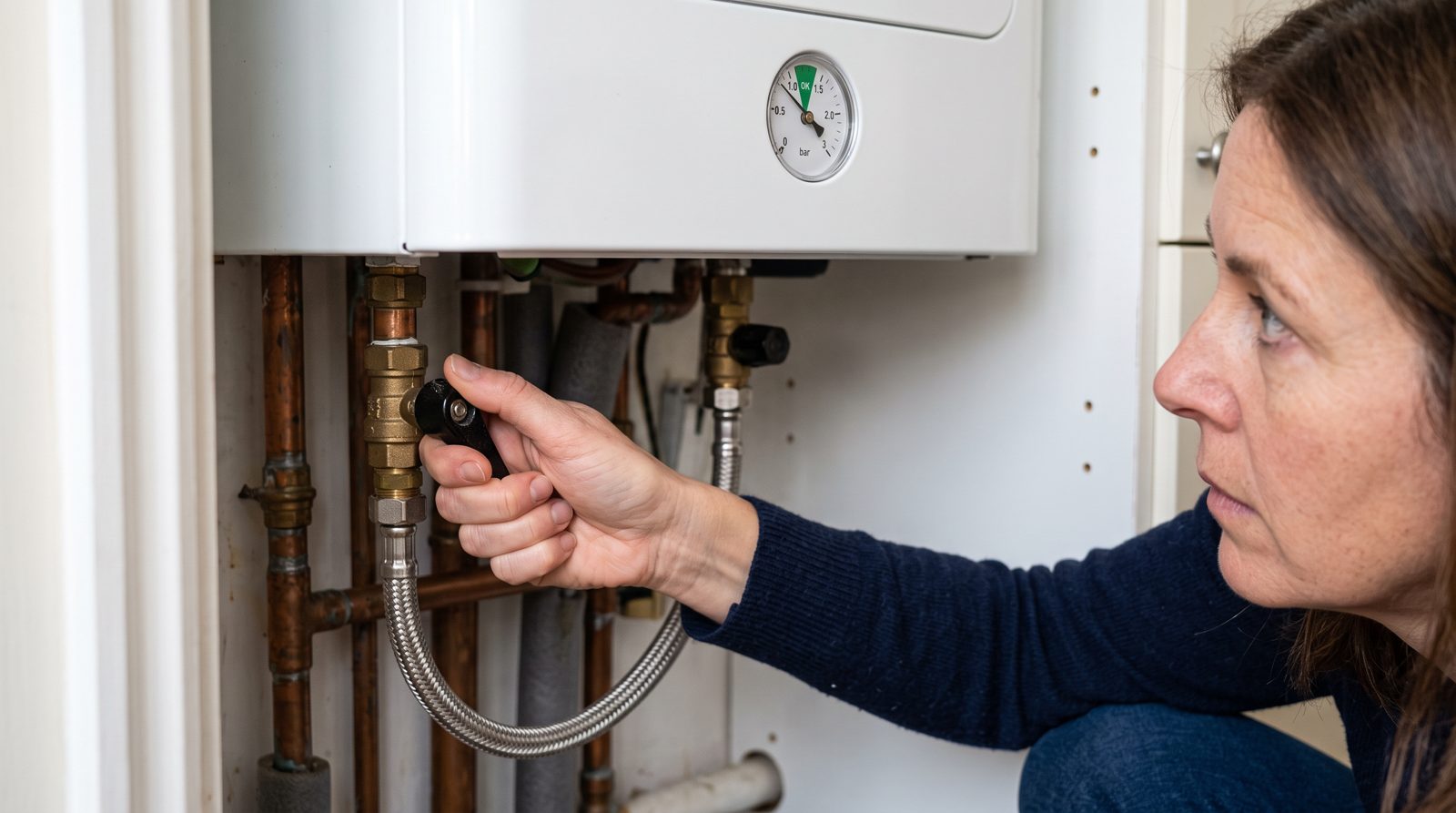
The filling loop is how water gets into the system. It is usually one of these:
- An external braided hose beneath the boiler, silver and flexible, with a small valve at each end. On some systems the hose is detached and stored nearby.
- A built-in filling key or lever, common on Worcester Bosch and some Ideal and Vaillant models, where a plastic key or blue lever underneath the boiler does the same job.
If you cannot find yours, the boiler manual will show it, and most manufacturers publish the manual free online. When in doubt, take a photo of the underside of your boiler and give us a call, we are happy to point you in the right direction.
How to repressurise a boiler: step by step
- Switch the boiler off and let it cool. You want a cold reading, and cool pipework is safer to work around. Give it half an hour or so after the heating has been running.
- Check the current pressure. Note where the needle sits. Below 1 bar confirms the system needs topping up.
- Attach the filling loop if it is the detachable type. Hand-tighten both ends onto their connection points. No spanners needed, snug is enough.
- Open the first valve fully. Turn the valve handle so it lines up with the pipe.
- Open the second valve slowly. You will hear water flowing into the system. Keep your eyes on the pressure gauge the whole time.
- Stop at 1 to 1.5 bar. Close the second valve as the needle reaches the green zone, then close the first. Around 1.2 bar cold is a comfortable target for most boilers.
- Close both valves firmly and remove the hose if detachable. Expect a small dribble of trapped water as it comes off, hence the cloth. Store the hose somewhere you will find it again.
- Switch the boiler back on. Most boilers reset themselves once pressure is restored. Some need a reset button pressed, your display will say so.
Run the heating and check the gauge again. It is normal for pressure to rise a little as the water heats, up to around 2 bar, and settle back down as it cools.
Safety caveats worth taking seriously
- Do not overfill. If the needle shoots past 2.5 bar, stop and bleed a radiator slightly to bring it back down. Consistently high pressure forces the pressure relief valve to dump water outside.
- Close the valves properly and remove a detachable loop. A filling loop left open, or left connected on older setups, can slowly overfill the system and can let heating water contaminate your mains supply.
- Never open the boiler casing. Everything you need for this job is on the outside. Anything behind the casing, gas components included, is strictly for a Gas Safe registered engineer. That is the law, not just advice.
- If water is visibly leaking from the boiler, do not top up. Turn the boiler off and call a professional. Topping up a leaking boiler just feeds the leak.
When repeated top-ups mean something is wrong
Repressurising once or twice a year is nothing to worry about. Repressurising every week is a symptom, not a cure. Sealed systems do not use water up, so a falling gauge means water is escaping through a leak in the pipework or radiators, a passing pressure relief valve, or a failed expansion vessel inside the boiler. Our guide to a boiler losing pressure covers the causes in detail.
Keep a simple log. Top up to 1.2 bar, then jot the reading down each morning for a week. If it drops noticeably, book an engineer. Constant fresh water also drags oxygen and minerals into the system, corroding radiators and building sludge, which is one of the main reasons boilers die early. A yearly boiler servicing visit will catch these problems before they get expensive, and if the boiler is old and struggling, we can give you an honest steer on whether a gas boiler replacement makes better sense than another repair.
How DCI Boilers can help
If your boiler will not repressurise, will not reset, or keeps dropping pressure no matter how often you top it up, DCI Boilers can sort it. Our Gas Safe and OFTEC registered engineers carry out boiler repairs across Cornwall and Devon with fixed upfront pricing, so you know the cost before we start. We trace the real cause, from hidden leaks to failed expansion vessels, and fix it once.
Need help now? Call DCI Boilers on 07888 862 603 or get a free quote.
Frequently asked questions
What pressure should my boiler be when repressurising?
Aim for between 1 and 1.5 bar with the system cold, with around 1.2 bar a safe target for most models. Check your manual for the exact figure, and expect the reading to rise towards 2 bar while the heating runs.
Do I need a plumber to repressurise my boiler?
No. Topping up the pressure via the filling loop is a routine job any homeowner can do safely, since it involves nothing inside the boiler casing. You only need a professional if the boiler will not hold pressure or will not reset afterwards.
Why does my boiler lose pressure after bleeding radiators?
Bleeding releases trapped air, and the water that replaces that air comes from the sealed system, so the overall pressure falls. It is completely normal. Simply top back up to around 1.2 bar once you have finished bleeding.
How often is it normal to repressurise a boiler?
Once or twice a year is typical, usually after bleeding radiators or over a long cold spell. If you are topping up every few days or weeks, there is a leak or a fault in the system and it needs looking at.