
The oil vs gas boiler question usually answers itself before you get near a brochure. If your home is connected to the mains gas network, a gas boiler is almost always the cheaper and simpler choice. If it is not, and a large share of homes in rural Cornwall and Devon are not, oil is the workhorse that keeps the radiators hot. The real decision is rarely oil or gas in the abstract. It is what your property, your budget and your patch of the county will actually allow.
At DCI Boilers we install and service both. Our engineers are Gas Safe registered and OFTEC registered, so we have no reason to steer you one way or the other. This guide sets out the honest differences so you can make the call with your eyes open.
First question: are you on the gas grid?
Everything hangs on this. Mains gas reaches most towns, but once you get out into the villages and hamlets of Cornwall and Devon the network thins out fast. Plenty of properties around Saltash, the Rame peninsula, Bodmin Moor and the South Hams have never had a gas main within reach, and connecting one from scratch can cost thousands, if the network operator will run a pipe at all.
If you are off the grid, your realistic choices are heating oil, LPG, electric heating or a heat pump. For most rural households replacing an existing system, an oil boiler replacement is the path of least resistance: the tank, pipework and radiators are already in place, and a modern condensing oil boiler is far more efficient than the unit it replaces.
If you are on the grid, or a main runs close to your property, gas deserves a serious look before anything else.
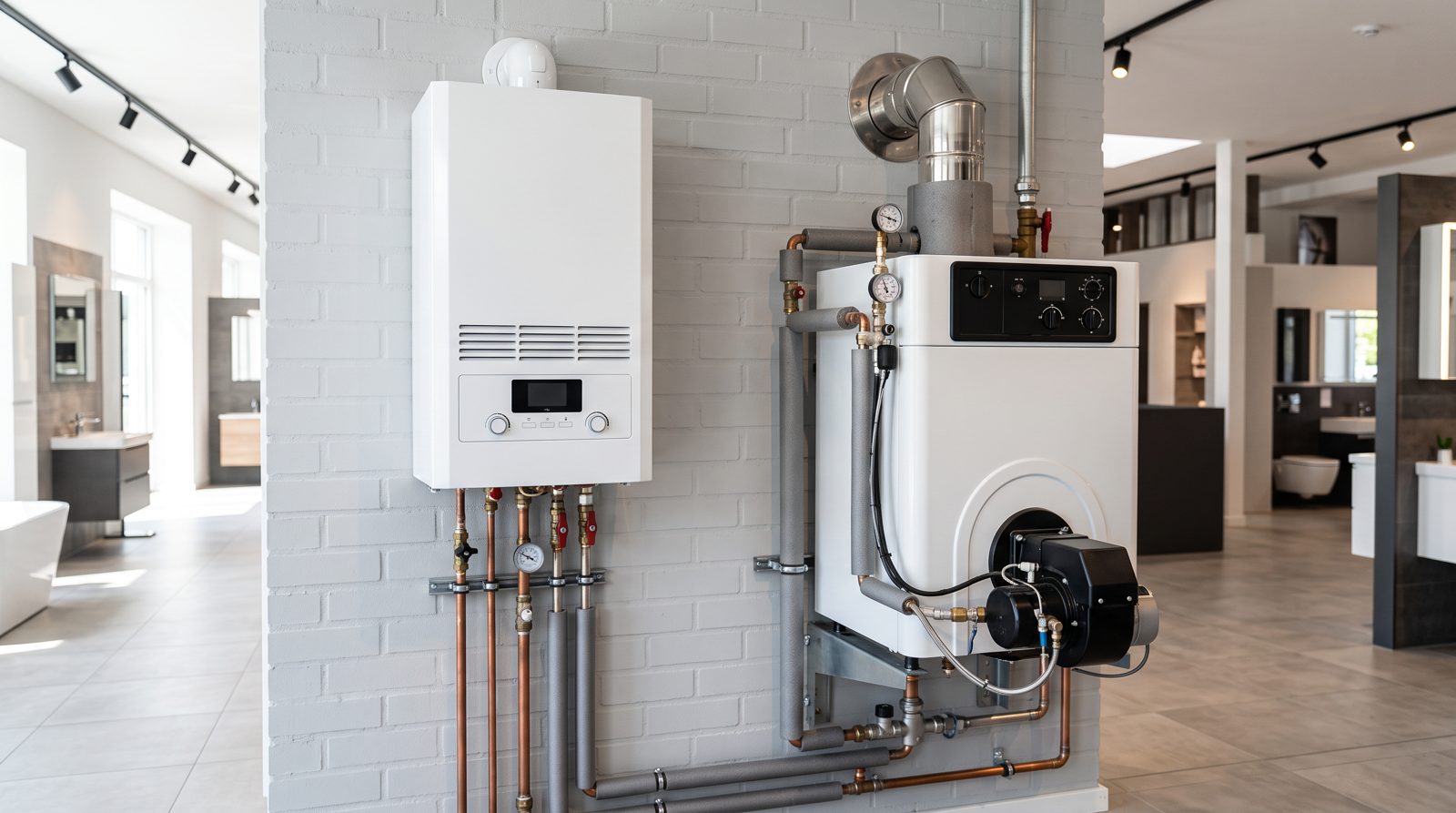
Running costs: an honest comparison
Neither fuel wins outright every year. Mains gas has historically been the cheaper of the two per unit of heat, and it usually still edges it, but heating oil prices move with the wholesale oil market and there have been stretches where oil worked out cheaper to run. The gap is smaller than many people assume.
What matters more than the headline fuel price:
- Boiler efficiency. A modern condensing boiler of either fuel converts over 90% of the fuel into useful heat. If your current boiler is 15 or 20 years old, replacing it will cut your bills whichever fuel you choose.
- How you buy. Gas arrives on a metered supply and you pay monthly. Oil is bought in bulk deliveries, so you can shop around suppliers and fill the tank when prices dip. Savvy oil users order in summer, when demand and prices tend to be lower.
- Standing charges. Gas customers pay a daily standing charge whether they use gas or not. Oil has no standing charge, which softens the comparison for smaller or well-insulated homes.
As a rough guide, annual heating costs for a typical three-bedroom home are in the same broad territory for both fuels, and the difference year to year often comes down to timing and tariffs rather than the fuel itself. Be wary of anyone quoting a precise saving without seeing your house.
Practicality: what living with each fuel is like
Gas
Gas is the low-admin option. Fuel arrives through a pipe, you never think about deliveries, and there is no tank in the garden. Gas boilers are compact, quiet and cheap to buy relative to oil equivalents. The trade-off is that you are tied to your supplier’s price and the network’s reach. If you are weighing up a new gas appliance, our gas boiler replacement service covers supply, installation and commissioning with fixed upfront pricing.
Oil
Oil asks a little more of you. You need a storage tank, typically holding 1,000 litres or more, sited and bunded to current regulations. You need to keep an eye on the gauge and order before you run low, especially ahead of winter. In return you get independence: no standing charge, no reliance on a network, and the freedom to buy when the price suits you. Modern oil boilers are efficient, reliable and well suited to the larger, older and stone-built properties common across Cornwall and Devon.

Installation and upfront cost
Like-for-like swaps are the cheapest route for either fuel. Replacing an old oil boiler with a new one, or an old gas boiler with a new one, keeps most of the existing system in place. Switching fuels is where costs climb, because you are paying for new pipework, possibly a tank or a grid connection, and sometimes alterations to flues and hot water cylinders.
Oil boilers generally cost more to buy than comparable gas models, and a new tank adds to the bill if yours is past its best. Gas installations are usually simpler where a supply already exists. The honest answer on cost is always a survey and a fixed quote, because two houses on the same lane can need very different jobs.
Servicing, safety and lifespan
Both fuels need an annual service to stay safe, efficient and under warranty. Gas work must be done by a Gas Safe registered engineer; oil work should be done by an OFTEC registered technician. A well-maintained boiler of either type commonly gives 10 to 15 years of service, and the boilers we fit come with up to 12 year manufacturer warranties when installed and serviced correctly. Our boiler servicing covers both fuels across Cornwall and Devon, and if something does go wrong we handle boiler repairs and 24/7 emergencies too.
So which should you choose?
- On the gas grid, happy with your system? Stay on gas. It is convenient and competitively priced.
- Off the grid with an existing oil system? A modern oil boiler is almost always the sensible replacement. Fuel switching rarely pays for itself.
- Off the grid and planning a bigger renovation? Worth discussing the full range of options, including future-proofing, before committing.
How DCI Boilers can help
We are based near Saltash and work across Cornwall and Devon, so off-gas-grid homes are our bread and butter, not an afterthought. Whether you need a like-for-like oil boiler replacement, a new gas system or simply honest advice on which way to jump, we will survey your property and give you a fixed upfront price with no surprises.
Need help now? Call DCI Boilers on 07888 862 603 or get a free quote.
Frequently asked questions
Is oil heating more expensive than gas?
Usually a little, but not always. Mains gas tends to be cheaper per unit of heat, though oil prices fluctuate and buying in bulk at the right time narrows the gap. Boiler efficiency and insulation affect your bills more than the choice of fuel.
Can I switch from oil to gas in Cornwall or Devon?
Only if a gas main runs close enough to your property to connect, which in rural areas it often does not. Where connection is possible, the cost of the new supply, pipework and boiler needs weighing against fairly modest running-cost savings.
How long does an oil boiler last?
A good quality oil boiler that is serviced every year will typically last 10 to 15 years, and often longer. Annual servicing by an OFTEC registered technician is the single best thing you can do to extend its life.
Do oil boilers need more maintenance than gas boilers?
Slightly, yes. Both need an annual service, but oil systems also need the tank, fuel lines and filters checked, and the burner nozzle replaced periodically. It is all covered in a proper annual service, so in practice the difference is small.