
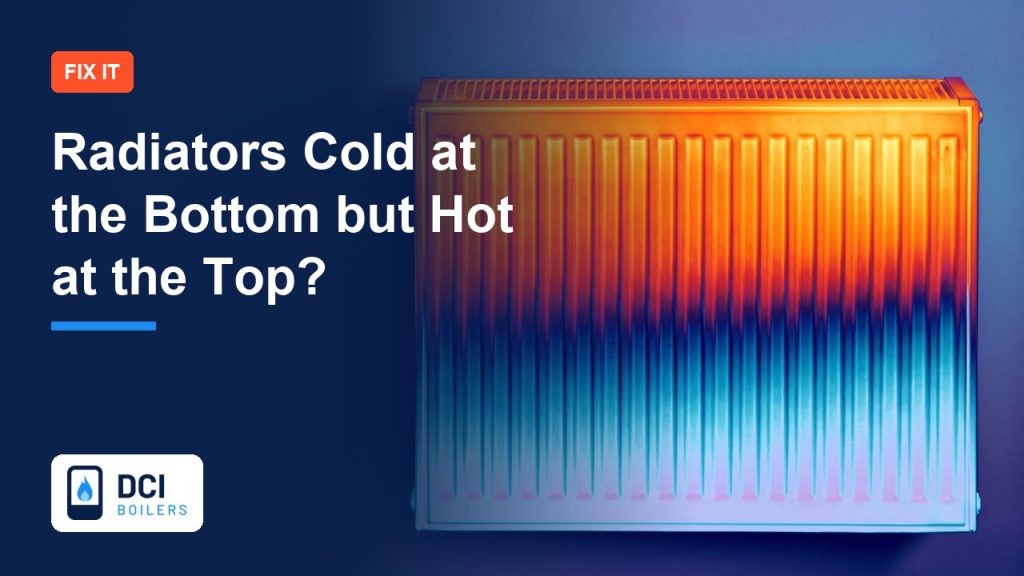
A radiator that is hot at the top and cold at the bottom has sludge settled inside it, not air. Air collects at the top and makes the top cold; sludge, which is iron oxide from slow corrosion of the radiators and pipework, sinks to the bottom and blocks the flow of hot water through the lower part of the panel. Bleeding will not help, because there is no air to release. The fix is to get the sludge out, either by removing and flushing the radiator, cleaning the system chemically, or power flushing the whole thing, and then fitting a magnetic filter and inhibitor so it does not come back.
This guide explains how to confirm the diagnosis, why sludge forms, which cleaning method suits which situation and what it means for the boiler if it is left.
Air or sludge? How to tell
| Symptom | Likely cause | Fix |
|---|---|---|
| Cold at the top, warm at the bottom | Air | Bleed the radiator |
| Hot at the top, cold at the bottom or in the middle | Sludge | Flush the radiator or system |
| Cold all over, other radiators fine | Valve closed or stuck, or balancing | Check valves, balance |
| Warm on one side only | Partial blockage or valve | Flush and check valves |
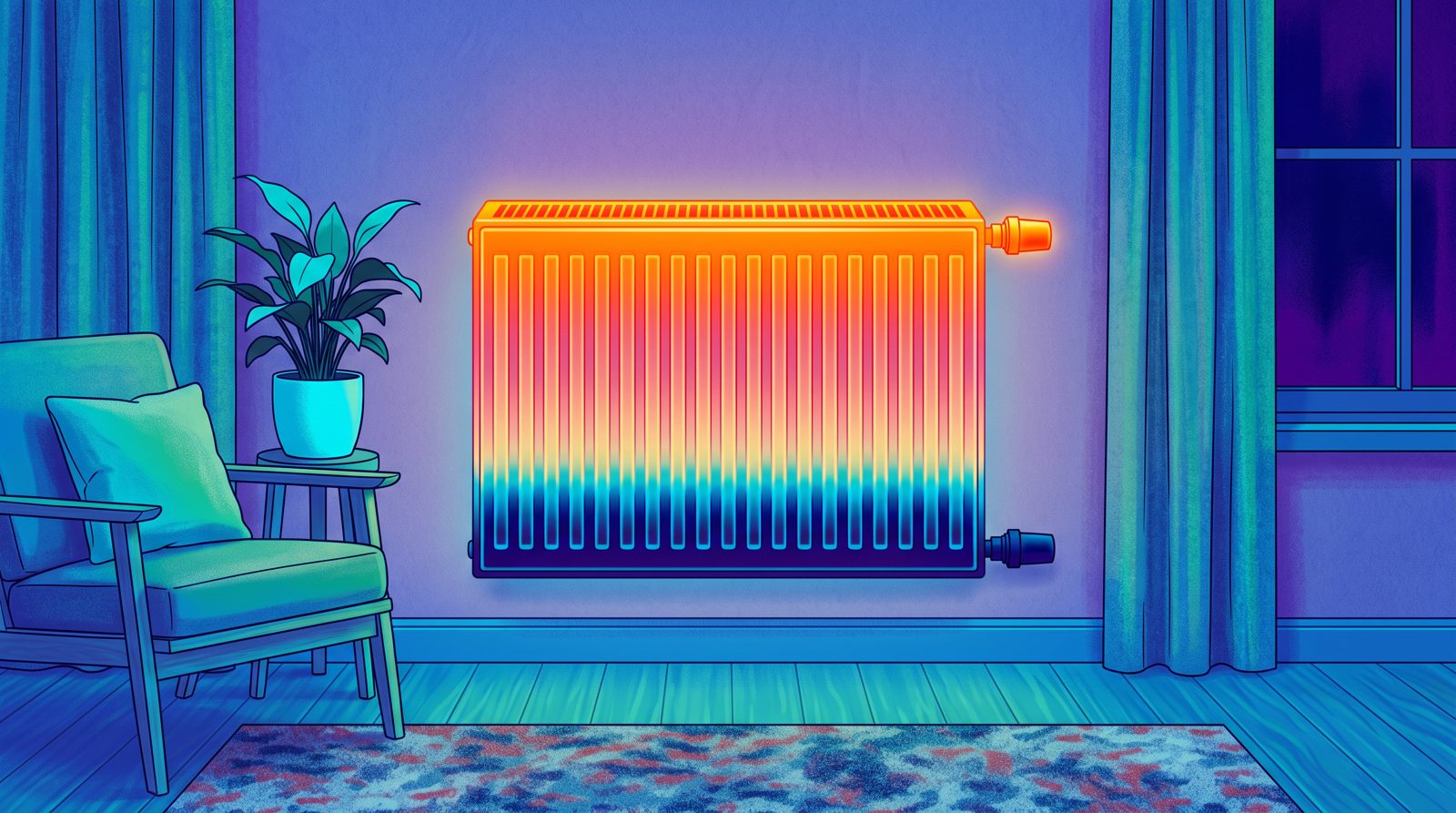
Run the heating for half an hour, then feel each radiator top and bottom. A cold band along the bottom, sometimes with a warm strip at the very top and the ends, is the classic sludge pattern. Our guide to how to bleed radiators covers the air case.
Why sludge forms
Steel radiators and the water in a heating system slowly react, producing black iron oxide. The reaction speeds up when fresh water and oxygen enter the system, which happens every time it is drained, topped up or bled, and when there is no inhibitor in the water. The oxide circulates as a fine black sludge, settles wherever the water moves slowest, which is the bottom of radiators, and clogs pumps, valves and the boiler’s heat exchanger on the way. Systems without a magnetic filter, or with inhibitor that has not been renewed in years, build it up fastest.
The fixes
Flush a single radiator
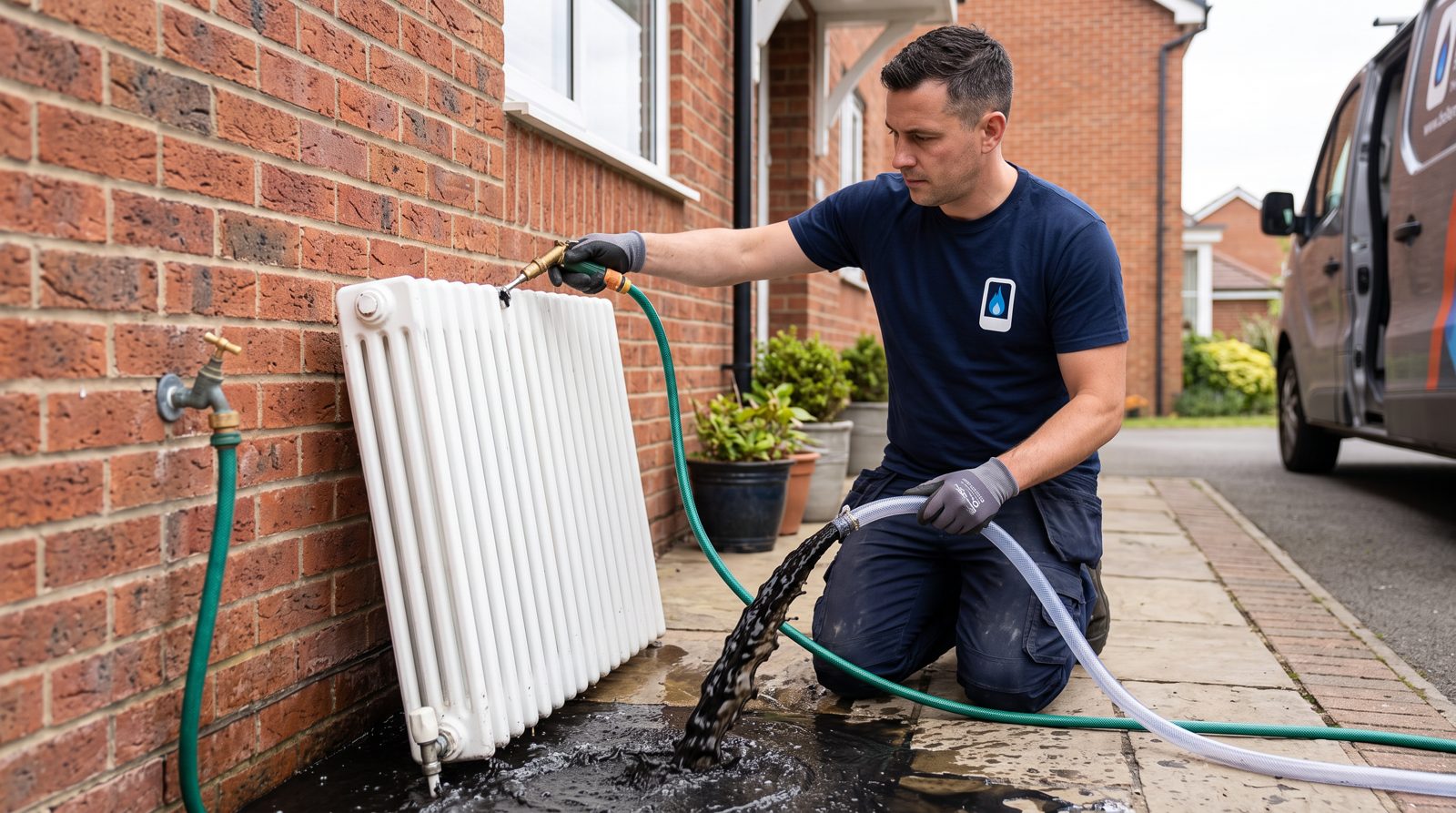
If only one or two radiators are affected, the engineer isolates the radiator, removes it, takes it outside and flushes it through with a hose until the water runs clear, then refits it. Quick, cheap and effective for a localised problem, but it does nothing about the sludge elsewhere in the system.
Chemical clean
A cleaning chemical is added to the system and circulated for a few days to a couple of weeks, loosening the sludge, then the system is drained, flushed and refilled with inhibitor. Suits systems with light to moderate sludge and no serious blockages.
Power flush
A pump is connected to the system and forces water and cleaning chemicals through at high flow, radiator by radiator, with the engineer agitating each one to loosen settled sludge, until the water runs clear from every radiator. This is the thorough option for a system with several cold radiators, a noisy boiler or a history of pump and valve failures. It is also the right preparation for a new boiler on an old system. Our guide to what a power flush is explains the process.
Magnetic filter and inhibitor
Whichever cleaning method is used, the system should be refilled with inhibitor and, if it does not have one, fitted with a magnetic filter on the return pipe near the boiler. The filter catches new sludge before it reaches the boiler and is emptied at each service. Without both, the sludge returns.
What sludge does to the boiler
Sludge does not stay in the radiators. It blocks the boiler’s heat exchanger, causing kettling noises and overheating, seizes pumps and diverter valves and shortens the boiler’s life. A new boiler fitted to a sludged system can fail within a few years, which is why manufacturers make a clean system and a filter a condition of the warranty. If your radiators are cold at the bottom and your boiler is noisy, the two are connected. Our guide to a boiler making noises explains the link.
Preventing it
- keep the inhibitor topped up; it is checked at a good service
- fit a magnetic filter and have it emptied annually
- avoid draining the system unnecessarily
- fix leaks that cause repeated topping up, which brings in fresh oxygen
How DCI Boilers can help
DCI Boilers flushes radiators and whole systems across Cornwall and Devon, fits magnetic filters and inhibitor, and clears sludge before every boiler we install. Our Gas Safe and OFTEC registered engineers will tell you honestly whether a single radiator flush, a chemical clean or a power flush is the right fix. See our heating services page, or mention cold radiators when you book boiler servicing.
Need help now? Call DCI Boilers on 07888 862 603 or get a free quote.
Frequently asked questions
Why is my radiator hot at the top and cold at the bottom?
Sludge has settled in the bottom of the radiator and is blocking the flow of hot water. Bleeding will not fix it; the radiator or system needs flushing.
Can I flush a radiator myself?
Removing a radiator and hosing it through is possible for a confident DIYer, but it is messy, the sludge stains, and the system needs inhibitor afterwards. Most people have an engineer do it.
Does a power flush damage old radiators?
Rarely. It can reveal a weak spot that was already leaking slowly, which is better found during a flush than in winter.
How often should a heating system be flushed?
Only when needed. With inhibitor and a magnetic filter maintained, a system may never need another flush.