
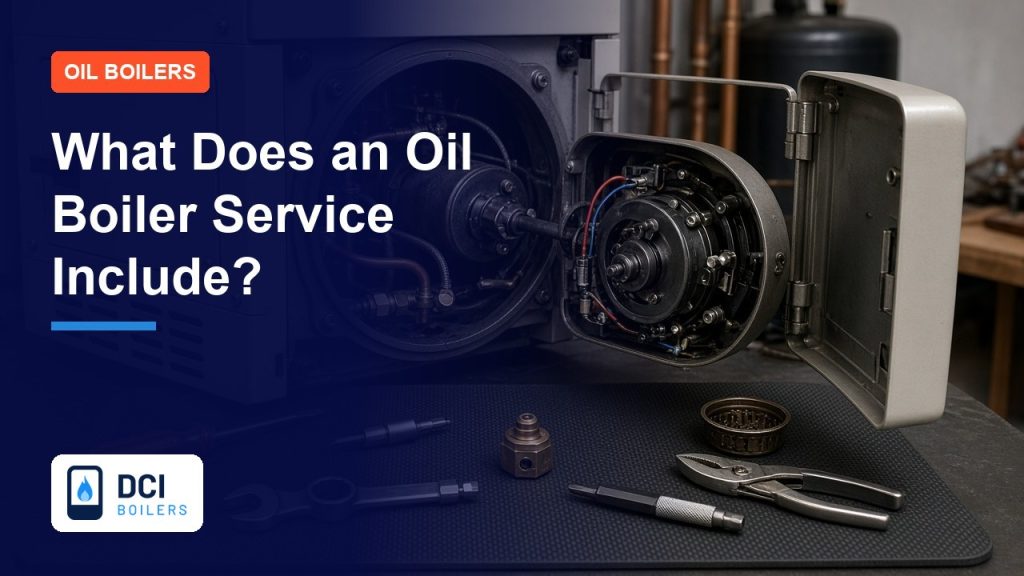
A proper oil boiler service is a strip-down, clean, test and tune of the whole heating system, not a quick vacuum and a sticker on the casing. Done to OFTEC standards it covers the burner, the nozzle, the electrodes, the heat exchanger and baffles, the filters, the flue, the controls and safety devices, a combustion test with an analyser, and a check of your oil tank and supply line.
Knowing what should happen is the best protection against paying for a service that is really just a dust-off. This is the oil boiler service checklist we work to at DCI Boilers, step by step, so you know exactly what you are paying for and what to expect when the engineer arrives.
Before the strip-down: inspection and safe isolation
The visit starts with a look and a listen. The technician runs the boiler, notes how it fires and sounds, and checks the casing, seals and visible pipework for leaks, corrosion or scorching. Anything odd here shapes the rest of the service. The boiler is then switched off and the oil supply isolated at the fire valve so the burner can be removed safely.
The burner strip-down
The burner is the heart of an oil boiler and the part that gets the most attention. Removed from the boiler, it is dismantled and each component checked and cleaned:
- Nozzle. The nozzle atomises oil into a fine mist for burning, and it wears with every hour of use. A worn or partially blocked nozzle gives a ragged spray, sooty combustion and wasted fuel. It is a consumable, and on a proper service it is replaced as a matter of routine rather than cleaned and refitted.
- Electrodes. These provide the spark that ignites the oil mist. They are cleaned, inspected for wear and set to the correct gap and position, because a fraction of a millimetre out means poor ignition and lockouts.
- Photocell and controls. The flame sensor is cleaned and checked so the boiler can correctly see its own flame, and the control box operation is verified.
- Fan and air intake. The combustion fan and air ways are cleaned and the air damper settings checked, since the fuel-to-air ratio decides how cleanly the boiler burns.
- Flexible fuel lines and seals. Braided fuel hoses perish over time and are checked, and replaced when showing their age, along with any tired gaskets and seals.
Heat exchanger, baffles and flue
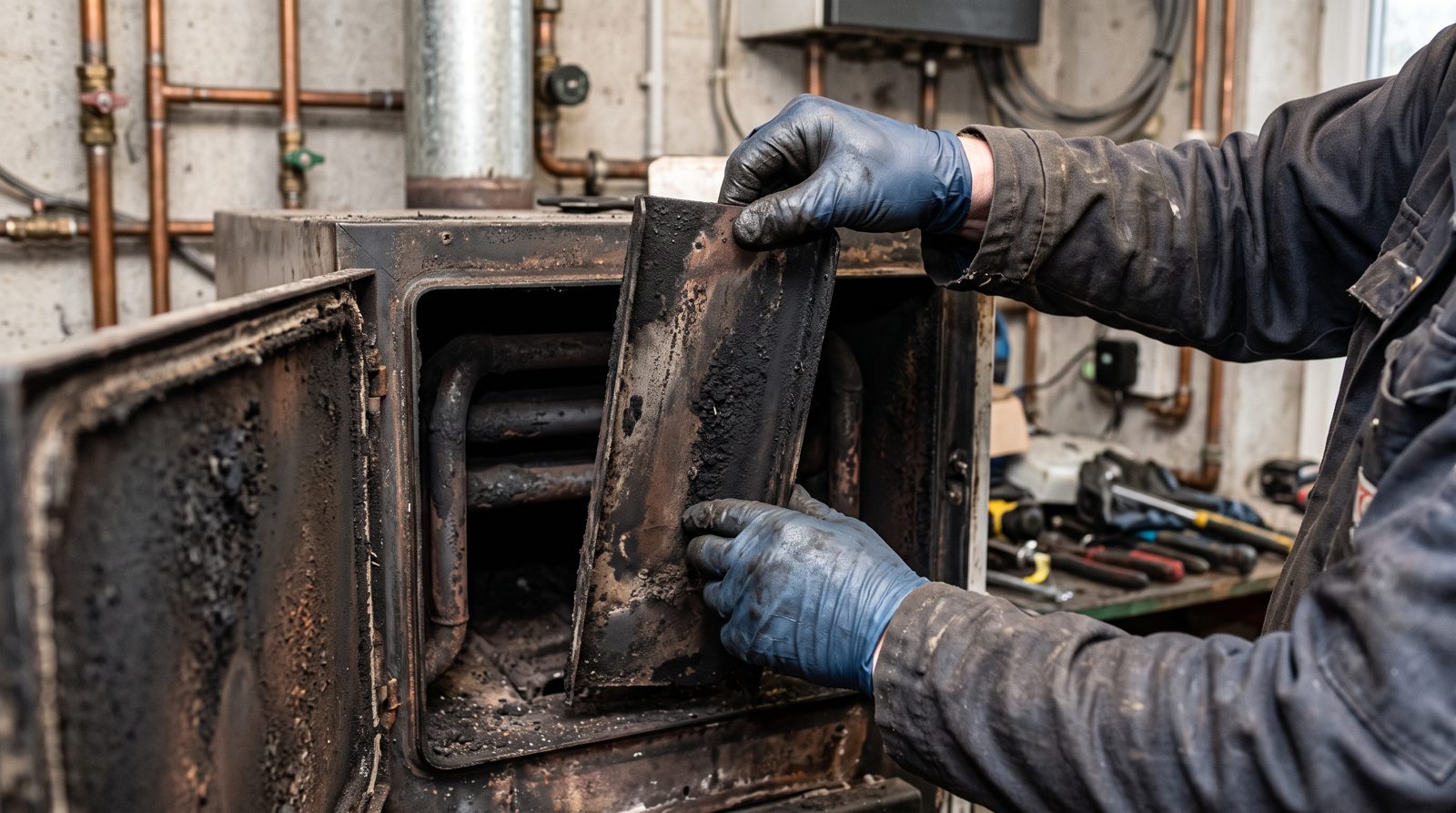
With the burner out, the technician gets into the combustion chamber. The baffles are removed and the heat exchanger surfaces are cleaned of soot and combustion deposits, because even a thin layer acts as insulation and pushes heat up the flue instead of into your radiators. The flue itself is inspected for blockages, corrosion and secure joints, and the terminal outside is checked for obstructions. Door seals and the combustion chamber lining are examined and the burner is refitted with fresh seals where needed.
Filters, pump and oil supply
Oil passes through at least one filter between tank and burner, and these are cleaned or the elements replaced. The pump pressure is checked and set to the manufacturer’s specification, and the fire valve, the safety device that cuts the oil supply in the event of fire, is checked for correct operation.
The combustion test: where the tuning happens
This is the step that separates a real service from a cosmetic one. With everything reassembled, the boiler is fired and a flue gas analyser is used to measure the combustion: CO2 or oxygen levels, carbon monoxide, flue temperature and smoke number. The technician adjusts the air settings and pump pressure until the readings sit within the manufacturer’s figures, meaning the boiler is burning its oil as cleanly and efficiently as it is designed to. You should be given the printout or the recorded readings with your paperwork. If a service ends without an analyser ever coming out of the van, it was not a full service.
Tank and fuel line check
A conscientious oil service looks beyond the boiler. The storage tank is inspected for cracks, bulging, rust and leaks, the vent and gauge checked, and the tank’s contents considered too, because water and sludge accumulate at the bottom of oil tanks over the years and will eventually reach the burner. The supply line between tank and house is checked for damage and weeping joints. Tank faults caught early are an inconvenience; caught late they mean lost oil, contaminated ground and serious cost.
Final checks and paperwork
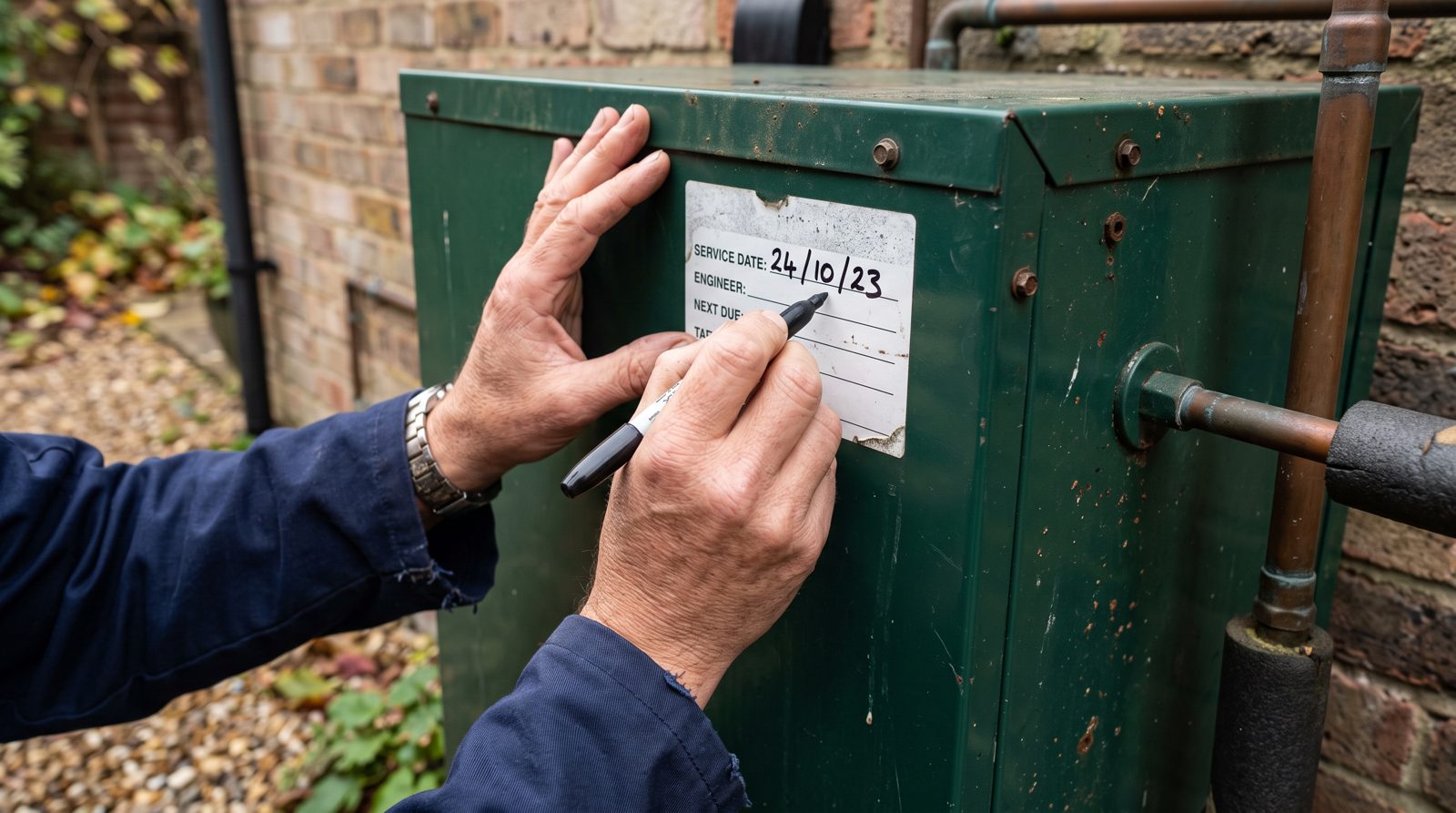
To finish, the boiler is run through a full heating and hot water cycle, controls, thermostats and safety cut-outs are tested, and everything is left clean and working. You should receive a completed service report, typically an OFTEC CD/11 form, recording the work done and the combustion readings. Keep it: it is your warranty evidence and a useful history for any engineer who works on the boiler in future.
How DCI Boilers can help
Every DCI Boilers service follows the full checklist above, carried out by OFTEC registered engineers with fixed upfront pricing, across Cornwall and Devon from our base near Saltash. Our boiler servicing includes the combustion analysis and the tank and line check as standard, and you get the readings and report every time. If the service uncovers a fault we will price the fix honestly through our boiler repairs service, and if the boiler is genuinely at the end of the road we will say so and talk through oil boiler replacement options rather than patching the unpatchable.
Need help now? Call DCI Boilers on 07888 862 603 or get a free quote.
Not sure when your boiler was last done? Our guide to how often an oil boiler should be serviced covers the timing, or simply book your annual boiler servicing visit now.
Frequently asked questions
Is the nozzle always replaced in an oil boiler service?
On a proper service, yes, as a routine consumable. The nozzle wears with use and a worn one causes sooty, inefficient combustion. Replacing it annually costs little and is far cheaper than the cleaning and call-outs a degraded nozzle leads to.
How long does a full oil boiler service take?
Usually around an hour to an hour and a half. A boiler that has missed services and needs heavy cleaning, or a system with tank or fuel line issues, can take longer. Be wary of any service completed in fifteen minutes.
What is a combustion test and why does it matter?
It is a measurement of the flue gases using an electronic analyser, checking the boiler burns oil cleanly and efficiently to the manufacturer’s figures. It is the only way to tune an oil burner properly, and the readings should be recorded on your service report.
Does an oil boiler service include the tank?
It should include a visual inspection of the tank, gauge, vent and supply line, and that is our standard practice. Some firms treat the tank as out of scope, so it is worth confirming when you book. Tank repairs or replacement would be quoted separately.