
A combi boiler (short for combination boiler) is a single unit that provides both your central heating and your hot water on demand, straight from the mains. There is no hot water cylinder, no cold water tank in the loft, and no waiting for a tank to heat up. When you turn on a hot tap, the boiler fires up and heats the water as it passes through.
Combis are the most popular type of boiler in the UK, and by some distance. Most new installations in ordinary family homes are combi boilers, because they are compact, efficient and simple to live with. That said, they are not right for every home, and a good installer will tell you when they are not.
This guide explains how a combi works in plain English, where it shines, where it struggles, and how to work out whether your home suits one.
How a combi boiler works
A combi boiler does two jobs from one box on the wall.
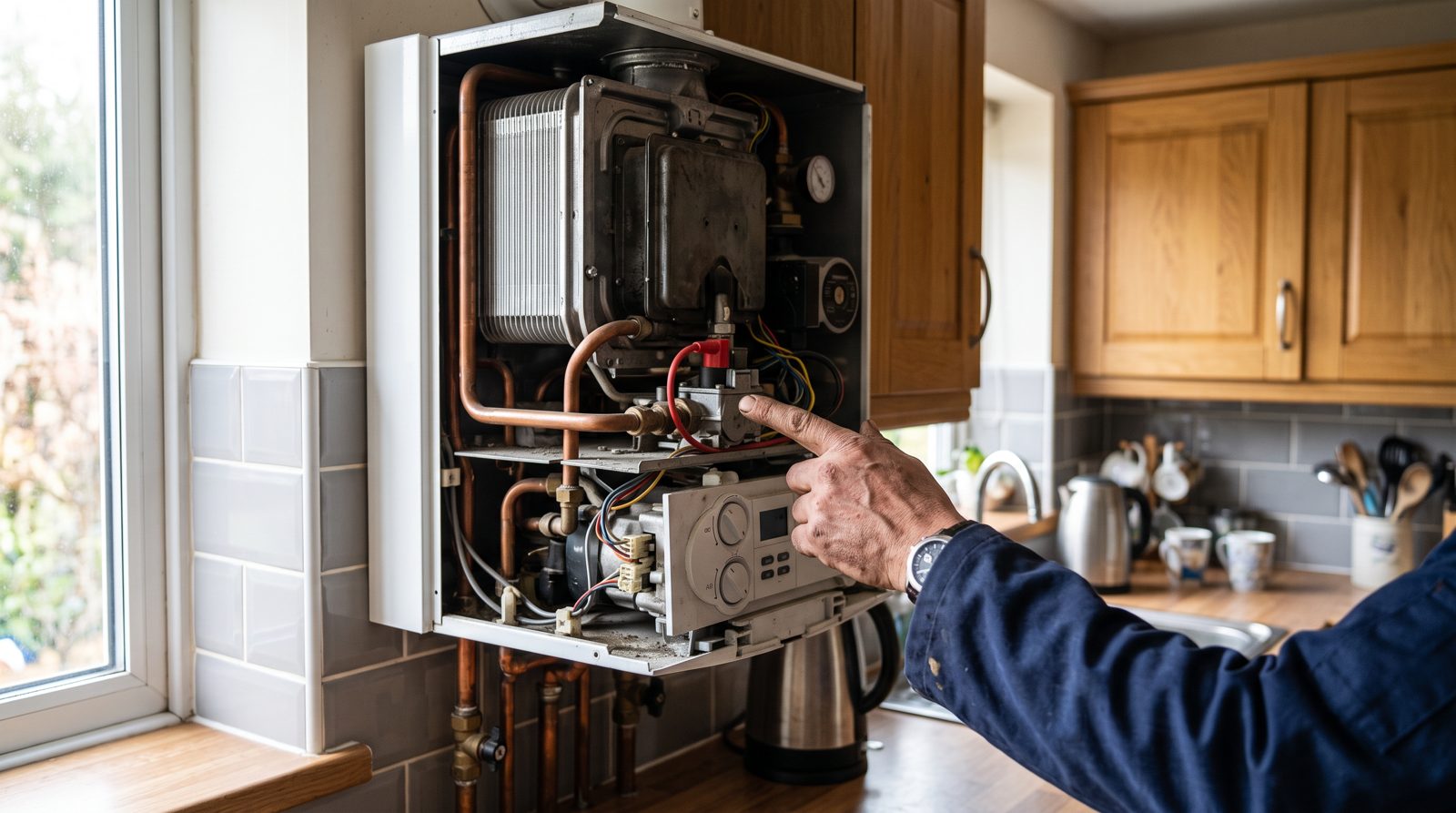
Heating. When your thermostat calls for heat, the boiler burns gas (or oil) to heat water, then pumps that hot water around your radiators in a sealed loop. The same water circulates round and round, reheated as needed.
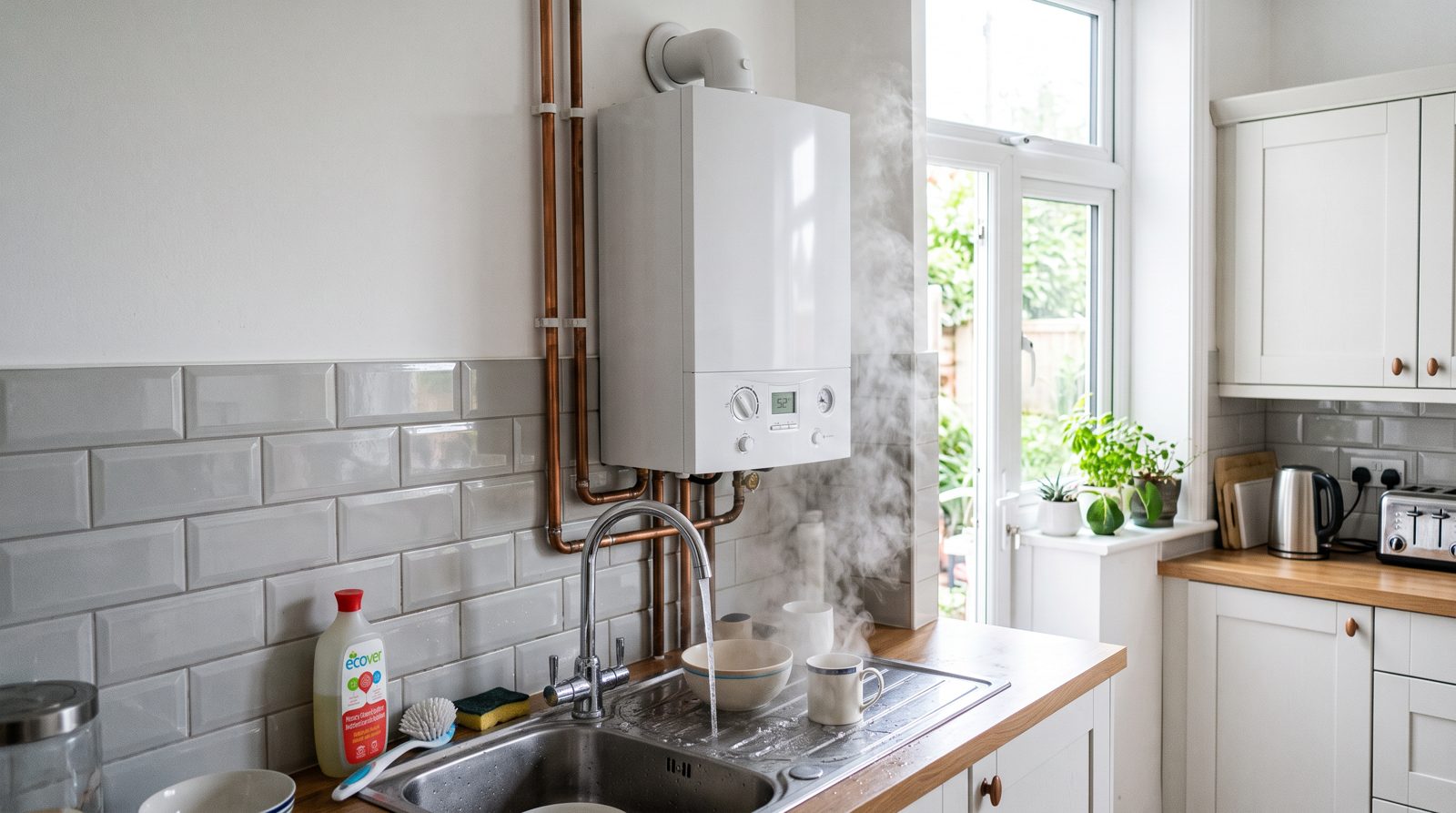
Hot water. When you open a hot tap or start the shower, a flow sensor inside the boiler detects moving water and the boiler switches its attention to heating that instead. Cold mains water passes over a heat exchanger, comes out hot, and flows straight to your tap. The heating pauses for the few minutes you are running hot water, then carries on. You rarely notice.
Because the hot water is heated on demand, there is no stored cylinder of hot water to run out of, and no energy wasted keeping a tank warm all day.
The advantages of a combi boiler
- Space saving. No cylinder in the airing cupboard, no tanks in the loft. The whole system is one unit, often tucked into a kitchen cupboard.
- Hot water on demand. You never “run out” of hot water the way you can with a cylinder. As long as the boiler is working, the hot tap keeps delivering.
- Efficiency. Modern condensing combis are highly efficient, and you are not paying to keep a tank of water hot that nobody uses.
- Mains pressure showers. Hot water arrives at mains pressure, so showers are usually stronger than from an old gravity-fed system, without needing a pump.
- Simpler installation. Fewer parts, less pipework, and often a quicker and cheaper install than a full system with a cylinder.
- Less to go wrong outside the boiler. No tank overflows, no cylinder thermostats, no loft pipes to freeze.
The honest drawbacks
- One tap at a time. A combi heats water as it flows, so if someone runs the kitchen tap while you are in the shower, the flow (and sometimes the temperature) drops. In busy households with two or more bathrooms in use at once, this is the number one complaint.
- It depends on your mains supply. A combi can only give out what the mains gives it. If your incoming water pressure or flow rate is poor, a combi will disappoint, and no amount of boiler power fixes that.
- No backup. With a cylinder and an immersion heater, you still have hot water if the boiler fails. With a combi, a breakdown means no heating and no hot water until it is repaired. Prompt boiler repairs matter more when everything hangs off one appliance.
- A short wait at the tap. There is a brief delay while the boiler fires and heats the water, so the tap runs cool for a few seconds first.
Which homes suit a combi boiler?
As a rule of thumb, a combi is a strong choice for:
- Flats and houses with one bathroom
- Homes with up to three or four occupants who rarely need two showers running at once
- Properties with good mains water pressure and flow
- Anyone who wants to reclaim the airing cupboard or clear tanks out of the loft
A combi is usually the wrong choice for larger homes with two or more bathrooms in regular use, homes with weak mains pressure, or properties where several people shower back to back at the same time of day. In those cases a system boiler with a cylinder often serves better. We cover that comparison in more detail elsewhere, and it is exactly the sort of thing we assess on a survey before recommending anything.
The only reliable way to know is to measure. A good installer will check your mains flow rate and pressure at the property, count your bathrooms, ask how your household actually uses hot water, and size the boiler accordingly. Guesswork at this stage is how people end up with feeble showers.
How DCI Boilers can help
DCI Boilers installs, services and repairs boilers across Cornwall and Devon. Our engineers are Gas Safe registered and OFTEC registered, so we can advise on gas and oil systems alike. If you are weighing up a gas boiler replacement, we will survey your home properly, measure your mains supply, and give you a fixed upfront price with no surprises. Where a combi is right for you, we will say so. Where it is not, we will tell you that too, and explain the alternative.
New boilers we fit come with up to 12 year manufacturer warranties, and we are available 24/7 for emergencies. Whether you are planning ahead or your old boiler has just given up, a gas boiler replacement quote from us is free and fixed.
Need help now? Call DCI Boilers on 07888 862 603 or get a free quote.
Frequently asked questions
Does a combi boiler need a water tank?
No. A combi takes cold water directly from the mains and heats it on demand, so there is no hot water cylinder and no cold water storage tank in the loft. This is one of the main reasons people choose them when replacing an older system.
Can a combi boiler run two showers at once?
Usually not well. Because a combi heats water as it flows, running two showers splits the flow and both suffer. If your household regularly needs two showers at the same time, a system boiler with a hot water cylinder is normally the better option.
How long does a combi boiler last?
A well-maintained combi typically lasts somewhere in the region of 10 to 15 years. Annual boiler servicing keeps it efficient, keeps the manufacturer warranty valid, and catches small faults before they become breakdowns.
Are combi boilers cheaper to run?
They are often cheaper for smaller households, because you only heat the water you actually use rather than keeping a full cylinder hot. Actual savings depend on your home, your usage and the boiler being sized correctly, which is why we always survey before quoting.