
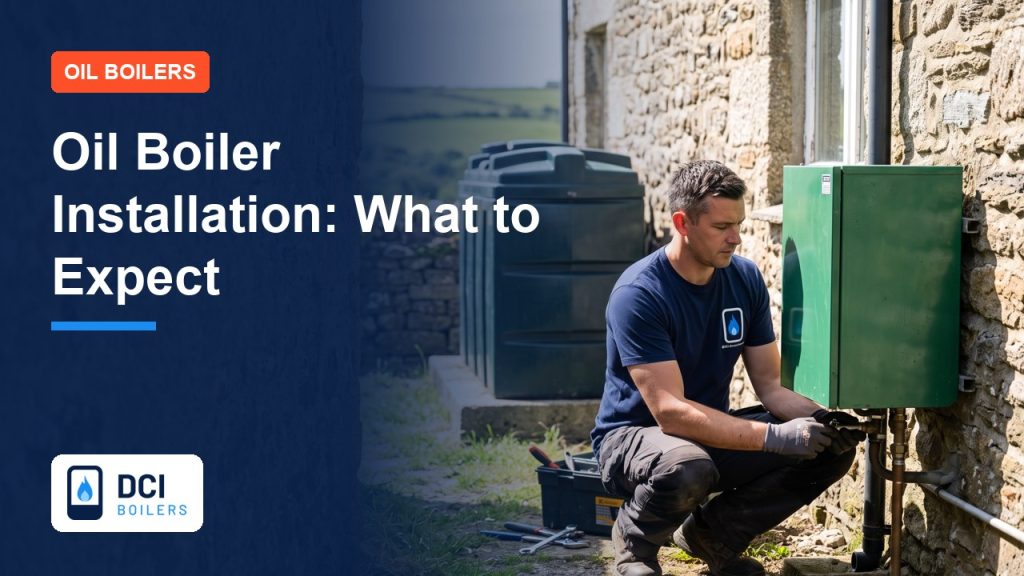
An oil boiler installation follows the same broad shape as any boiler replacement, with a few extra steps that are specific to oil: the tank, the fuel line and the filter are inspected and often upgraded, the burner is commissioned with a smoke test and a combustion analyser set for kerosene, and the whole job is certified through OFTEC rather than Gas Safe. A like-for-like swap of an internal or external oil boiler is usually a one-day job. Adding a new tank, or moving the boiler outside, takes longer.
Across rural Cornwall and Devon, oil is the everyday fuel, and most homeowners have had an oil boiler for decades without seeing one installed. This guide walks through the day so you know what to expect, from the survey to the paperwork.
The survey
An oil survey looks at more than the boiler. The engineer checks the tank: its age, material, condition, position, base and distance from the house, boundaries and drains, because the regulations on tanks have tightened and an old tank may need replacing or bunding. They inspect the fuel line from tank to boiler, the filter and the fire valve, which cuts the oil supply if the boiler overheats. Inside, they check the flue, the condensate route and, for a combi or system boiler, the hot water arrangements. The survey ends with a written, fixed quote.
Step 1: shutting down and draining
The fire valve or the tank outlet is closed to isolate the oil, the electrics are switched off and the heating system is drained. Any oil left in the old boiler’s fuel line is drained into a container.
Step 2: removing the old boiler
Oil boilers are heavier than gas boilers, particularly floor-standing models with cast iron heat exchangers, so this often takes two people. The old flue comes out with it. An external boiler is unbolted from its base and lifted away.
Step 3: the tank and fuel line
If the tank is being replaced, the new one goes on a level, fire-resistant base at the required distances, and is filled after the installation. If the tank stays, the fuel line is checked and often replaced with new pipe, a new filter, a new fire valve and an isolation valve at the tank. A de-aerator may be fitted if the line runs uphill or a long way. This stage is where oil installations differ most from gas, and where a good installer earns their money.
Step 4: fitting the new boiler
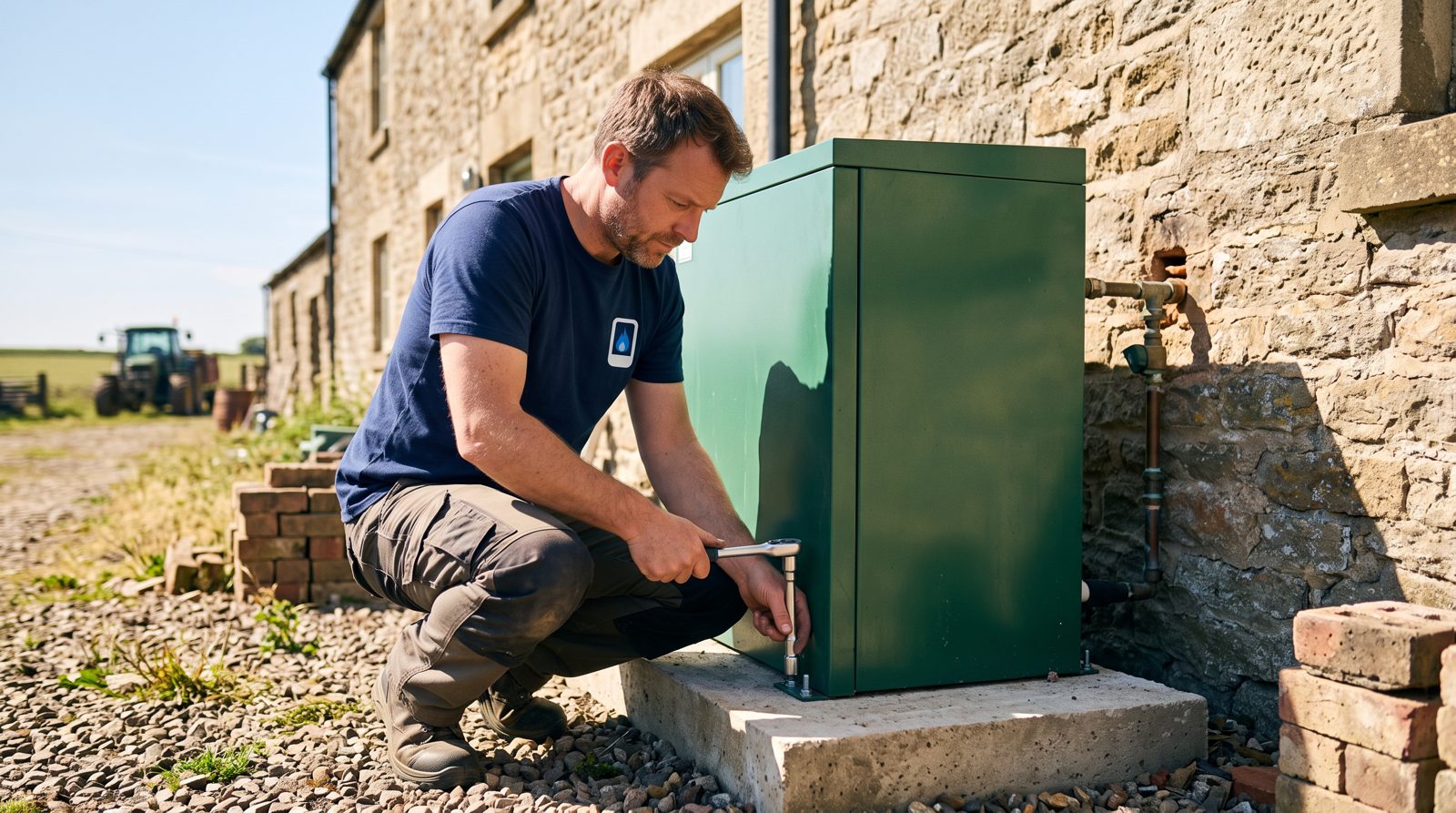
An internal boiler is positioned, connected to the heating pipework, the fuel line, the condensate drain and the electrics, and fitted with its flue. An external boiler sits on a prepared base against the wall, with the flow, return and condensate pipes passing through the wall, insulated against frost. A new boiler usually comes with a magnetic filter on the return and, if quoted, new controls.
Step 5: flushing and refilling
The heating system is flushed, chemically or with a power flush, refilled and dosed with inhibitor. Every radiator is bled and balanced.
Step 6: commissioning the burner
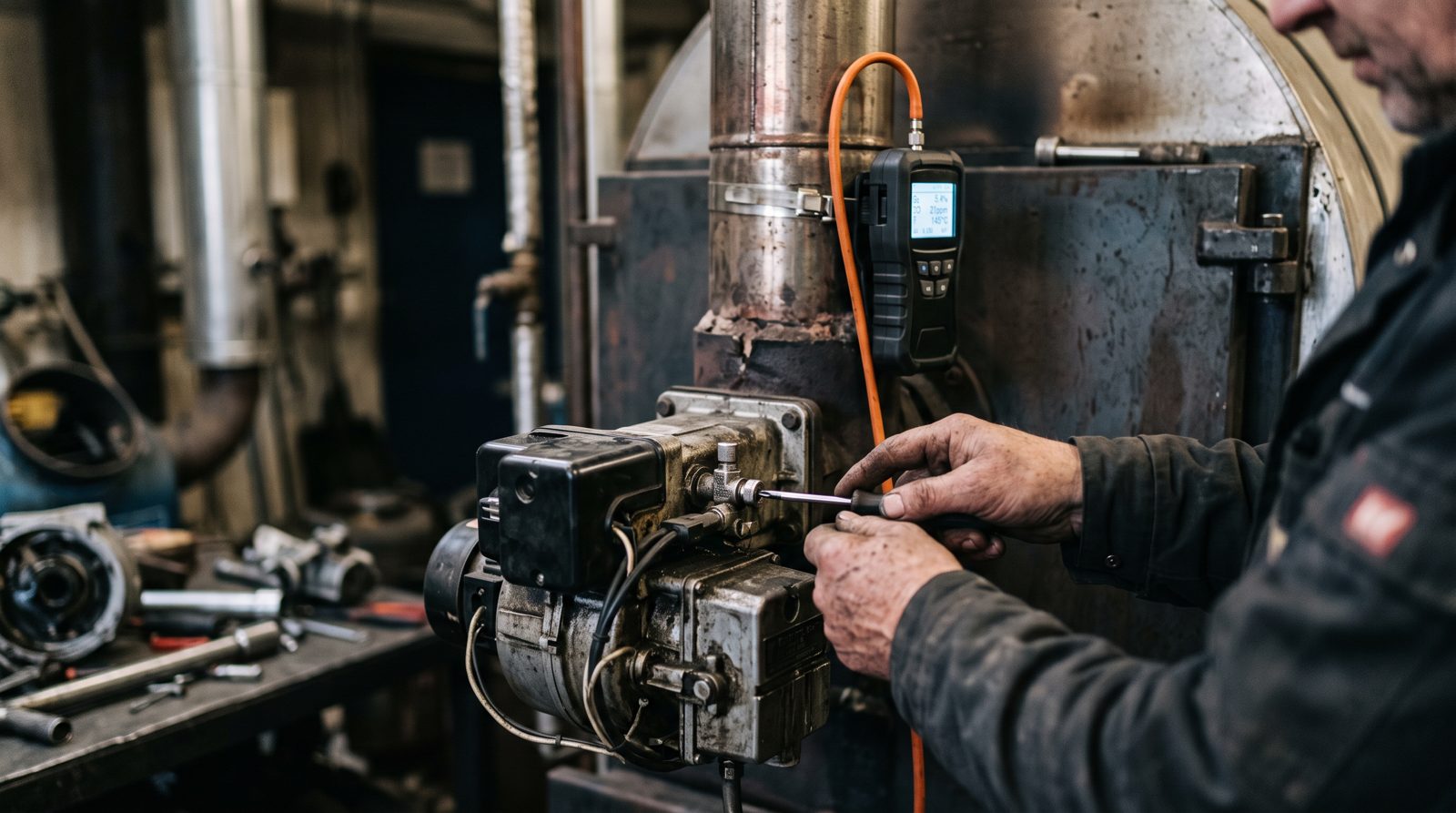
Commissioning an oil burner is precise work. The engineer bleeds air from the fuel line, sets the pump pressure, fits the correct nozzle, sets the air, fires the boiler and measures the combustion with a flue gas analyser and a smoke test. The readings are adjusted until they match the manufacturer’s figures for kerosene. Then the hot water, heating and controls are checked. Commissioning takes an hour on its own and is recorded on the Benchmark checklist.
Step 7: handover and certification
You should be shown the controls, the pressure gauge and filling loop, the fire valve and how to read the tank gauge. The Benchmark checklist is completed, the warranty registered and the installation notified through OFTEC, which issues the Building Regulations compliance certificate. Our guide to the boiler installation certificate explains the paperwork.
How oil differs from gas
- the tank and fuel line are part of the job and often need work
- OFTEC registration and certification rather than Gas Safe
- a smoke test as well as a combustion analysis at commissioning
- heavier boilers and more floor-standing and external options
- an annual service that includes the burner, nozzle and filter
Our guides on what an OFTEC registered engineer is and oil tank replacement cover the parts of the job that are unique to oil.
How DCI Boilers can help
DCI Boilers installs oil boilers across Cornwall and Devon with OFTEC registered engineers, surveys the tank and fuel line as part of every quote, commissions every burner with an analyser and a smoke test and hands over the full paperwork. Fixed prices, manufacturer warranties of up to 12 years and honest advice on whether your tank needs attention. Read about our oil boiler replacement service.
Need help now? Call DCI Boilers on 07888 862 603 or get a free quote.
Frequently asked questions
How long does an oil boiler installation take?
A like-for-like swap is usually one day. A new tank, a change of position or a conversion adds a day.
Do I need a new oil tank with a new boiler?
Not always. The survey checks the tank’s condition, position and compliance. Many tanks are fine; old single-skin steel tanks often are not.
Should I have oil in the tank on installation day?
Yes, enough to commission the boiler. The engineer will tell you how much at the survey.
Can an oil boiler go outside?
Yes. External oil boilers are common, free up indoor space and remove the flue question, though they need a base and frost protection.