
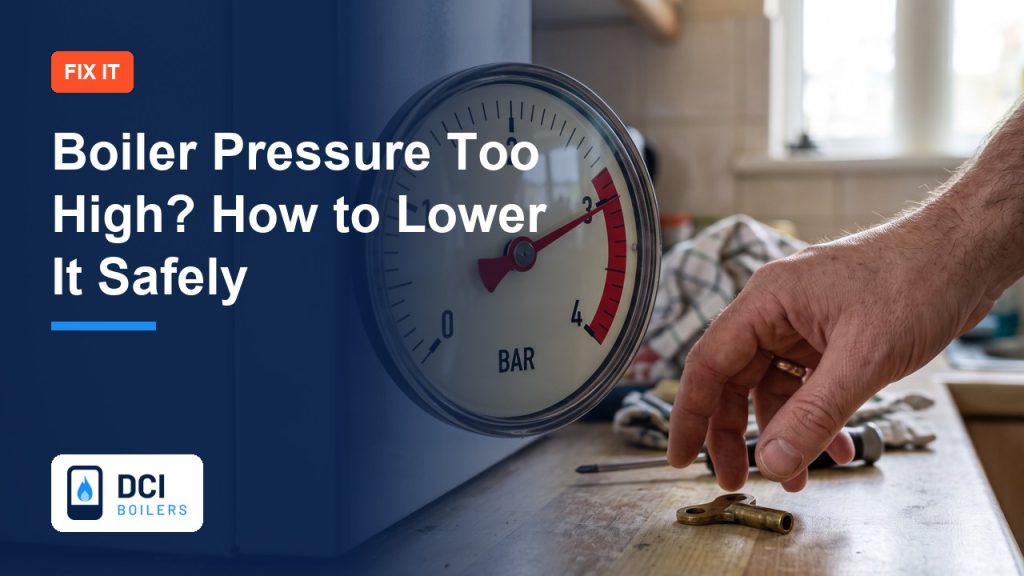
Boiler pressure is too high when the gauge reads above about 2.5 bar with the system cold, or heads towards 3 bar when the heating is running. The safest way to lower it is to bleed a radiator: open the bleed valve with a radiator key, let air and then a little water out, and watch the gauge fall back into the green zone. If the pressure climbs again within days, something is putting water or air into the system, and the usual suspects are a filling loop left open or passing, a flat expansion vessel, or a fault in the boiler’s own plate heat exchanger.
This guide explains what the reading means, how to lower it step by step, why it keeps rising, and the point at which you should stop bleeding radiators and call an engineer.
What high pressure means
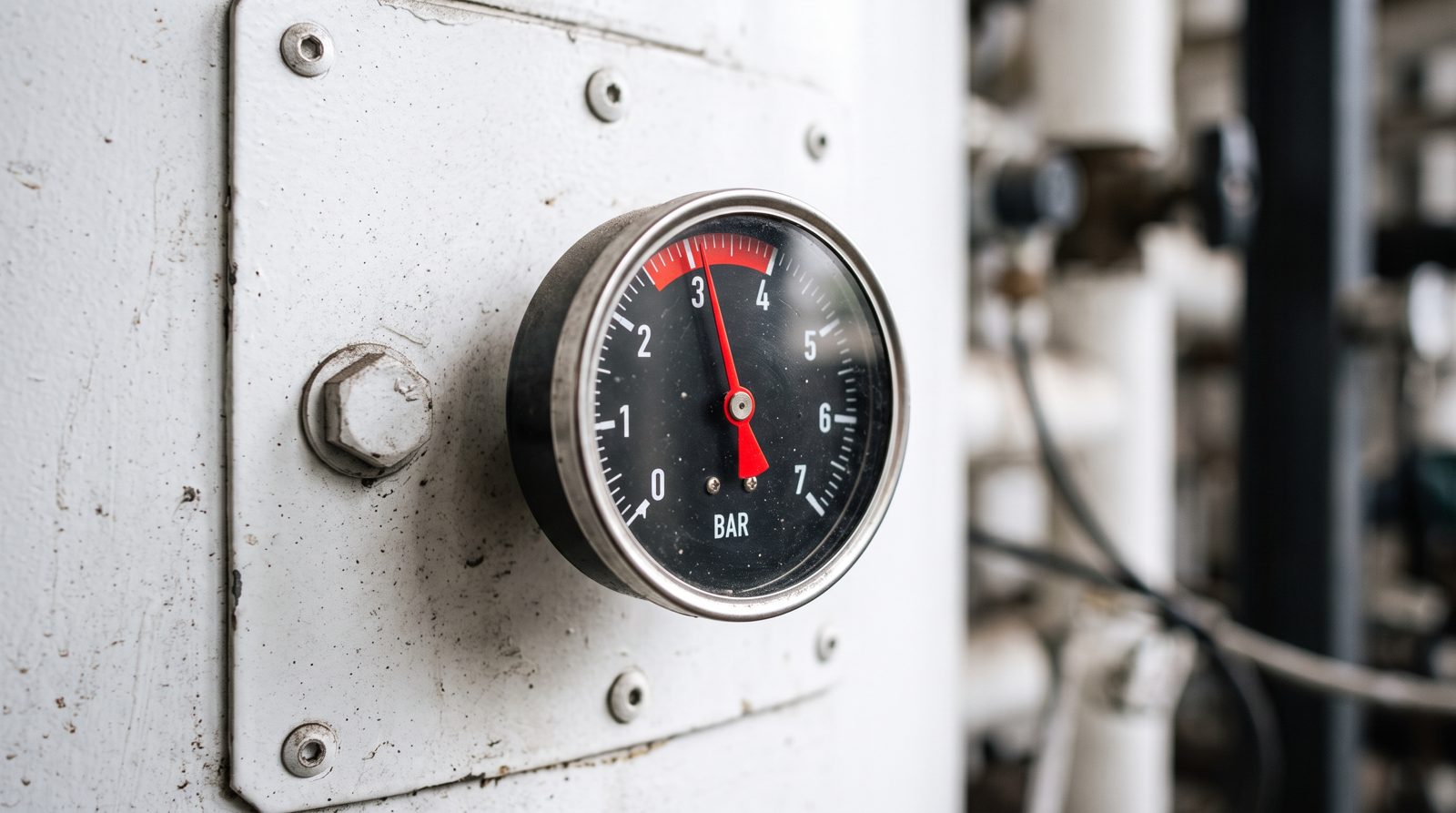
A sealed heating system holds a fixed amount of water under pressure. When the water heats it expands, and the expansion vessel absorbs the extra volume so the gauge only rises a little. If there is too much water in the system, or the vessel cannot absorb the expansion, the pressure rises sharply as the heating runs. At around 3 bar the pressure relief valve opens and dumps water through a pipe to the outside, which protects the boiler but leaves the valve prone to dripping afterwards. Our guide to what boiler pressure should be gives the healthy ranges.
How to lower boiler pressure safely
- Turn the heating off and let the system cool for an hour. Bleeding a hot radiator is messy and the reading is misleading while the water is warm.
- Check the filling loop under the boiler. Both valves or levers should be fully closed. If one is open, close it; that alone may explain the reading.
- Find a radiator on the lowest floor and put a cloth and a container under the bleed valve at the top corner.
- Open the bleed valve with a radiator key a quarter turn. Air hisses out first, then water.
- Let water run until the gauge on the boiler drops to around 1.3 bar, then close the valve firmly.
- Run the heating and check the gauge stays below about 2 bar when hot.
Why the pressure keeps rising
Filling loop left open or passing
The filling loop connects the mains to the heating system for topping up. If a valve is not fully closed, or the valve seat has worn, mains water creeps in continuously and the pressure climbs. Close the valves and, if it still rises, the loop needs replacing. Our guide to a filling loop not working covers the valve faults.
Flat expansion vessel
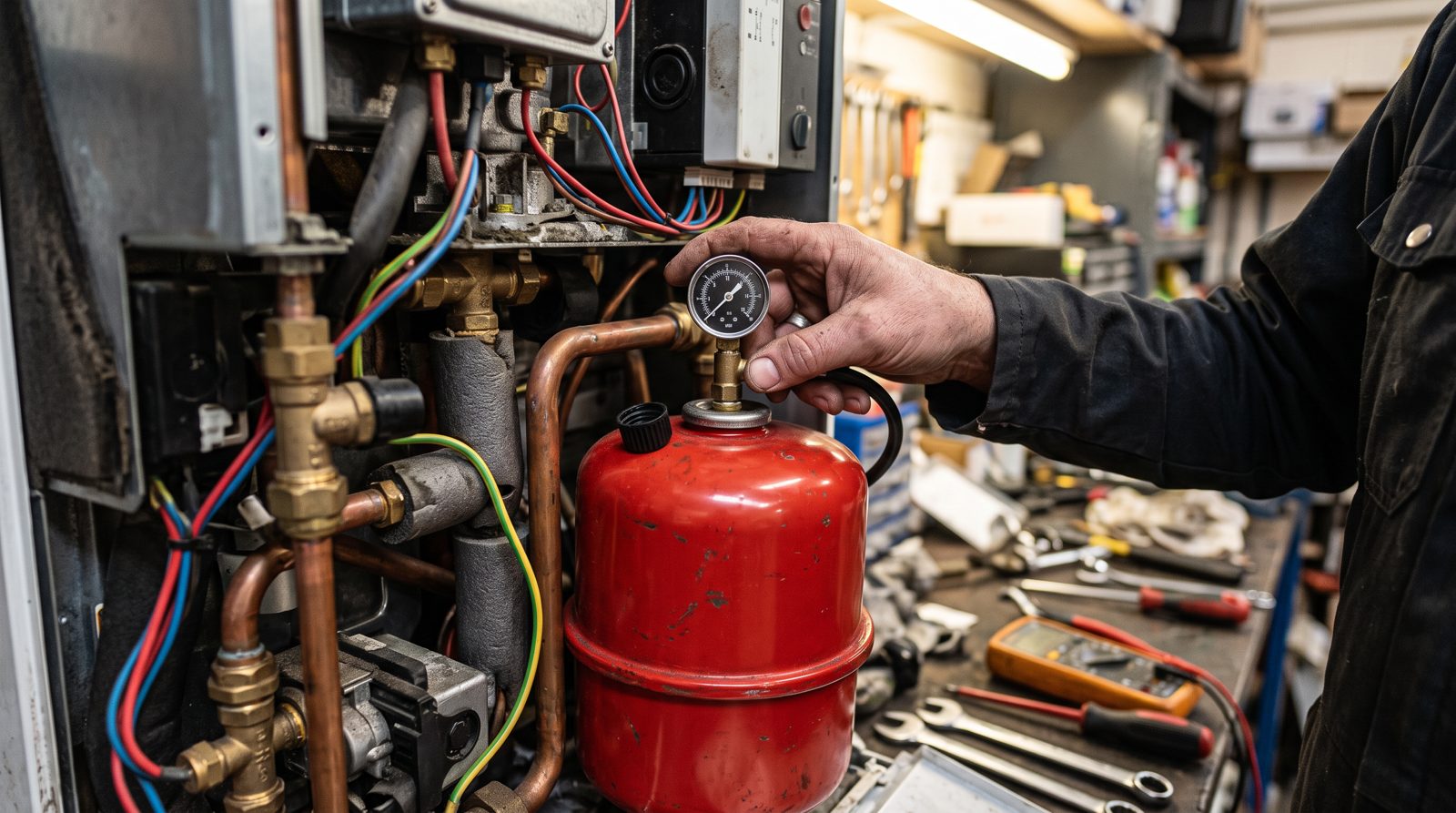
The vessel contains a rubber diaphragm with air on one side and system water on the other. Over time the air charge leaks away, the diaphragm cannot absorb expansion, and the pressure shoots up whenever the heating runs, then drops as it cools. The signs are a big swing between cold and hot readings and a relief valve that discharges. An engineer can recharge the vessel with a pump, or replace it if the diaphragm has failed.
Plate heat exchanger fault on a combi
A combi heats tap water through a plate heat exchanger. If it develops an internal leak, mains water at higher pressure passes into the heating side and the pressure rises steadily even with the filling loop shut. This needs an engineer.
Overfilling
Simply topping up too enthusiastically after a pressure drop is the most common cause of a one-off high reading. Bleed a radiator and it is fixed.
When to call an engineer
- the pressure rises again within a few days with the filling loop closed
- water drips from the relief valve pipe outside
- the pressure swings by more than a bar between cold and hot
- the boiler shows a high pressure or overheat fault code
- you have bled radiators more than once and it keeps coming back
Repeated bleeding to control high pressure introduces fresh water and oxygen into the system every time, which accelerates corrosion. It is a temporary measure, not a fix.
Is high boiler pressure dangerous?
Not in the sense of a risk to you. The relief valve is there precisely to stop pressure building to a dangerous level, and modern boilers shut down on overheat. The risks are to the boiler and the house: a relief valve that has opened often will weep, seals are stressed and a discharge pipe can stain a wall or freeze in winter.
How DCI Boilers can help
DCI Boilers diagnoses and fixes pressure faults across Cornwall and Devon, from recharging expansion vessels and replacing filling loops to plate heat exchanger repairs, with Gas Safe and OFTEC registered engineers at a fixed price. Book boiler repairs, or mention the problem at your next boiler servicing visit and we will check the vessel charge as part of it.
Need help now? Call DCI Boilers on 07888 862 603 or get a free quote.
Frequently asked questions
Is 2 bar too high for a boiler?
Not when the heating is hot. When cold, 2 bar is slightly high and worth bleeding down towards 1.3 bar.
Can I lower boiler pressure without bleeding a radiator?
Some boilers have a drain point, but bleeding a radiator is the simplest safe method for a homeowner. Do not open the pressure relief valve manually; it often fails to reseat.
Why does the pressure go up when the heating is on?
Water expands as it heats. A small rise is normal; a large rise means the expansion vessel has lost its charge.
Why is water dripping from the pipe outside my boiler?
The pressure relief valve has opened, usually because the pressure reached 3 bar. Lower the pressure and, if it keeps happening, have the vessel and valve checked.