
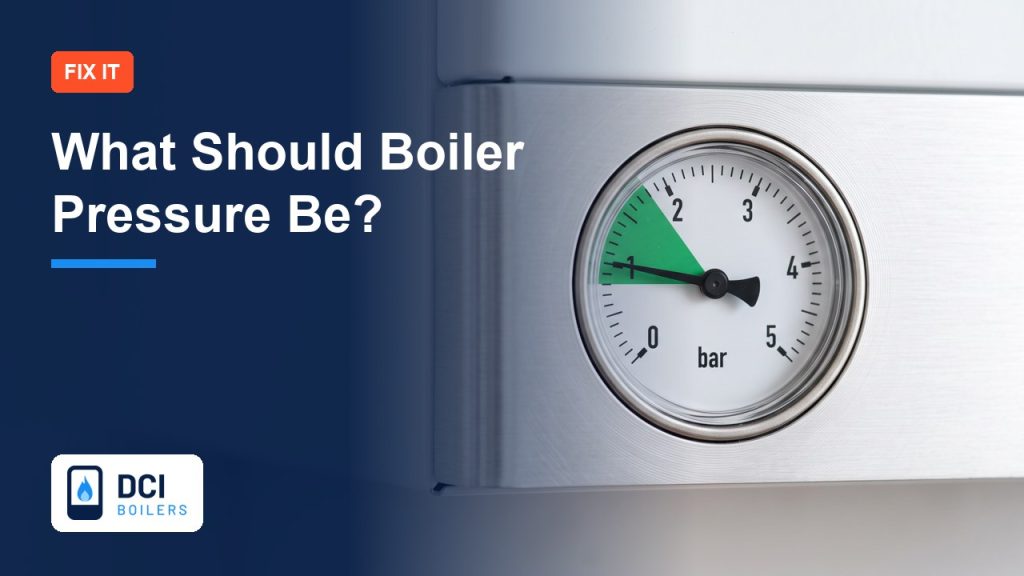
For most modern combi and system boilers the pressure should sit between 1 and 1.5 bar when the heating is off and the system is cold. When the heating has been running for a while the needle rises, and anything up to about 2 bar is normal. Below 1 bar the boiler may lock out with a low pressure fault. Above about 2.5 to 3 bar the pressure relief valve can start to discharge water outside, and the boiler may shut down to protect itself.
That is the short answer. The rest of this guide explains why the number moves, how to read the different kinds of gauge, what your boiler manual will say and how to tell the difference between a reading that needs attention and one you can leave alone.
Why a boiler needs pressure at all
Combi and system boilers are sealed systems. Rather than being open to a tank in the loft, the water in the radiators and pipes is held under a small amount of pressure so it circulates properly and so the boiler can sense that there is enough water to heat safely. The pressure is set when the system is filled and it stays there unless water escapes or is added. That is why a reading that keeps changing is worth understanding.
How to read your boiler pressure gauge
The gauge is usually on the front or underside of the boiler. There are three common types:
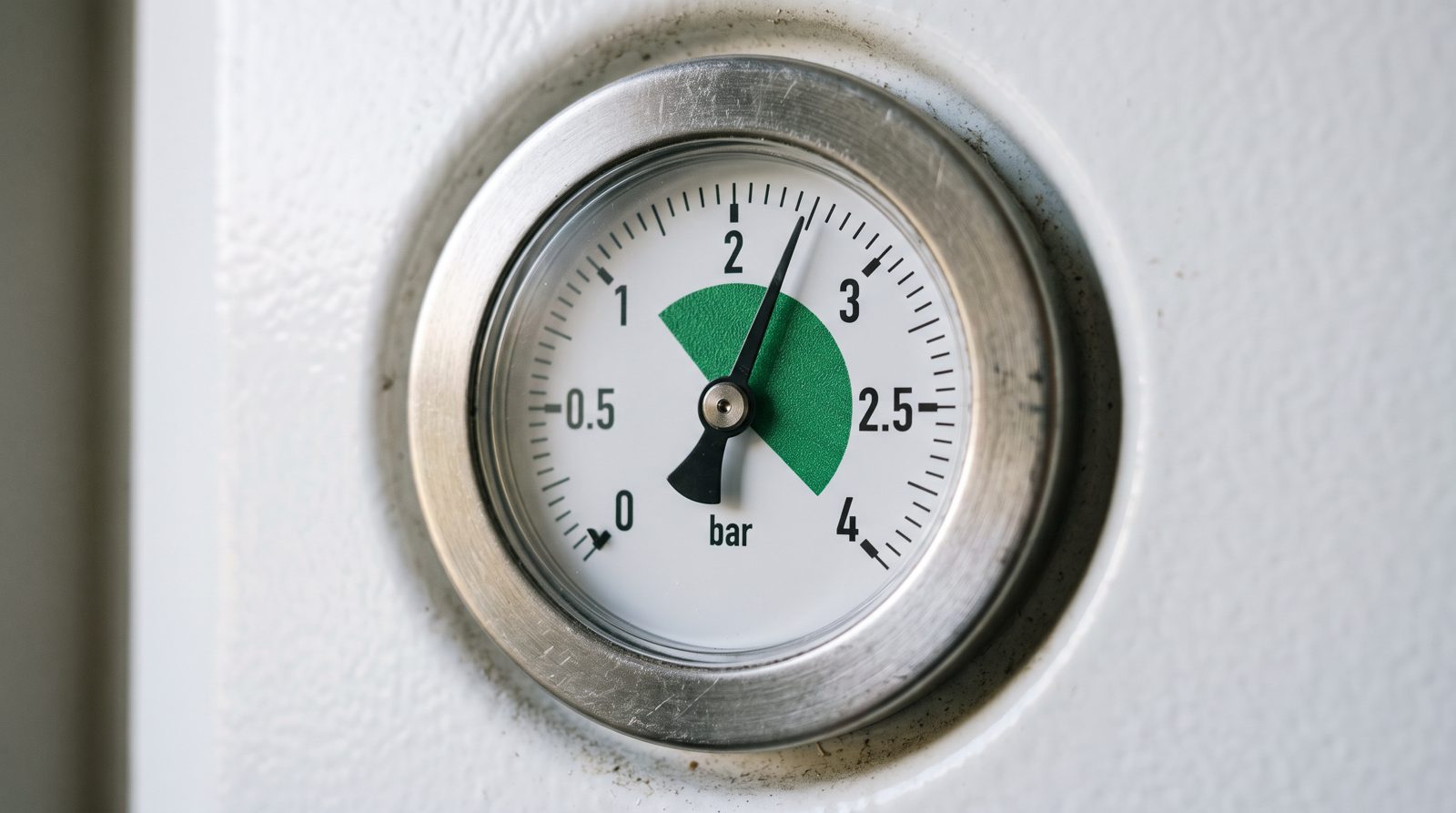
- A dial with a needle. The scale runs from 0 to 4 bar. Many dials have a green zone, typically 1 to 2 bar, and a red zone above that.
- A digital display. The pressure appears as a number, sometimes only when you press a button or scroll a menu. The manual tells you which screen to look at.
- A hidden gauge. Some boilers put the dial behind a drop-down flap or inside the casing. If you cannot find it, look for a small round window low on the front panel.
Take the reading when the heating has been off for at least an hour, because that cold figure is the one the manufacturer’s range refers to.
What the readings mean
| Cold reading | What it means | What to do |
|---|---|---|
| Below 0.5 bar | Very low. The boiler has probably locked out. | Top up using the filling loop, then watch whether it drops again. |
| 0.5 to 1 bar | Low. Heating may still work but a lock-out is likely soon. | Top up to around 1.3 bar. |
| 1 to 1.5 bar | Healthy. | Nothing. |
| 1.5 to 2 bar | Fine while hot. Slightly high when cold. | Check again when cold. If still high, bleed a radiator to release a little. |
| Over 2.5 bar | Too high. The relief valve may discharge. | Bleed a radiator carefully. If it climbs again, book an engineer. |
Your boiler manual gives the exact figures for your model, and they occasionally differ from the general ranges above. Where the manual and this table disagree, follow the manual.
Why the pressure rises when the heating is on
Water expands as it heats. A component called the expansion vessel absorbs that growth, which is why the needle should only creep up by half a bar or so when the system is hot. If the pressure jumps sharply every time the heating fires, then drops back when it cools, the expansion vessel has probably lost its charge and needs an engineer to re-pressurise or replace it. That is a common repair rather than a sign the boiler is finished.
Why the pressure falls
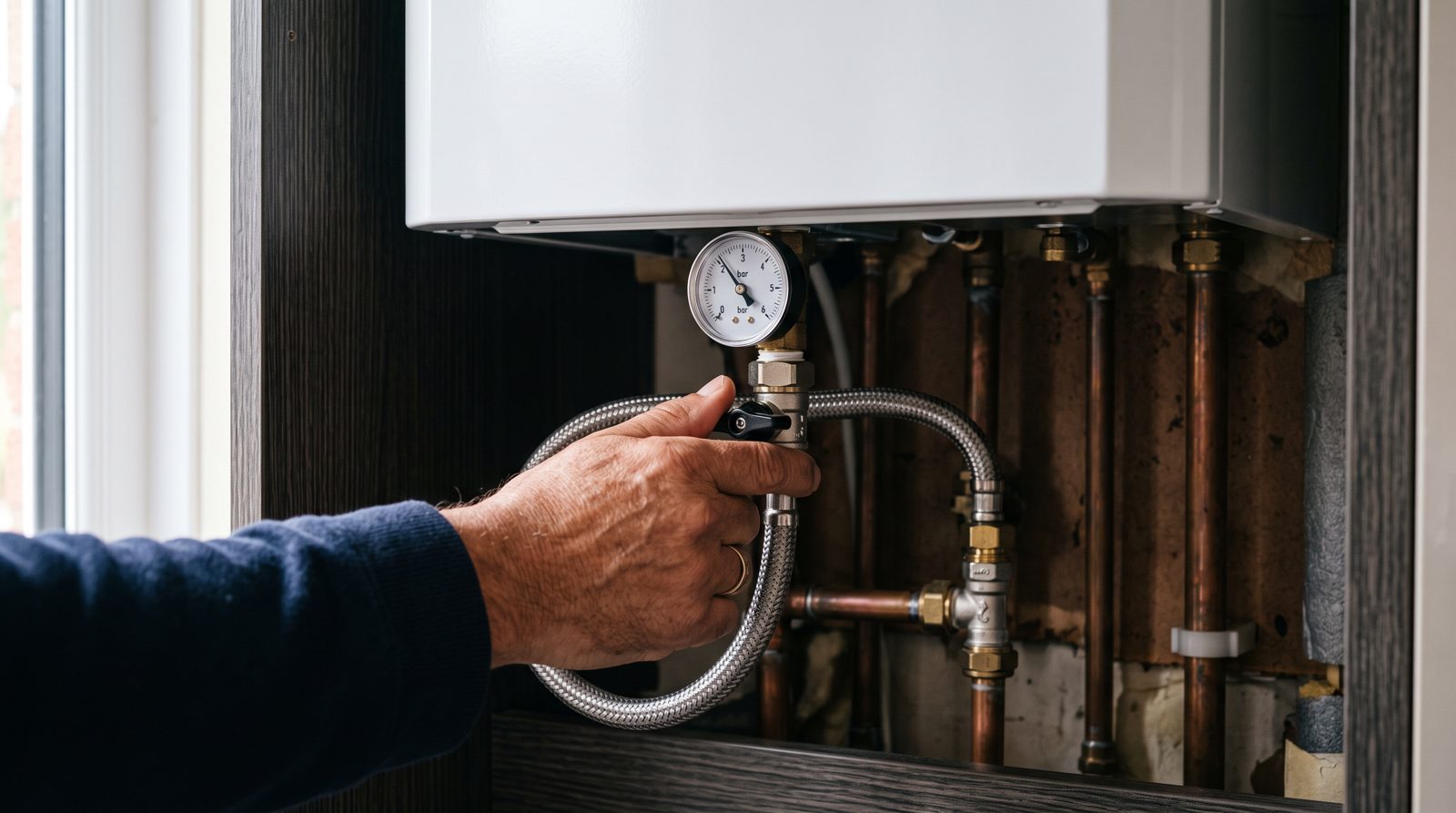
Water does not vanish from a sealed system. If the reading keeps dropping, water is getting out somewhere. The usual places are a weeping radiator valve, a joint under a floor, a drip from the pressure relief valve pipe outside, or a fault inside the boiler. Bleeding radiators also lowers the pressure a little, which is normal and is put right with a quick top-up. Our guide to a boiler losing pressure covers the causes in more detail, and how to repressurise a boiler shows the top-up itself.
Is low or high pressure dangerous?
Low pressure is not dangerous in itself. The boiler simply stops until the pressure is restored. High pressure is managed by the pressure relief valve, which is designed to open at 3 bar and dump water safely outside. What you should not ignore is a pattern: pressure that keeps falling means a leak that could be damaging a floor or ceiling, and pressure that keeps rising to the valve means a part inside the boiler needs attention before it fails.
When to call an engineer
- You are topping up more than once a month with no obvious leak.
- The gauge reads zero and will not rise when you open the filling loop.
- The pressure shoots up to the red zone whenever the heating runs.
- There is water dripping from the pipe on the outside wall.
- The boiler shows a pressure fault code you cannot clear with a top-up.
These are all jobs for boiler repairs by a registered engineer rather than repeated topping up, which only hides the problem.
How DCI Boilers can help
DCI Boilers carries out boiler repairs across Cornwall and Devon, from expansion vessel recharges and relief valve replacements to tracking down the leak that keeps emptying your system. Our engineers are Gas Safe and OFTEC registered, we quote a fixed price before any work starts, and if it is urgent we offer an emergency boiler call-out.
Need help now? Call DCI Boilers on 07888 862 603 or get a free quote.
Frequently asked questions
What should boiler pressure be when the heating is off?
Between 1 and 1.5 bar for most boilers. Check the manual for your model, because a few manufacturers specify a slightly different cold figure.
What should boiler pressure be when the heating is on?
It normally rises to somewhere between 1.5 and 2 bar once the system is hot. It should settle back down as the system cools.
Is 2 bar too high for a boiler?
Not while the heating is running. If the gauge reads 2 bar when the system is cold, bleed a radiator briefly to bring it back towards 1.3 bar.
Why does my boiler pressure keep going up and down?
A small swing between cold and hot is normal. Large swings usually point to a flat expansion vessel, which an engineer can recharge or replace.