
Preparing your home for a boiler installation takes about an hour the evening before and saves the engineer a good deal of time on the day. Clear the space around the boiler and any radiators, make sure the engineer can park near the door, protect anything precious along the route from the door to the boiler, and plan for a day without hot water and heating. Everything else, from dust sheets to removing the old boiler, is the engineer’s job.
Most people have never had a boiler fitted before, so the questions are always the same: do I need to empty the cupboard, will they need to get upstairs, can I go to work? Here is a straightforward checklist, in the order you would tackle it.
The night before
Clear the boiler area
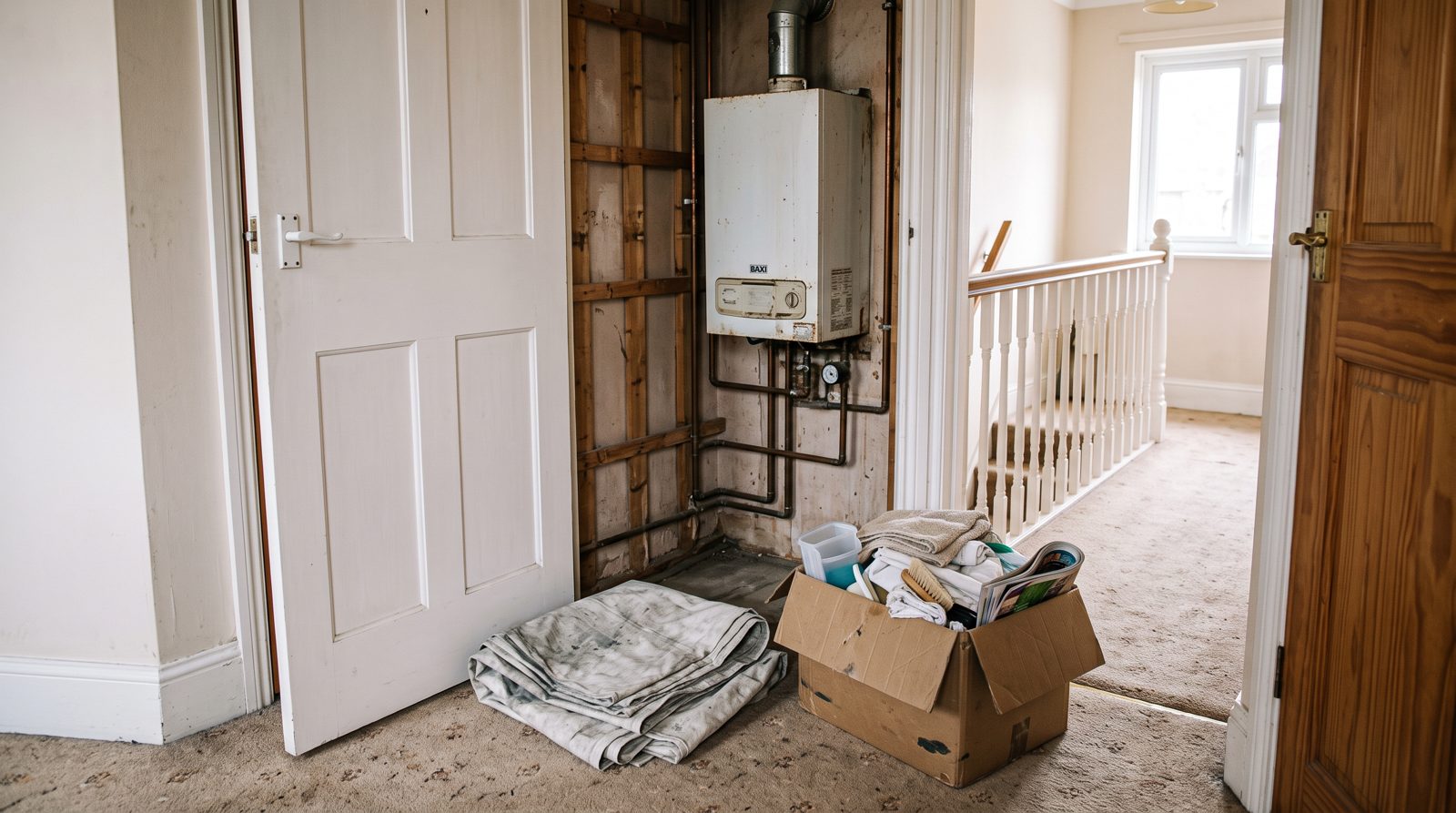
Empty the cupboard or the space around the boiler completely. The engineer needs room to lift the old boiler off the wall, which is heavier and more awkward than it looks, and room to work on the pipework below it. Take down shelves that sit within arm’s reach of the boiler, remove anything stored on top of a floor-standing boiler and clear the worktop under a kitchen boiler.
Clear the flue route
Look outside at where the flue comes through the wall. The engineer needs to reach it from outside, so move bins, planters and bikes away from that spot. If the flue goes through the roof, a clear path to the loft hatch is needed.
Free up every radiator
The system will be drained, flushed, refilled, bled and balanced, which means the engineer needs to get to both ends of every radiator in the house. Pull furniture away, remove radiator covers, take towels off rails and move anything stored under or in front of them. Our guide on whether you need access to all radiators for a new boiler explains why this matters.
Protect the route
The engineer will lay dust sheets, but it does no harm to lift a favourite rug, move a vase off the hall table and put pets somewhere calm. If pipework runs under floors that will be lifted, clear the furniture off those boards.
Find the paperwork
If you have the old boiler’s manual and service history, leave it out. It helps the engineer confirm the model and the age of the system, which shapes how thorough the flush needs to be.
On the morning
- Shower early. Hot water is off from the moment the old boiler is drained, usually within the first hour.
- Fill the kettle and a jug, in case the stopcock is off when you want a cup of tea.
- Run the washing machine or dishwasher before the engineer arrives rather than during the job.
- Parking. The engineer arrives with a boiler, a flue kit and heavy tools. Space outside the door, a visitor permit if you live in a permit zone, or a note about where to park all help.
- Introduce the house. Show the engineer the stopcock, the fuse board, the gas meter or oil tank, the loft hatch and any radiator that has been playing up.
During the day
You do not need to stay in the room, but someone should be at home or reachable, because the engineer may need a decision, such as where a new thermostat goes or whether a corroded valve should be replaced while the system is open. If you plan to go out, leave a phone number and agree a time to be back for the handover, which takes around half an hour.
In winter, a plug-in heater keeps one room comfortable until the heating is back. Our guide on whether the water gets turned off during a boiler installation explains which supplies are off and for how long.
The handover
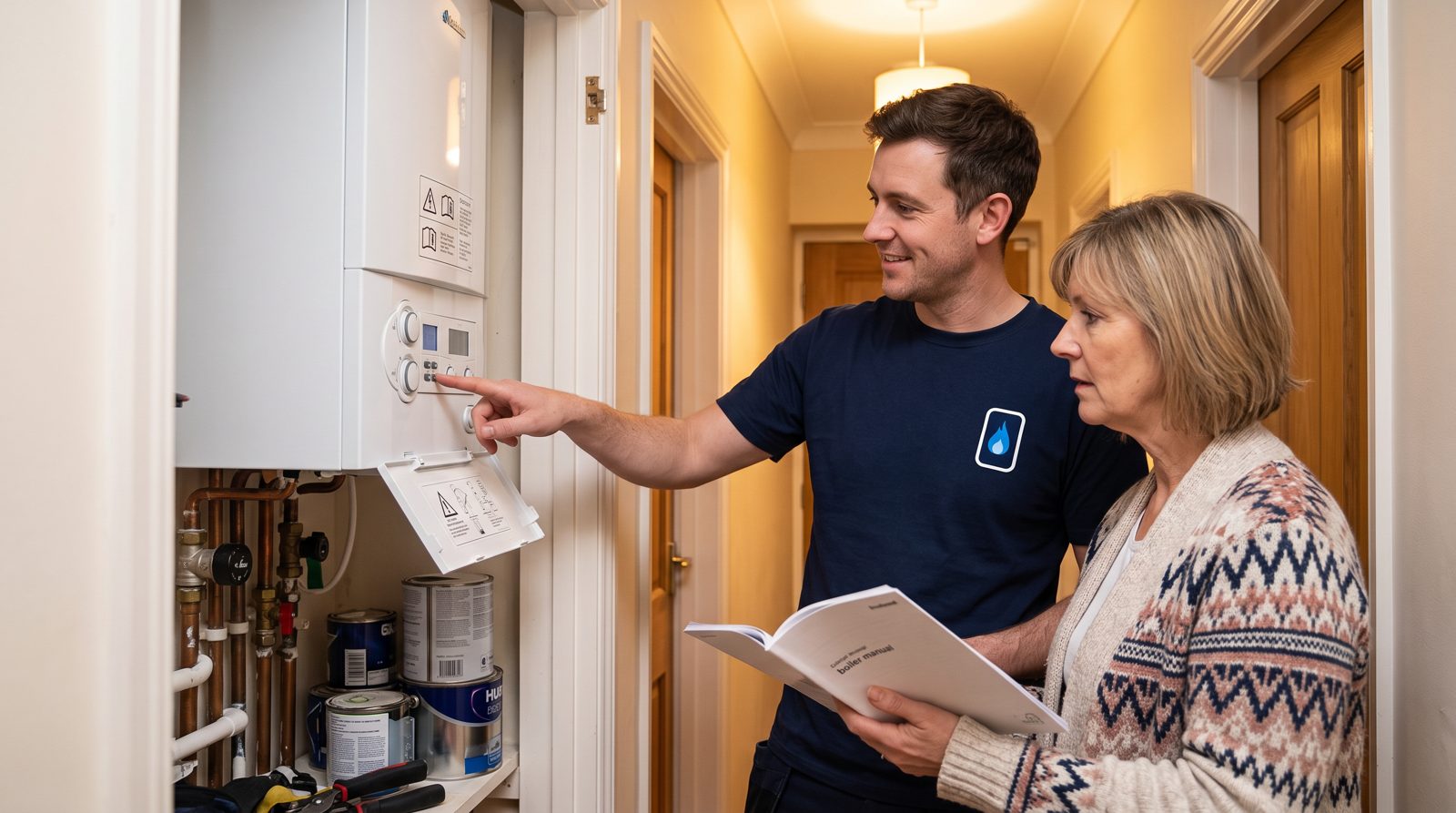
Set aside half an hour at the end. The engineer will show you the controls, the pressure gauge and the filling loop, explain the condensate pipe, run the heating so you can check every radiator, and hand over the manual with the commissioning checklist completed. Ask anything you like. It is far easier to learn how to top up the pressure with the engineer standing next to you than from a video in January.
What the engineer does, so you do not have to
- lays dust sheets and protects the working area
- drains the system and removes the old boiler and flue
- flushes, refills and bleeds the system
- fits, tests and commissions the new boiler
- takes away the old boiler, flue and all packaging
- registers the warranty and notifies the installation for the Building Regulations certificate
How DCI Boilers can help
DCI Boilers fits gas and oil boilers across Cornwall and Devon, and our Gas Safe and OFTEC registered engineers tell you at the survey exactly what to clear and what to expect on the day. Everything is quoted at a fixed price beforehand. Read about our gas boiler replacement service or, for rural homes, our oil boiler replacement page.
Need help now? Call DCI Boilers on 07888 862 603 or get a free quote.
Frequently asked questions
Do I have to empty the whole cupboard?
Yes. The engineer needs space to lift the old boiler down and to work on the pipework beneath, and anything left in the cupboard is at risk of dust and water.
Can I go to work while the boiler is fitted?
You can, as long as someone lets the engineer in, the engineer can reach you by phone and you are back for the handover.
Do I need to turn anything off before the engineer arrives?
No. The engineer isolates the gas or oil, the electrics and the water as part of the job.
Will pets be a problem?
Doors are open and tools are on the floor for much of the day, so a calm room away from the work, or a day at a friend’s, is kinder for a dog or cat.