
A modern condensing oil boiler converts over 90 per cent of the energy in kerosene into heat for the house. An older non-condensing oil boiler, of the kind still common in rural Cornwall and Devon, manages somewhere between 60 and 80 per cent, and less as it ages. The gap is the single biggest lever on your oil bill, but it is not the only one: the flow temperature, the controls, the state of the burner and the insulation of the pipework all decide how much of each tank ends up as warmth rather than flue gas.
This guide explains how oil boiler efficiency is measured, what makes a condensing oil boiler different, the settings and habits that reduce consumption on any boiler, and how to work out whether replacement makes sense.
How oil boiler efficiency is rated
Like gas boilers, oil boilers carry an ErP energy label and a seasonal efficiency figure. New condensing oil boilers are A-rated with efficiencies in the low nineties. Older boilers can be looked up on the product characteristics database by model to find their original efficiency, though a boiler that has run for twenty years with intermittent servicing will be below its original figure.
Why condensing oil boilers are different
Burning kerosene produces water vapour, and that vapour carries heat. A conventional boiler sends it up the flue. A condensing boiler passes the flue gases through a second heat exchanger cool enough to condense the vapour, recovering the heat and draining the condensate away. That is where the extra ten to twenty per cent comes from. As with gas, the boiler only condenses when the return water is cool enough, so a condensing oil boiler run with the flow temperature at maximum gives away much of its advantage.

Settings that cut oil use on any boiler
- Lower the flow temperature. On a condensing boiler, a heating flow temperature of around 60 to 65 degrees keeps it condensing in most homes. On any boiler, a lower flow temperature reduces losses, as long as the radiators can still heat the house.
- Use the controls properly. A programmer with a sensible schedule, a room thermostat and thermostatic radiator valves in the rooms you use least stop the boiler heating empty rooms.
- Consider weather compensation. Many modern oil boilers support an outdoor sensor that lowers the flow temperature on mild days.
- Set the hot water sensibly. On a system with a cylinder, a cylinder thermostat at 60 degrees and a timer that heats water once or twice a day rather than all day saves a surprising amount.
Maintenance that keeps efficiency up
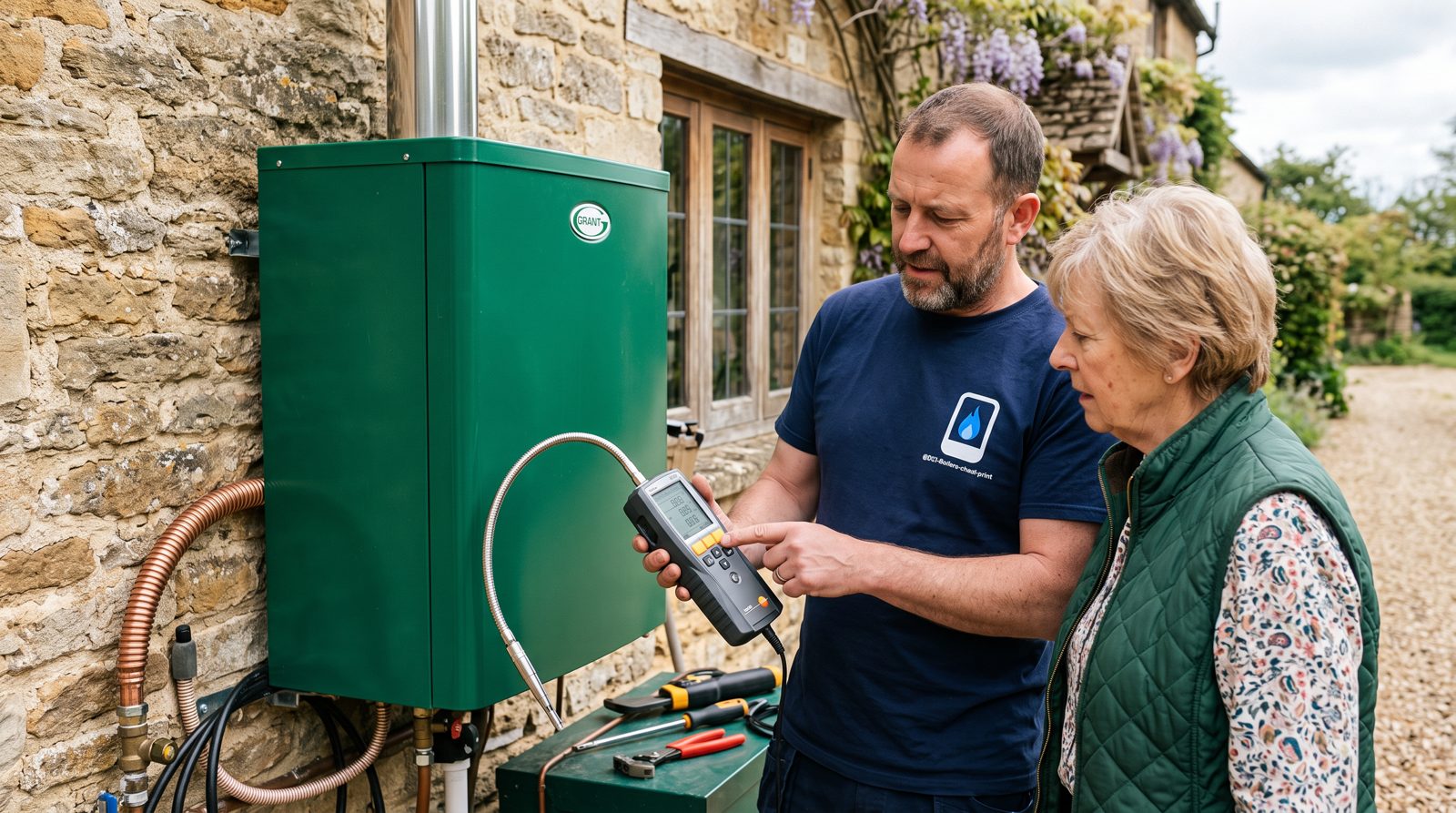
- Annual service. A new nozzle, clean baffles, a clean heat exchanger and a correctly set burner can restore several percentage points on a neglected boiler. Combustion is tested with an analyser and a smoke test. Our guide to what an oil boiler service includes explains each step.
- Clean fuel. Water and sludge in the tank cause poor combustion. Have the tank checked and the filter replaced at each service.
- Clean system. Sludge in the radiators insulates the heat exchanger and slows heat transfer. A magnetic filter and inhibitor keep it clean.
- Insulated pipework. External boilers lose heat through uninsulated flow and return pipes. Lagging pays for itself in a season.
Habits that help
Bleed radiators, keep them clear of furniture, close curtains at dusk, set the thermostat a degree lower and wear a jumper. None of these is a boiler matter, but together they reduce the heat the boiler has to produce. Our guide to preparing your boiler for winter collects the pre-season checks.
When replacement pays
If your oil boiler is non-condensing, past fifteen years or increasingly unreliable, the fuel saving from a modern condensing boiler is large enough that replacement is usually the sensible route, particularly at today’s oil prices. Add the reliability and the warranty and the case is strong. If your boiler is already condensing and well maintained, the gains from a new one are smaller and the settings and controls above are the better investment. Our guide to how long an oil boiler lasts helps you judge where yours sits.
How DCI Boilers can help
DCI Boilers services and installs oil boilers across Cornwall and Devon with OFTEC registered engineers who set every boiler up to condense, fit the controls that let it and test combustion at every visit. If your boiler is at the end, our oil boiler replacement service fits modern condensing boilers at a fixed price with manufacturer warranties of up to 12 years. If it is not, a boiler servicing visit will get the most out of it.
Need help now? Call DCI Boilers on 07888 862 603 or get a free quote.
Frequently asked questions
What efficiency should a new oil boiler have?
A-rated, with a seasonal efficiency in the low nineties. All new condensing oil boilers meet this.
Does an oil boiler service improve efficiency?
Yes. A new nozzle, clean baffles and a correctly set burner can restore several percentage points on a boiler that has been neglected.
What flow temperature should an oil boiler run at?
On a condensing boiler, around 60 to 65 degrees for heating keeps it condensing. Your engineer can set it to suit your radiators.
Is an external oil boiler less efficient?
Not in itself, but uninsulated pipework between the boiler and the house loses heat. Lag the pipes and the difference disappears.