
When one radiator stays cold and every other radiator is hot, the boiler is fine and the fault is at that radiator: air trapped inside it, a thermostatic valve whose pin has stuck down, a lockshield valve closed too far so the water bypasses it, sludge settled in the bottom, or, less often, a blockage or airlock in the pipework feeding it. Most of these are fixed in a few minutes with a radiator key and a spanner. The rest need an engineer to flush the radiator or trace the pipework.
This guide takes the causes in the order you should check them, with the fix for each, and explains how to tell a radiator problem from a pipework problem.
1. Air in the radiator
If the radiator is cold at the top and warm at the bottom, air has collected inside. Turn the heating off, put a cloth under the bleed valve at the top corner, open it a quarter turn with a radiator key until water appears, then close it. Check the boiler pressure afterwards and top up if it has dropped. Our guide to how to bleed radiators covers the technique.
2. Stuck thermostatic valve
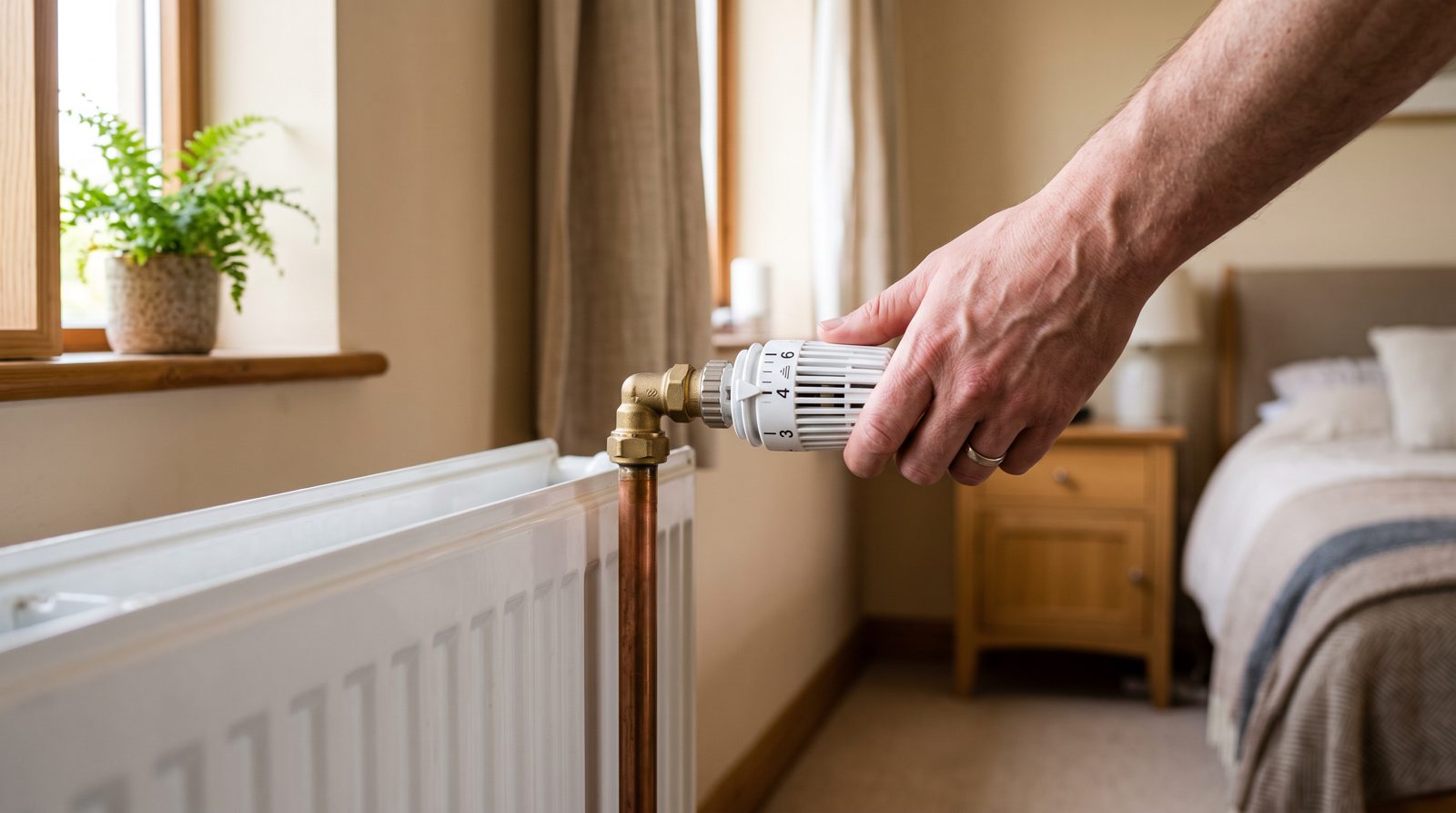
Thermostatic radiator valves have a pin under the head that moves up and down to control flow. After a summer turned off, the pin can stick down and the radiator stays cold regardless of the setting. Unscrew or unclip the head, and gently press the pin down and let it spring back a few times with a small spanner or pliers. If it moves freely, refit the head. If it is seized, the valve insert needs replacing.
3. Balancing
If the radiator warms slightly but never gets hot, and it is the furthest from the boiler or upstairs, the system is out of balance. Hot water takes the easiest route through the nearer radiators. Open the lockshield valve, the one under a plastic cap at the other end from the thermostatic valve, a turn or two with a spanner and give it half an hour. Proper balancing sets every lockshield so all the radiators heat evenly, and is worth having an engineer do once.
4. Sludge
If the radiator is hot at the top and cold at the bottom, sludge has settled inside. Bleeding will not help. The radiator needs removing and flushing, or the system needs a chemical clean or power flush. Our guide to radiators cold at the bottom explains the options.
5. Both valves closed
It sounds obvious, but a radiator that was turned off at both ends during decorating, or whose lockshield was closed to stop a leak, is a common find. Check both valves are open.
6. Pipework problems
If the radiator has been bled, the valves are free and open, the lockshield is open and it is still cold, the problem is in the pipes feeding it.
- Airlock in the pipework. Common after the system has been drained. Sometimes cleared by closing every other radiator briefly so all the flow is forced through the cold one.
- Blockage. Sludge or a kinked microbore pipe. Needs an engineer to flush or repipe.
- Frozen pipe. In winter, a radiator in an extension or a room over a garage with pipes in a cold void.
- Wrong pipework. Occasionally a radiator was plumbed with the flow and return the wrong way round, which some valves tolerate and others do not.
Upstairs or downstairs all cold?
If it is a whole floor rather than one radiator, the cause is usually balancing, a zone valve or an airlock in that circuit. Our guide to heating not working but hot water is covers zone valves.
Checks in order
- Feel the radiator: cold top means air, cold bottom means sludge, cold all over means a valve or flow problem.
- Bleed it.
- Free the thermostatic valve pin.
- Open the lockshield a turn or two.
- Check both valves are open and the pipes are warm.
- If still cold, call an engineer.
How DCI Boilers can help
DCI Boilers fixes cold radiators across Cornwall and Devon, from valve replacements and balancing to flushing and pipework repairs, with Gas Safe and OFTEC registered engineers at a fixed price. See our heating services page, or mention the cold radiator when you book boiler servicing and we will look at it in the same visit.
Need help now? Call DCI Boilers on 07888 862 603 or get a free quote.
Frequently asked questions
Why is one radiator cold when the others are hot?
Air, a stuck thermostatic valve pin, a closed lockshield, sludge or a pipework blockage, in roughly that order of likelihood.
How do I free a stuck radiator valve?
Remove the thermostatic head and gently press the pin down and release it a few times until it springs freely. Replace the valve insert if it will not move.
Why is my radiator only warm, never hot?
The system is out of balance. Open the lockshield valve a little, or have the whole system balanced.
Can a single radiator be flushed?
Yes. An engineer removes it, flushes it through outside and refits it. It is quick if only one radiator is affected.