
Replacing a back boiler usually means removing the boiler and gas fire from behind the fireplace and installing a modern condensing boiler, most often a combi, in a kitchen or utility room. The chimney is capped or vented, the fireplace is made good or reused for a decorative fire, and the hot water cylinder and loft tanks are removed if a combi is chosen. It is a two to three day job and it transforms both the running costs and the reliability of the heating.
Back boilers were fitted in huge numbers from the 1960s to the 1990s, and plenty are still running in Cornwall and Devon, often in homes that have had the same owners for decades. They are tough, but they are also inefficient, expensive to keep alive as parts dry up, and reliant on an open chimney that lets heat out of the house. This guide explains the options when yours finally needs to go.
What a back boiler is
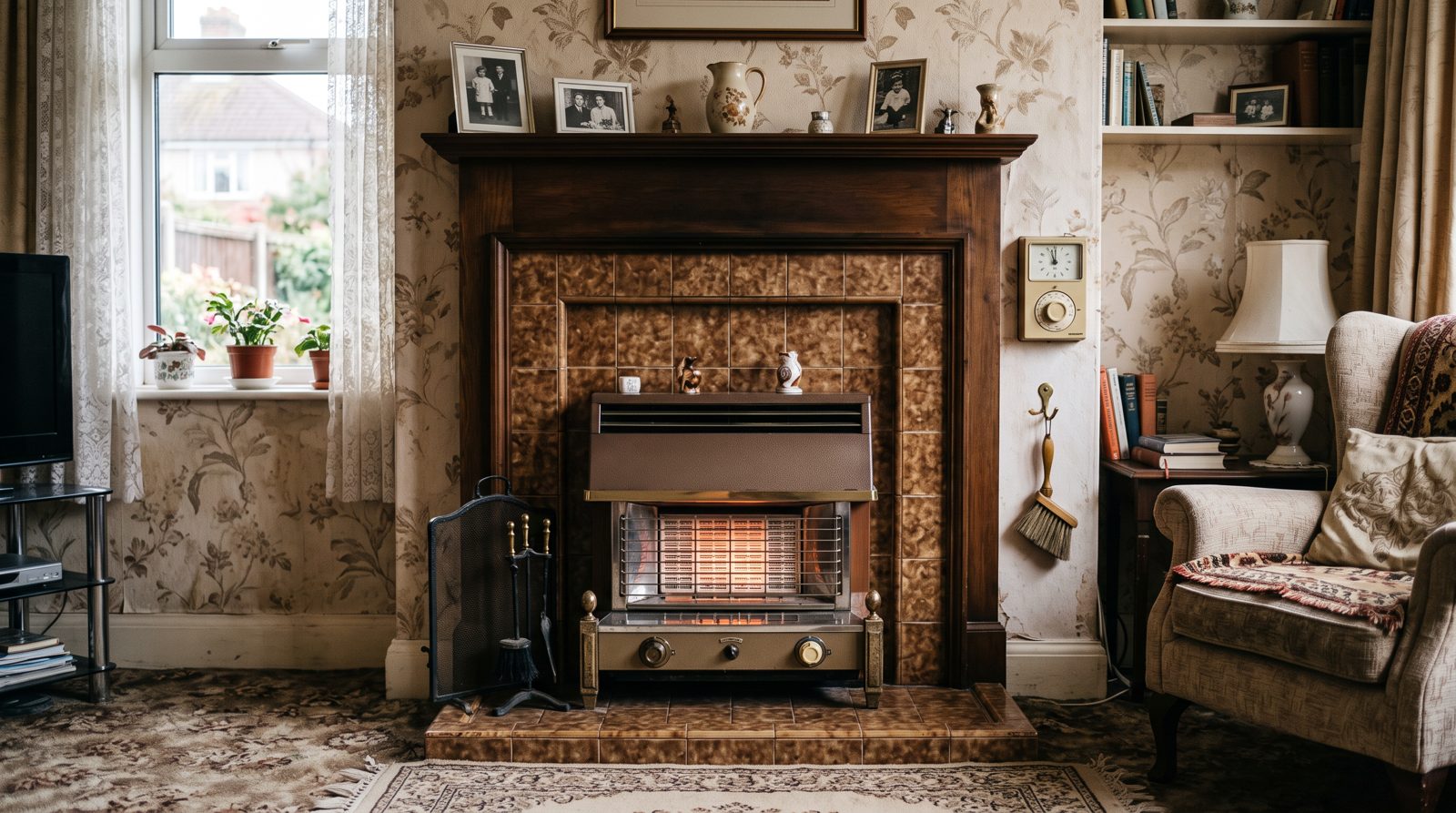
A back boiler sits in the fireplace recess behind a gas fire, using the chimney as its flue. It heats the radiators and a hot water cylinder, fed by tanks in the loft, and it is controlled by a programmer that is often as old as the boiler. The design has three drawbacks by modern standards: it is non-condensing, so a large share of the heat goes up the chimney; it needs a permanent air supply into the room; and it cannot be moved without removing the fire.
Option 1: a combi boiler in a new position
This is the most common choice. The back boiler and fire come out, and a combi is fitted in the kitchen, utility or a cupboard with a flue through an outside wall. The cylinder and loft tanks are removed, freeing the airing cupboard and the loft. Hot water is then on demand, mains pressure and unlimited. A combi suits most homes with one bathroom and works well with two if the incoming water main is decent. Our guide on what a combi boiler is explains how it works.
Option 2: a system boiler with the existing cylinder
If you have a large family, several bathrooms or you simply like stored hot water, a system boiler in a new position can keep the hot water cylinder, ideally upgraded to an unvented one that runs at mains pressure. The loft tanks still go. This option costs a little more than a combi because the cylinder stays in the system, but it delivers strong hot water to several outlets at once.
Option 3: a like-for-like back boiler
New condensing back boilers exist but are rare, and the installers who fit them are rarer still. They keep the fireplace layout but need a lined chimney and a condensate drain, and they cost as much as a conventional replacement. Unless the fireplace position is the only possible location in the house, it is seldom the best choice.
What happens to the fireplace and chimney
Once the back boiler is out, the chimney no longer carries flue gases and must not be sealed completely, or damp builds up. The usual approach is a vent at the bottom and a cap at the top. The fireplace itself can be bricked up and plastered, left open as a feature, or fitted with a new gas or electric fire. If you want a new gas fire, it needs its own flue arrangement and should be planned with the installer.
What the job involves
- Draining the heating and hot water system and isolating the gas.
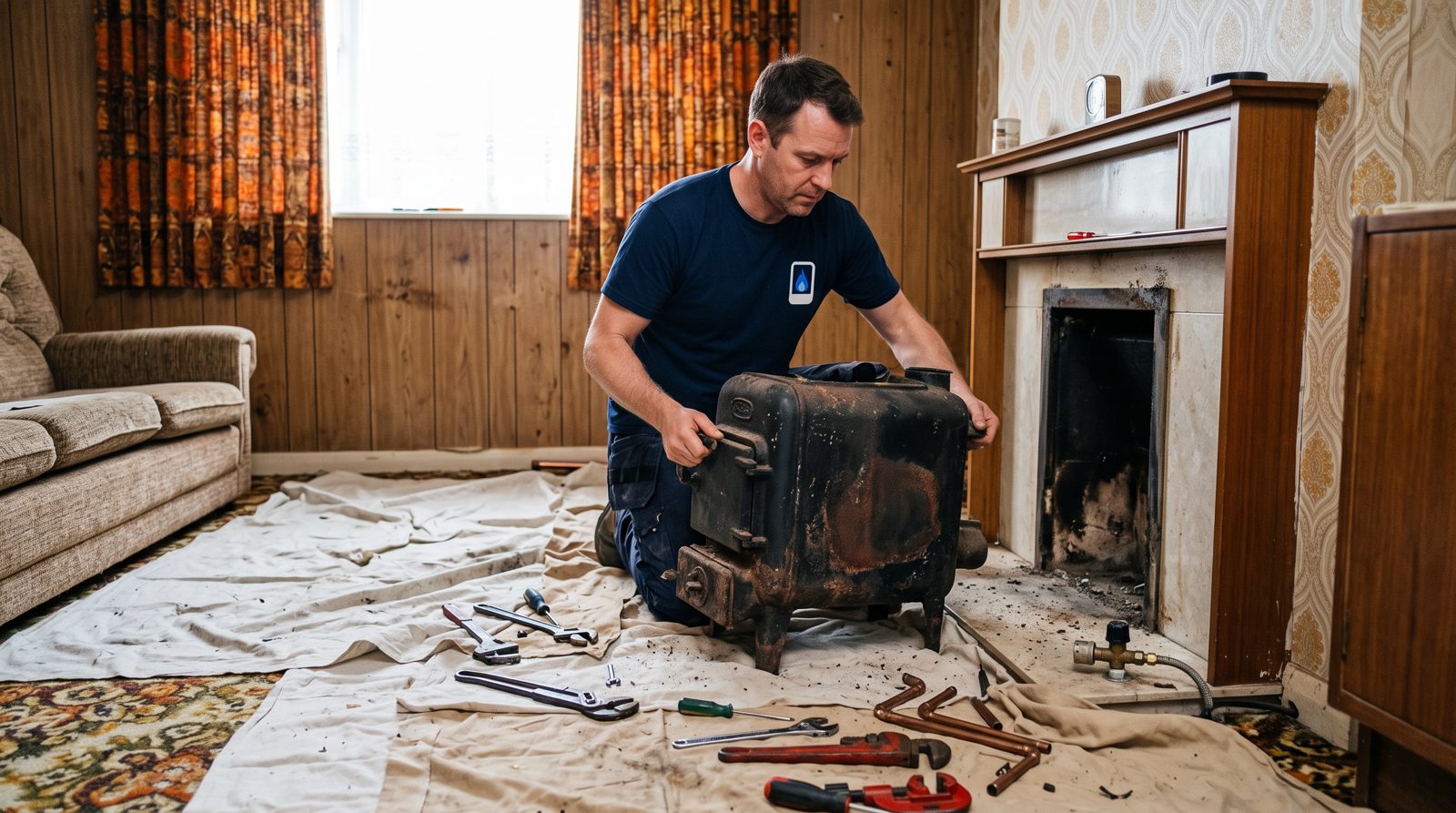
- Removing the gas fire, the back boiler and the pipework in the fireplace recess.
- Removing the hot water cylinder and loft tanks if converting to a combi.
- Installing the new boiler, flue, gas supply, condensate drain and controls in the new position.
- Converting the pipework from an open vented system to a sealed one, which usually means adding new valves and checking the radiators can take the pressure.
- Flushing the system, which is essential on an old open vented system full of decades of sludge.
- Commissioning, balancing and handing over the paperwork.
Two days is typical, three if the boiler is moving a long way or the radiators are being replaced. Our guide to what happens during a boiler installation explains each stage.
Things to plan for
- Radiators. Old open vented systems sometimes have radiators that will not cope with a sealed system, and it is cheaper to replace them during the job.
- Water pressure. A combi needs decent mains pressure. The survey should test it.
- Decorating. Removing the fire and making good the recess leaves some decorating to do afterwards.
- Loft space. Removing the tanks frees a surprising amount of room, but the tanks have to come down through the hatch, sometimes in pieces.
How DCI Boilers can help
DCI Boilers replaces back boilers across Cornwall and Devon with modern combi and system boilers, fitted by Gas Safe registered engineers at a fixed price with manufacturer warranties of up to 12 years. We survey the house, test the water pressure, plan the new position and deal with the fireplace and chimney as part of the job. Read more on our gas boiler replacement page.
Need help now? Call DCI Boilers on 07888 862 603 or get a free quote.
Frequently asked questions
Can a back boiler still be repaired?
Sometimes, but parts for most models are no longer made, and a registered engineer may decline to work on one that fails a safety check.
Do I have to remove the gas fire?
Yes. The fire and the back boiler are one unit and share the flue. A new gas fire can be fitted afterwards if you want one.
Will I lose my hot water cylinder?
Only if you choose a combi. A system boiler keeps a cylinder, usually upgraded to an unvented one.
How long does a back boiler replacement take?
Two to three days, because the boiler moves, the system changes from open vented to sealed and the fireplace is made good.