
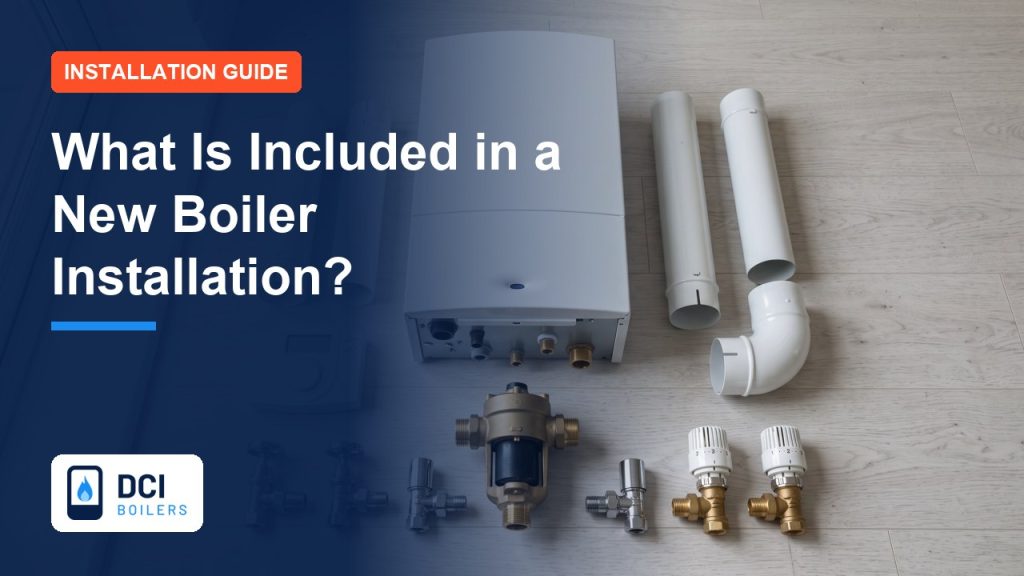
A new boiler with installation should include the boiler itself, a new flue, the controls required by Building Regulations, a magnetic system filter, a chemical or power flush of the existing system, inhibitor, all the pipework alterations needed to connect the new boiler, removal and disposal of the old one, full commissioning, the completed Benchmark checklist, warranty registration and notification for the Building Regulations certificate. If any of those are missing from what you have been offered, ask why.
“Boiler with installation” is sold in a lot of different ways, from a boxed boiler with a fitting fee on top to an all-in package that covers everything down to the last radiator valve. This guide lists what belongs in a complete installation, what is optional but worth considering, and what you should never have to pay extra for on the day.
The boiler
The named model, correctly sized for your home. The installer should choose the output based on your hot water demand and the size of the heating system, not simply match what was there before. Modern boilers modulate their output, so slightly oversizing for hot water is normal on a combi; wildly oversizing wastes money and cycles the boiler on and off. Our guide on what size boiler you need explains the maths.
The flue
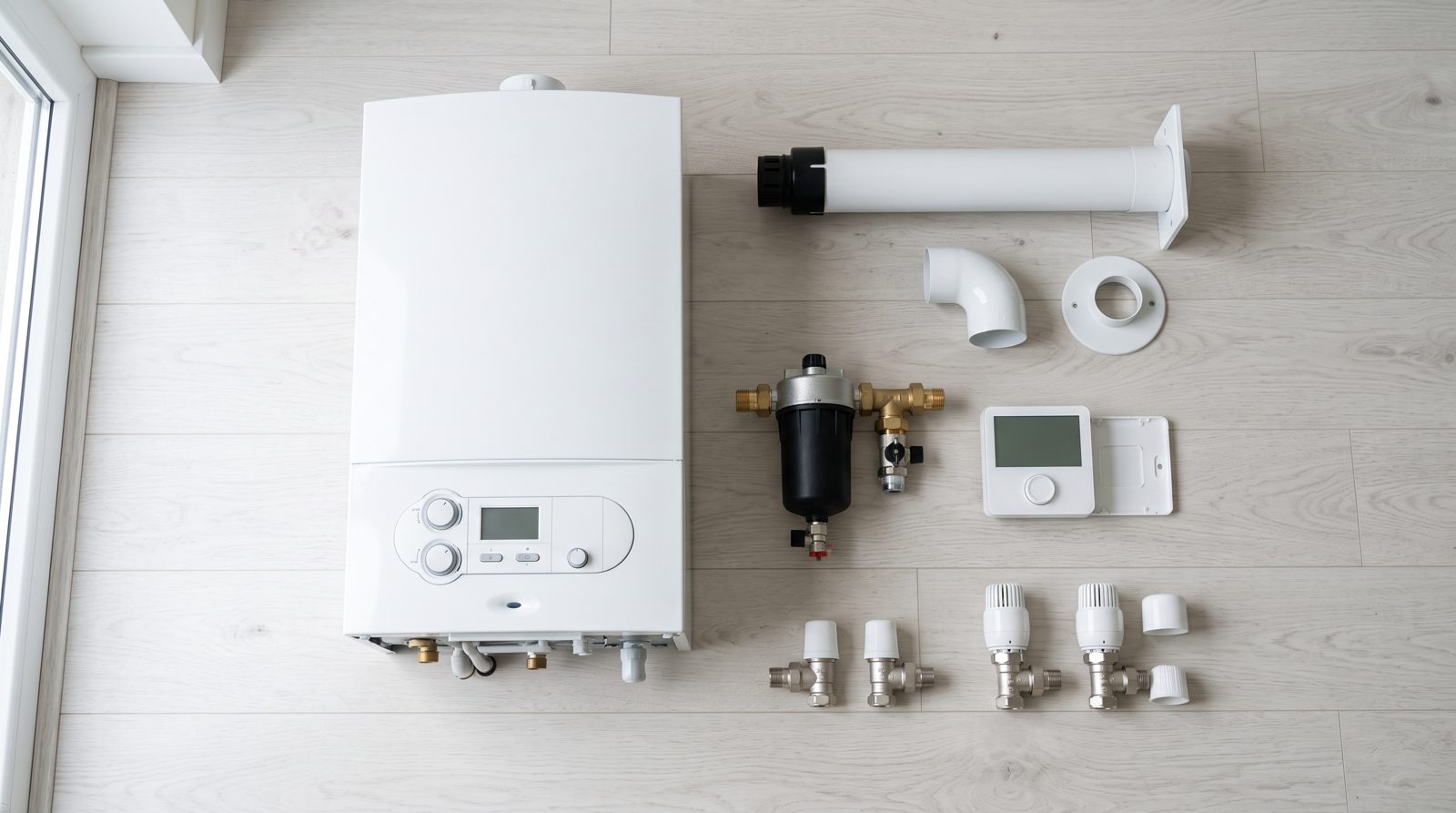
A new boiler always gets a new flue, because flue designs are specific to the boiler and the old one will not fit or seal correctly. Horizontal flues through an outside wall are standard; vertical flues through the roof or longer runs with bends are also common and should be itemised. The installer positions the terminal to meet the distance rules from windows, doors, boundaries and air bricks, which our guide on boiler flue regulations sets out.
Controls
Building Regulations require a new boiler to be fitted with a room thermostat and a timer or programmer, and in most cases thermostatic radiator valves on radiators that do not already have them. Many installers include a smart thermostat as standard or as an upgrade. Whatever is fitted, it should be named in the quote, and the installer should set it up and show you how it works before leaving.
System cleaning and protection
This is the part most likely to be quietly dropped from a cheap package, and the part that matters most to the boiler’s lifespan.
- A flush. Either a chemical cleanser circulated through the system or a full power flush with a pump, depending on how much sludge is in the pipework and radiators.
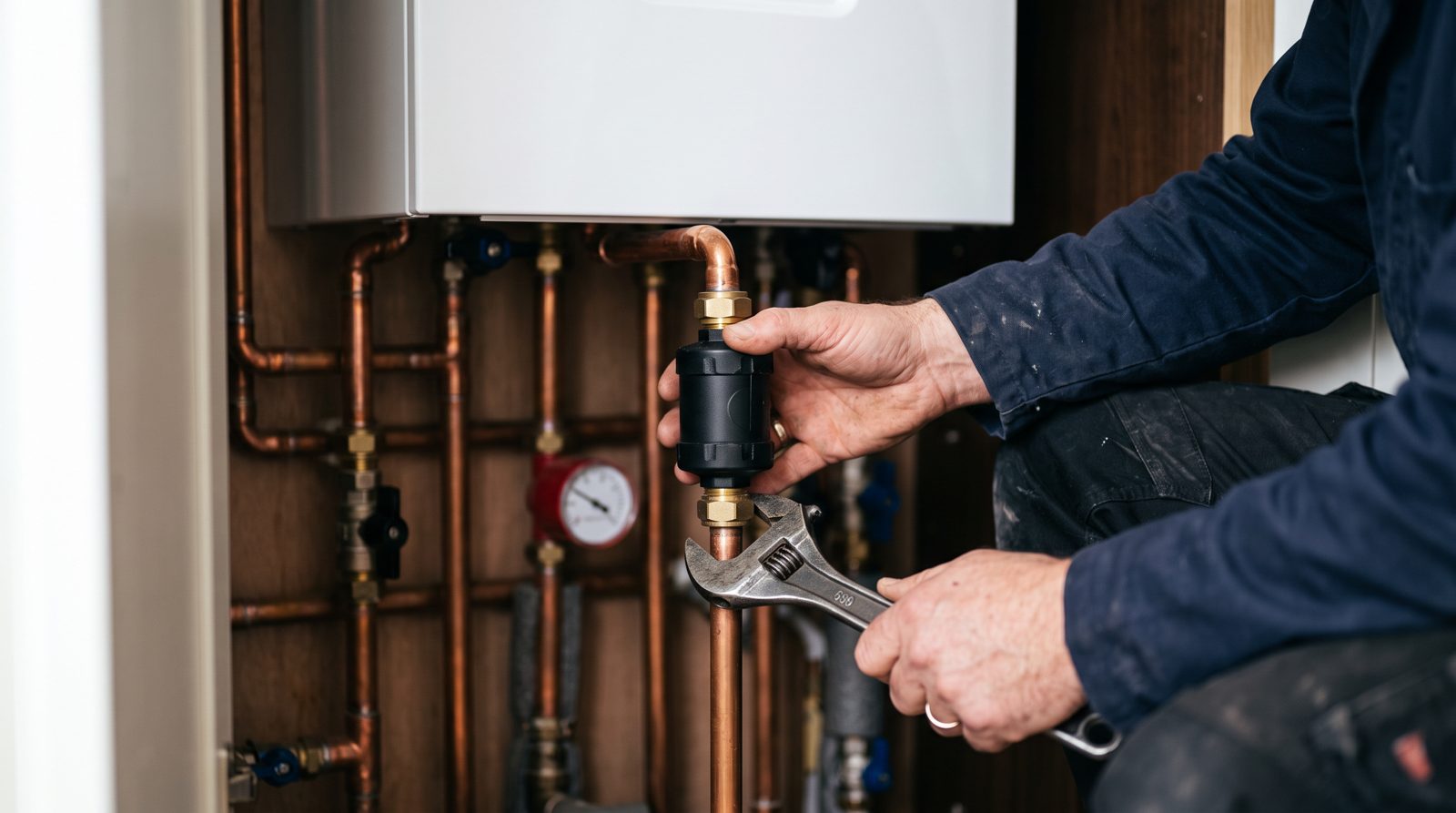
- A magnetic filter. Fitted on the return pipe to catch the iron oxide that would otherwise collect in the new heat exchanger. Most manufacturers require one for the warranty.
- Inhibitor. A chemical added to the system water that slows corrosion and stops new sludge forming.
Pipework and connections
The installer connects the new boiler to the gas or oil supply, the cold water, the heating flow and return, the hot water outlet on a combi, the condensate drain and the electrical spur. Any alteration needed to make those connections is part of the installation. If the gas pipe is undersized for the new boiler, which is common in older houses, upgrading it should be identified at the survey and included.
Removal and disposal
The old boiler, its flue and packaging are taken away. On a conversion from a conventional system, the hot water cylinder and the loft tanks are removed as well. It should never be left for you to arrange.
Commissioning
Commissioning is the testing and setting up that turns a fitted boiler into a working one: gas or oil pressure checks, leak testing, combustion analysis with a flue gas analyser, checking flow rates and temperatures, balancing the radiators and programming the controls. It is also where the Benchmark checklist in the manual is completed, and without that the warranty is not valid. Our guide on what happens during a boiler installation walks through commissioning in order.
Paperwork and warranty
Three things: the Benchmark checklist completed in the manual, the boiler registered with the manufacturer for its warranty, and the installation notified to Gas Safe or OFTEC so you receive the Building Regulations compliance certificate. The warranty length depends on the boiler and the installer’s accreditation; the longest, up to 12 years on some ranges, is only available through accredited installers.
Optional extras worth considering
Because the system is drained and the engineer is on site, some additions are far cheaper to do during an installation than later.
- new radiators or radiator valves where the old ones are tired
- a power flush rather than a chemical flush if the radiators are cold at the bottom
- a smart thermostat with room-by-room control
- a scale reducer in hard water areas
- moving the boiler to a more convenient position
What you should never be charged extra for on the day
With a fixed price after a proper survey, the boiler, flue, controls, filter, flush, removal, commissioning and paperwork are all in the price. The only things that should legitimately change the price are genuinely unforeseeable discoveries, such as pipework hidden in a wall that turns out to be corroded, and a good installer stops and talks to you before doing anything about those.
How DCI Boilers can help
Every DCI Boilers installation across Cornwall and Devon includes all of the above as standard, at a fixed price agreed after a survey, fitted by Gas Safe and OFTEC registered engineers with manufacturer warranties of up to 12 years. See our gas boiler replacement and oil boiler replacement pages for what we fit, or read our guide to boiler installation quotes before comparing ours with anyone else’s.
Need help now? Call DCI Boilers on 07888 862 603 or get a free quote.
Frequently asked questions
Does a new boiler installation include a new flue?
Yes, always. Flues are specific to the boiler model and are replaced with it.
Is a magnetic filter really necessary?
Most manufacturers require one as a condition of the warranty, and it is the single cheapest protection for the new heat exchanger.
Are new radiators included?
Not normally. Radiators are quoted as an extra, but they are cheaper to fit during the installation than afterwards.
Who registers the warranty?
The installer, within the manufacturer’s time limit, usually 30 days. Ask for the confirmation and keep it with the manual.