
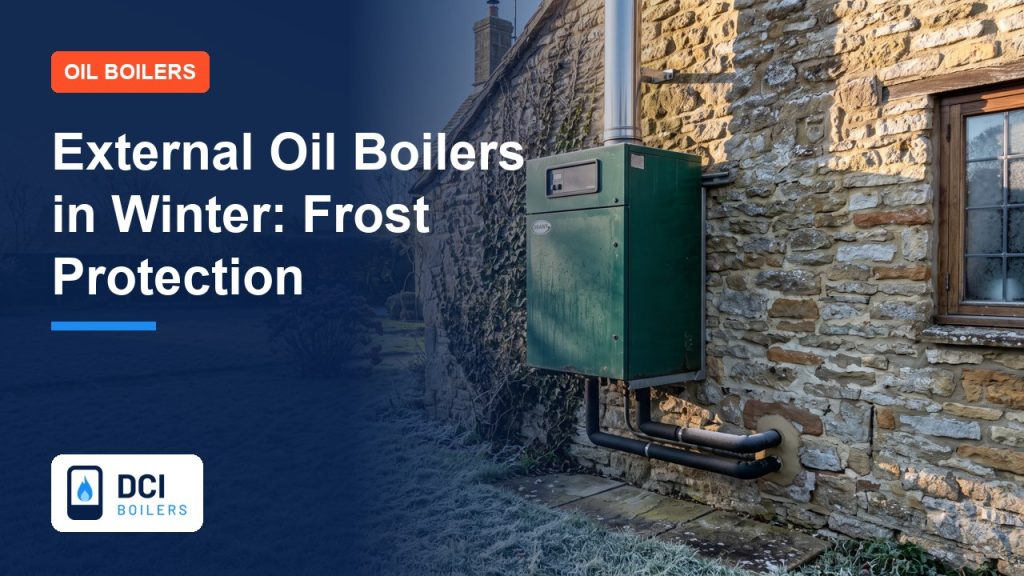
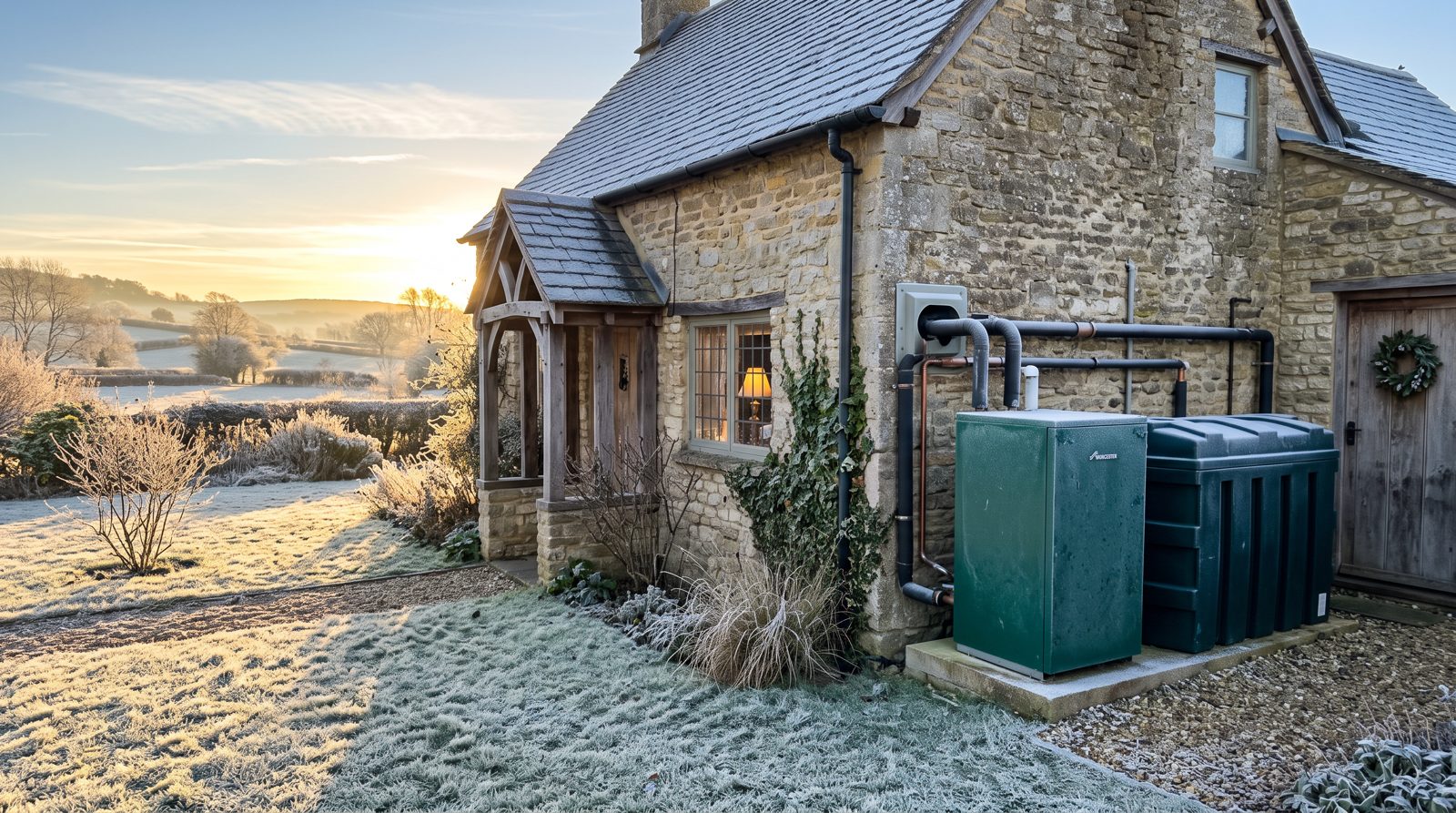
An external oil boiler is built for the weather, and modern models have frost protection that fires the boiler briefly whenever the temperature inside the casing drops towards freezing. The protection only works while the boiler has power and oil, which is why the first rule of an external boiler in winter is never to switch it off at the wall. The parts most at risk are outside the boiler: the flow and return pipes between the boiler and the house, the condensate pipe and the fuel line from the tank, all of which need insulation and a little attention before the cold arrives.
Cornwall and Devon rarely see prolonged deep frosts, but a few nights below minus five are enough to freeze a badly lagged pipe. This guide explains how the boiler protects itself, what it cannot protect, the checks to make in autumn and what to do if something has frozen.
How built-in frost protection works
Most external boilers have a frost thermostat inside the casing. When the temperature falls to a set point, typically a few degrees above freezing, it overrides the controls and runs the boiler and pump until the water is warm enough to be safe. Some models also have a pipe thermostat on the return that does the same job. The protection is automatic, uses very little oil, and works even when the heating is programmed off. It does not work if the power is off, the boiler is locked out or the tank is empty, so a locked-out external boiler in a cold snap is worth resetting sooner rather than later. Our guide to resetting an oil boiler lockout explains how.
What the boiler cannot protect
Flow and return pipes
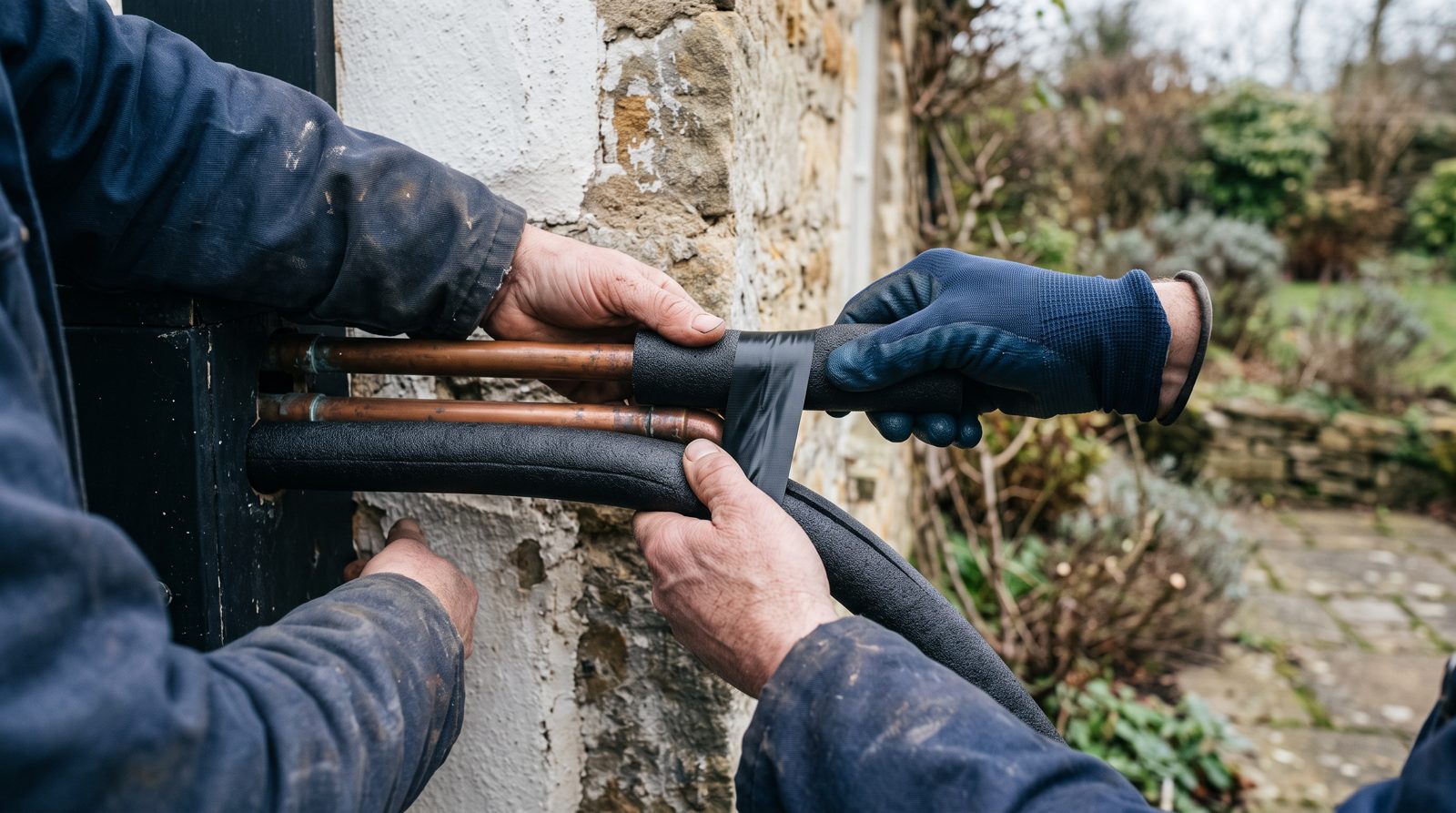
The pipes between the boiler and the house carry water that stands still whenever the heating is off. Uninsulated or poorly insulated pipe freezes first, and a frozen return stops the boiler circulating even if it fires. Every external run should be lagged with weatherproof, closed-cell insulation, with the joints taped and the lagging protected from birds and UV. Where a run is long, trace heating tape under the lagging is worth considering.
The condensate pipe
A condensing external boiler drains its condensate through a small pipe that is often routed outside to a drain. It is the most common freeze on any condensing boiler. Insulate it, keep the run short, use a larger diameter pipe where possible and make sure it falls steadily to the drain with no dips. Our guide to a frozen condensate pipe covers thawing and prevention.
The fuel line
Kerosene does not freeze at normal UK temperatures, but it can thicken, or wax, in a very hard frost, particularly in an exposed above-ground line or a filter bowl. The result is a starved burner and a lockout. Lagging the exposed line and filter, keeping the tank reasonably full and using a winter-grade additive if your supplier offers one all help.
The tank
Water in the bottom of the tank can freeze at the outlet. Having the tank checked for water at the annual service and drained if needed prevents it.
Autumn checks for an external boiler
- lagging on every external pipe intact, dry and taped at the joints
- condensate pipe insulated, short and falling to the drain
- casing door closed and sealed, with no gaps where wind can drive rain in
- base clear of standing water and leaves
- flue terminal clear of vegetation
- power supply switch on and labelled so no one turns it off
- tank above a quarter full and checked for water
- annual service done, so the boiler is not locked out when the frost comes
Our guide to preparing your boiler for winter covers the rest of the system.
If the boiler has frozen
A boiler that will not circulate on a frosty morning, or shows an overheat or flow fault, has probably frozen somewhere in the pipework. Do not pour boiling water on pipes or use a blowtorch. Warm the suspect section gently with warm water, a hot water bottle or a hairdryer, starting at the boiler end, and let the boiler run once flow returns. If you cannot find the frozen section, or the boiler will not reset once thawed, call an OFTEC engineer. A frozen pipe that has split will leak as it thaws.
Should the heating be left on in a cold snap?
The frost protection covers the boiler, but a low background setting on the room thermostat overnight during a hard frost keeps water moving through the whole system and the house above the point where pipes elsewhere freeze. It costs little and it is cheaper than a burst.
How DCI Boilers can help
DCI Boilers services and installs external oil boilers across Cornwall and Devon with OFTEC registered engineers who check the lagging, condensate route and fuel line as part of every boiler servicing visit. If your external boiler has frozen or locked out in the cold, our emergency boiler call-out runs around the clock. Read about our external oil boilers guide or our oil boiler replacement service.
Need help now? Call DCI Boilers on 07888 862 603 or get a free quote.
Frequently asked questions
Should I turn my external oil boiler off in winter?
No. The frost protection only works with the power on. Leave it on even if the heating is programmed off.
Can an external oil boiler freeze?
The boiler itself rarely does if it has power and oil. The pipework, condensate pipe and fuel line outside it can, unless insulated.
Does frost protection use a lot of oil?
Very little. It runs the boiler briefly only when the casing temperature drops near freezing.
What temperature does frost protection kick in?
Typically a few degrees above freezing inside the casing. The manual for your boiler gives the exact figure.