
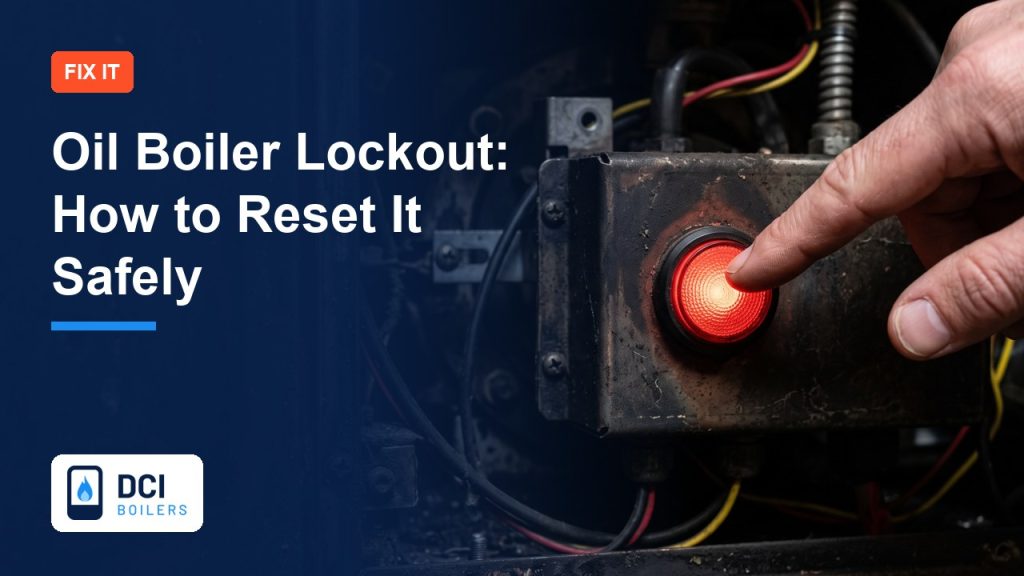
An oil boiler lockout is the burner’s safety system shutting the boiler down because it tried to light and either failed or lost its flame. To reset it, press the reset button on the burner control box once, wait, and let the boiler run through its start-up. If it fires and stays lit, the lockout was a one-off. If it locks out again, stop. Every attempt sprays oil into the combustion chamber, and repeated resets on a boiler with a real fault can fill the chamber with unburnt oil, which then ignites in a rush when the burner finally lights.
This guide explains what the lockout is protecting you from, exactly how to reset it, what usually causes lockouts in the first place, and how to tell a harmless one from a boiler that needs an engineer.
What the lockout is doing
When an oil burner starts, the fan runs, the pump builds pressure, the electrodes spark and oil is sprayed through the nozzle as a fine mist. A photocell watches for the flame. If it does not see one within a few seconds, or if the flame goes out while the boiler is running, the control box shuts everything down and lights the lockout lamp. That stops oil being pumped into a chamber with no flame to burn it. The lockout is not a fault in itself; it is the boiler refusing to do something unsafe.
How to reset an oil boiler safely
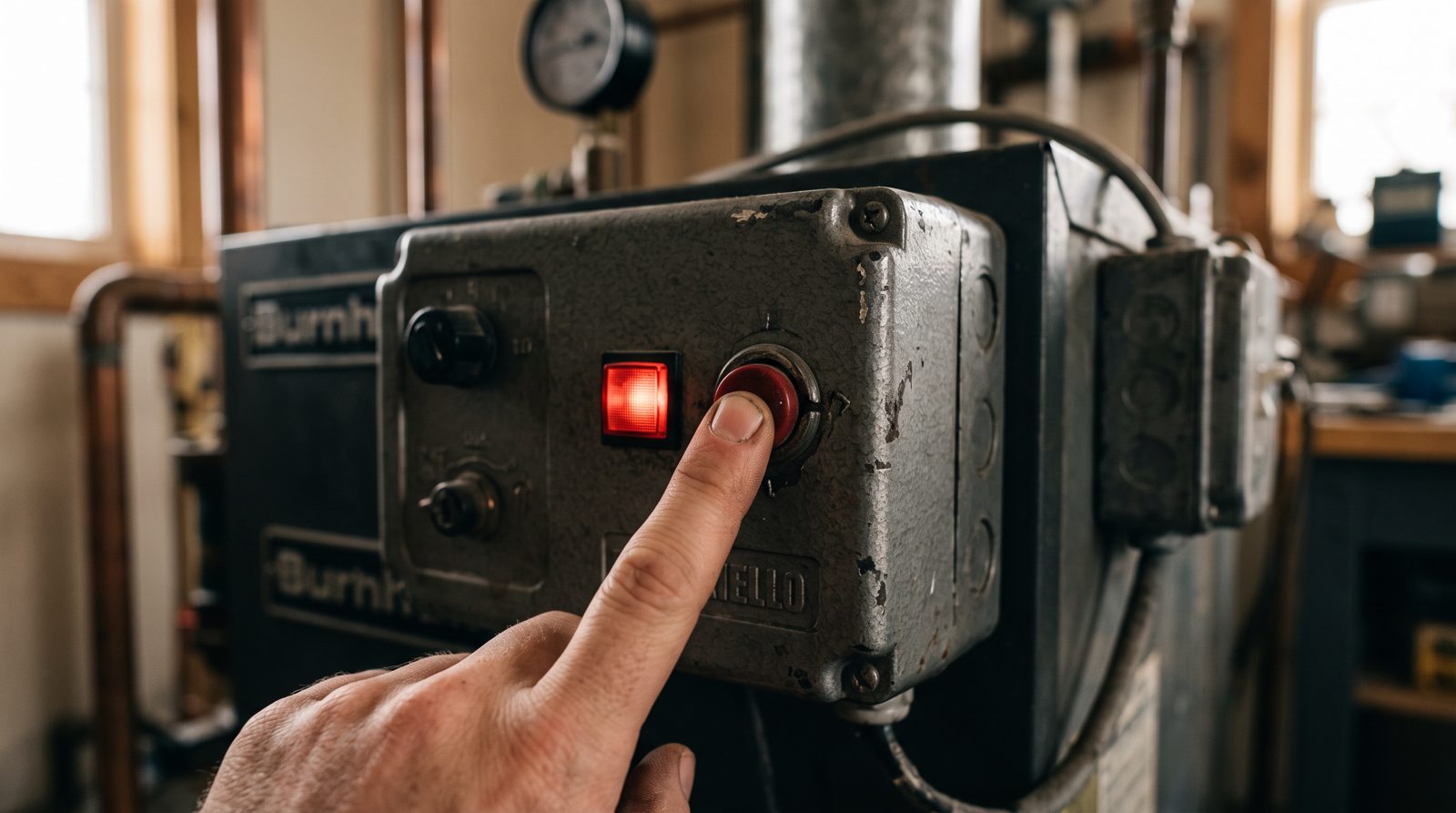
- Find the burner control box. On an internal boiler it is behind the front cover or on the burner at the bottom. On an external boiler it is inside the casing. The lockout light is usually red or orange, and the reset button is either part of the light or next to it.
- Check the tank has oil and the fire valve and any isolation valves are open.
- Press the reset once and release. Do not hold it.
- Stand back and wait. The fan runs, there is a pause, and the burner should light with a soft whoosh within about ten to fifteen seconds.
- If it lights and stays lit for a few minutes, the reset has worked. Note the date.
- If it locks out again, do not reset a second time. Turn the boiler off and call an OFTEC registered engineer.
Why only one reset
Each start-up attempt delivers a measured amount of oil through the nozzle. If it does not burn, it pools in the chamber and soaks into the baffles and the base. A second and third attempt add more. When the burner eventually lights, the pooled oil can ignite all at once, which at best puffs smoke and soot back through the boiler and at worst damages the chamber. Engineers see the results of this regularly. One reset tells you whether the lockout was a fluke. Two tells you nothing new.
Common causes of lockouts
- Low or empty tank. Air is drawn into the fuel line as the level drops, and the burner cannot hold a flame. Refill and have the line bled.
- Air in the fuel line after a delivery. A tank that ran empty lets air in, and a delivery does not push it out. The line needs bleeding. See our guide to a boiler not working after an oil delivery.
- Blocked nozzle. The nozzle is a precision part that wears and blocks. It is replaced at every service, and a missed service is the commonest reason for lockouts.
- Dirty photocell. Soot on the photocell stops it seeing the flame, so the control box shuts down a burner that is actually lit.
- Worn or misaligned electrodes. A weak spark or one in the wrong place fails to light the mist.
- Blocked filter. Sludge or water in the tank clogs the filter and starves the burner.
- Waxed or frozen fuel line. In hard frosts, kerosene can thicken in an exposed line.
- Failing pump, motor or control box. Less common, and needs an engineer.
- Strong wind. A gust down a poorly positioned flue can blow the flame out. An occasional lockout on a stormy night is not unusual.
When a lockout means a fault
A single lockout after a delivery, a storm or a power cut is normal. A lockout every few days, a lockout accompanied by smoke, soot, a smell of oil or a bang on lighting, or a boiler that will not reset at all, all mean a fault that an engineer needs to find. Our guide to an oil boiler not working covers the wider checks, and oil boiler smoking, sooting or smelling of oil explains those warning signs.
How an engineer fixes it
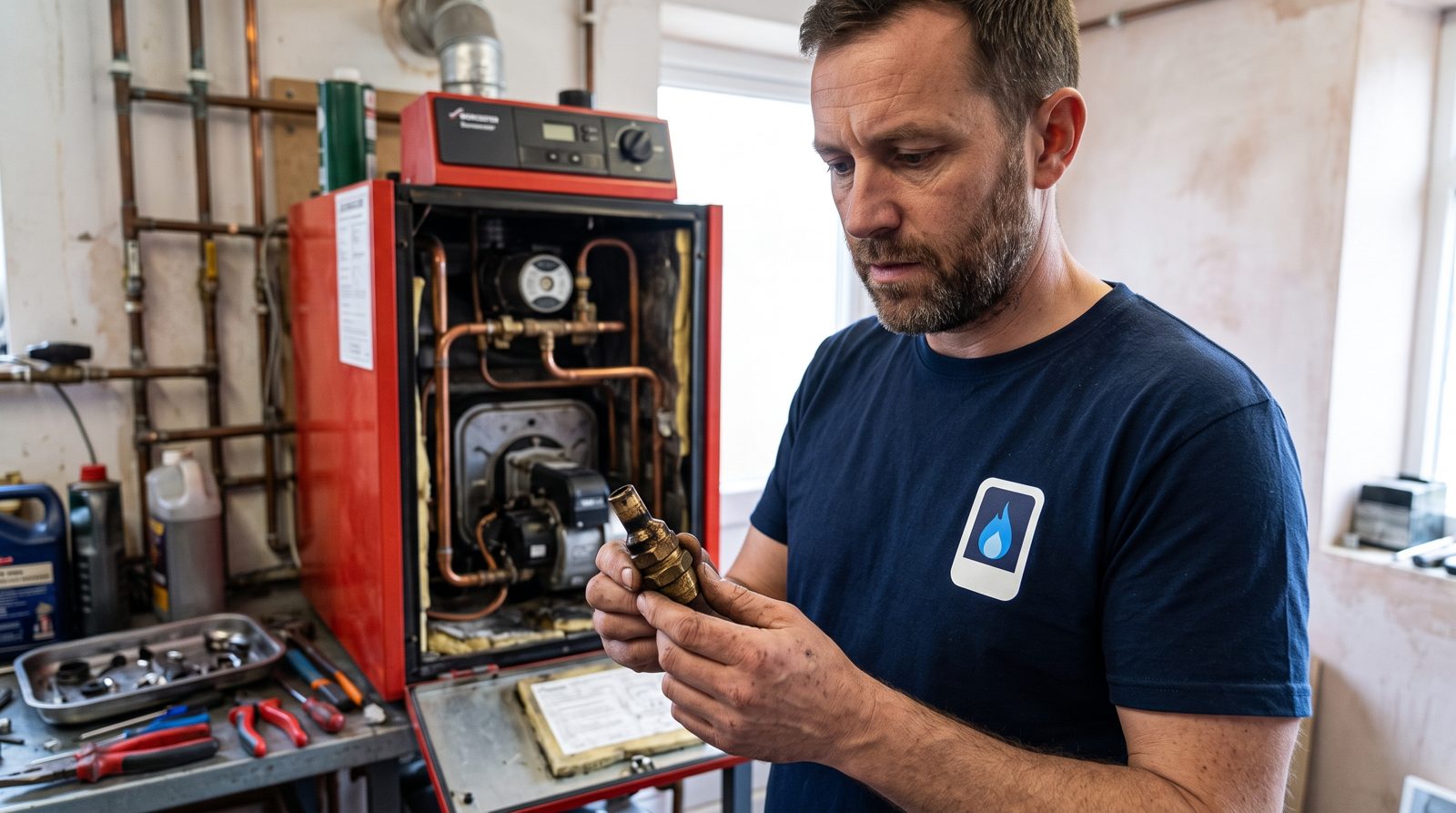
An OFTEC engineer checks the tank and filter, bleeds the fuel line, replaces the nozzle, cleans and sets the electrodes and photocell, checks the pump pressure and air setting, and fires the boiler with a combustion analyser and smoke test to confirm it is burning cleanly. Most lockout faults are fixed in one visit, and if the boiler is due a service the fix and the service are the same job.
How DCI Boilers can help
DCI Boilers repairs oil boilers across Cornwall and Devon with OFTEC registered engineers who carry nozzles, filters, photocells and electrodes for the common burners. Fixed prices before work starts, and an emergency boiler call-out for households with no heat. For a boiler that locks out now and then, book boiler repairs or a boiler servicing visit and we will stop it happening again.
Need help now? Call DCI Boilers on 07888 862 603 or get a free quote.
Frequently asked questions
Where is the reset button on an oil boiler?
On the burner control box, behind the front cover on an internal boiler or inside the casing on an external one. It is usually part of, or next to, the red lockout light.
How many times can I reset my oil boiler?
Once. If it locks out again, call an engineer rather than trying again.
Why does my oil boiler lock out in the wind?
A gust down the flue can blow the flame out. An occasional storm lockout is normal; frequent ones may mean the flue terminal needs a different position or a guard.
Can a lockout damage the boiler?
A single lockout does no harm. Repeated resets can flood the chamber with oil and cause a delayed ignition that damages the baffles and blows soot through the boiler.