

Smoke from the flue, soot around the boiler or a smell of oil are all signs that an oil boiler is not burning cleanly or is leaking fuel. Black smoke and soot mean the burner is running rich, usually because of a worn nozzle, a blocked air intake or a sooted heat exchanger. A smell of oil means unburnt kerosene, either leaking from the fuel line or pooling in the combustion chamber after failed ignitions. A strong smell of oil, or smoke inside the house, means switch the boiler off, close the fire valve and call an OFTEC registered engineer.
This guide takes each sign in turn, explains what is happening in the burner, tells you what you can safely check and what the engineer will do.
Black smoke from the flue
A healthy oil boiler produces a faint plume of water vapour, particularly on cold days, and nothing more. Black or grey smoke means incomplete combustion: too much oil for the air available. The usual causes are a worn or blocked nozzle spraying a poor pattern, a pump pressure that has drifted, a blocked air intake or fan, or a heat exchanger so sooted that the gases cannot pass properly. It is not usually dangerous outside, but it is wasting oil, sooting the boiler further and heading for a lockout.
Soot around the boiler or in the house
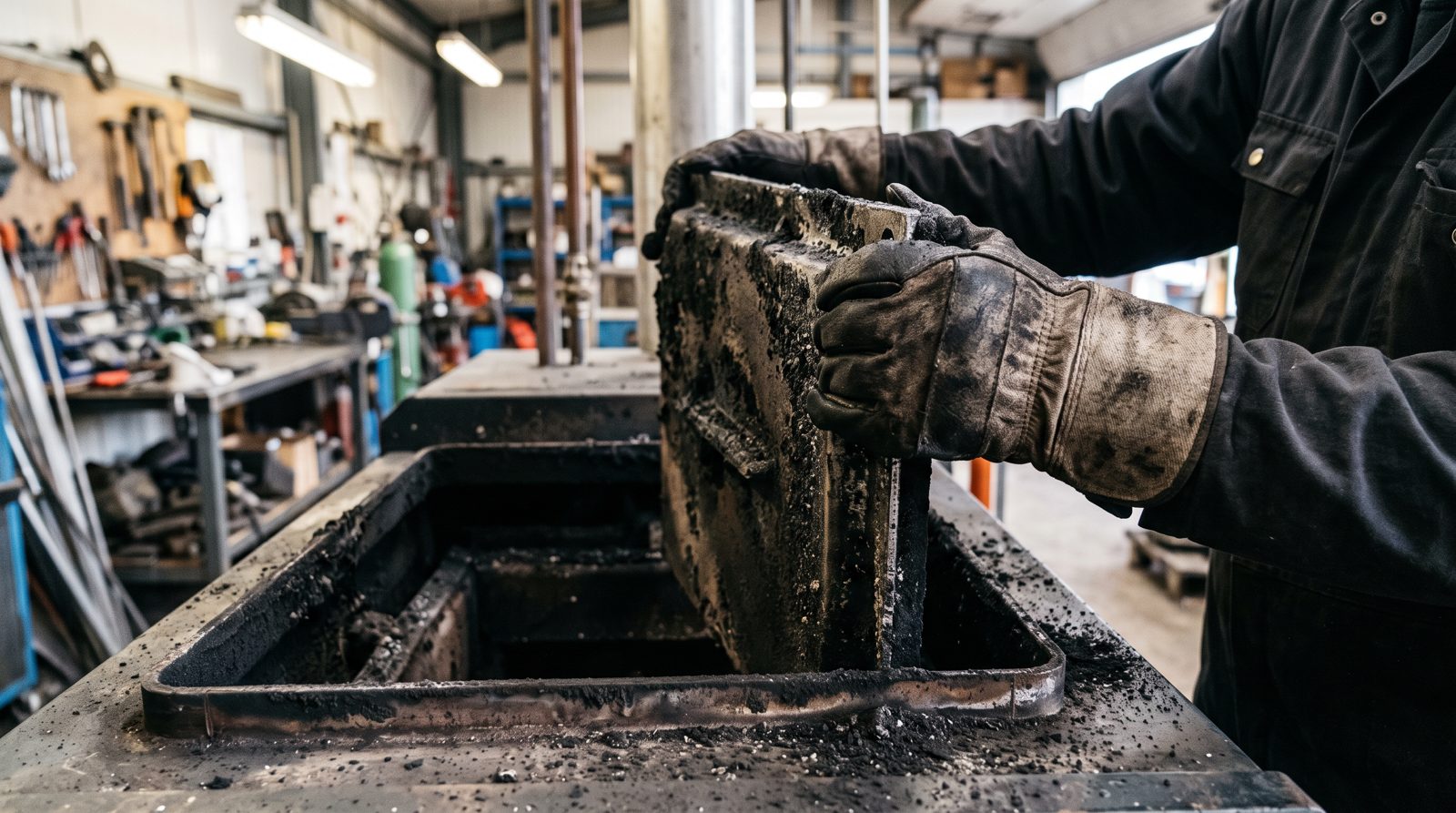
Soot on the boiler casing, around the flue joints or, worse, on surfaces inside the house means combustion gases are escaping before they reach the flue terminal. Look for loose flue joints, a cracked flue, a burner door seal that has failed or a heat exchanger that has perforated. Soot indoors is a warning sign for carbon monoxide as well, so switch the boiler off and make sure the carbon monoxide alarm is working.
A smell of oil
Kerosene has a distinctive smell and a healthy boiler should not produce it. The common sources are:
- A leak on the fuel line, filter or pump. Look for wet patches or drips along the line and under the burner.
- Oil in the combustion chamber. Repeated resets after lockouts leave unburnt oil in the chamber, which smells and then burns off in a smoky rush. Our guide to resetting an oil boiler lockout explains why one reset is the limit.
- A leaking nozzle assembly or pump seal. Oil weeps inside the burner.
- Tank or delivery spillage. Occasionally the smell is outside the boiler altogether.
A faint smell after a service or a delivery can be normal for a day. A persistent or strong smell is a leak until proven otherwise.
A bang or puff on lighting
A boiler that lights with a bang, sometimes puffing smoke from the casing, is igniting oil that has pooled in the chamber. It is called delayed ignition and it is hard on the baffles and door seals. The cause is usually a nozzle, electrode or photocell fault that made the first attempts fail. Do not keep resetting.
What you can safely check
- Switch the boiler off at the fused spur if smoke or a smell is inside the house.
- Close the fire valve or the tank outlet valve if you can see or smell a fuel leak.
- Check the carbon monoxide alarm works.
- Look along the fuel line for drips and at the flue terminal for smoke.
- Note when the problem started and whether it followed a delivery, a storm or a missed service.
Do not open the burner, adjust the air setting or clean the chamber yourself.
What the engineer will do
An OFTEC engineer strips and cleans the burner, replaces the nozzle, cleans and sets the electrodes and photocell, checks the pump pressure and the fuel line and filter for leaks and air, removes and de-soots the baffles, brushes the heat exchanger clean, checks the flue joints and seals, then fires the boiler and sets the air using a combustion analyser and a smoke test until the readings are clean. In most cases the smoke and smell disappear with that work, which is essentially a thorough service. A perforated heat exchanger or a cracked flue is a different matter and may mean the boiler is at the end of its life. Our guide to how long an oil boiler lasts covers that decision.
Preventing it
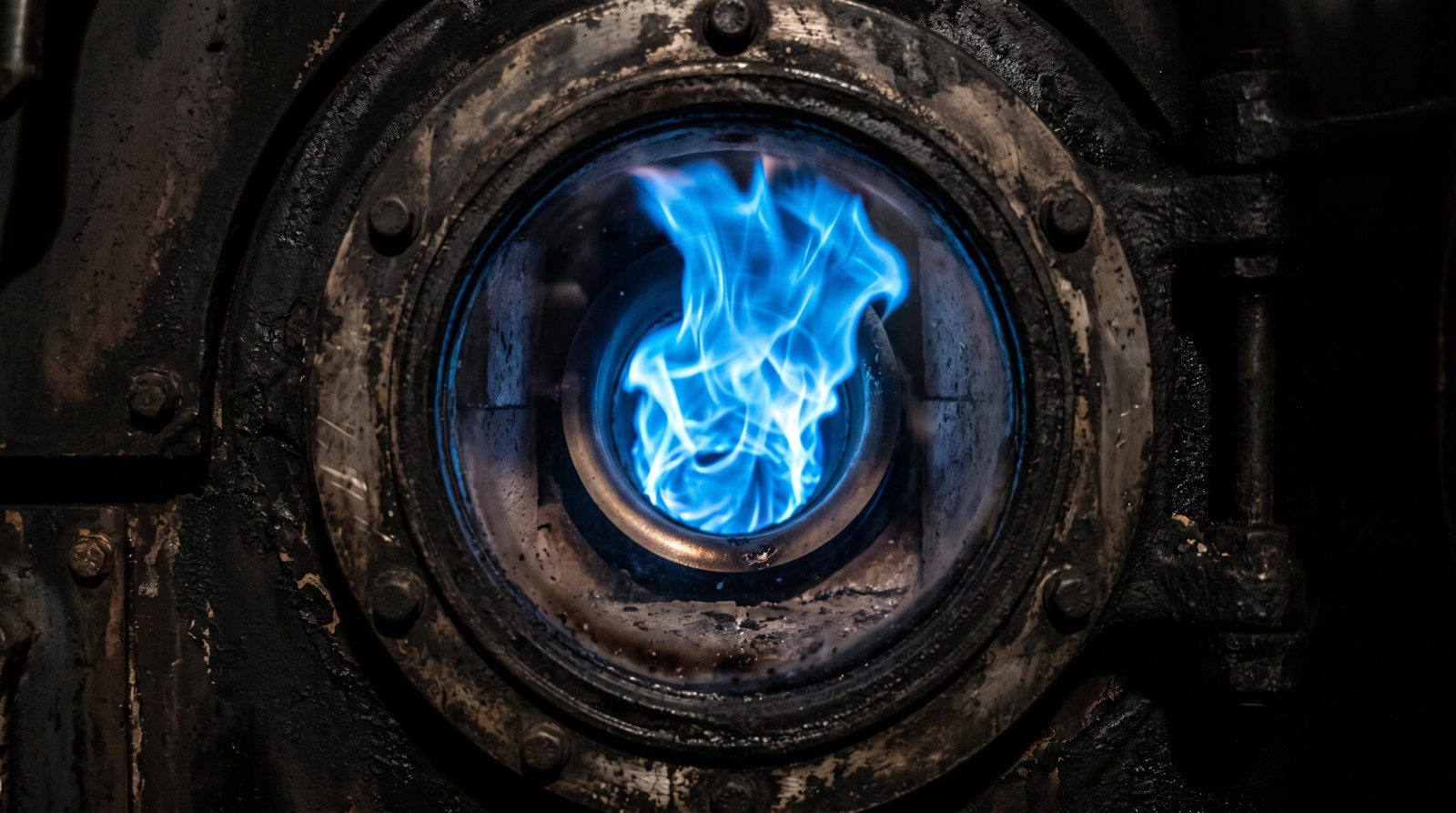
Almost every smoking or sooting oil boiler has missed a service or is burning dirty fuel. An annual service with a new nozzle and filter, a tank checked for water and sludge and a combustion test each year keeps the burner clean and the flue clear. Our guide to what an oil boiler service includes lists the work.
How DCI Boilers can help
DCI Boilers repairs and services oil boilers across Cornwall and Devon with OFTEC registered engineers who carry the parts to fix a sooting burner in one visit. If there is smoke or a smell of oil in the house, our emergency boiler call-out runs around the clock. For anything less urgent, book boiler repairs or an annual boiler servicing visit.
Need help now? Call DCI Boilers on 07888 862 603 or get a free quote.
Frequently asked questions
Is it dangerous if my oil boiler smells of oil?
A strong or persistent smell means a leak or unburnt oil. Switch off, close the fire valve, ventilate and call an engineer.
Why does my oil boiler smoke when it starts?
A puff on start-up usually means delayed ignition from a worn nozzle or faulty electrodes. Continuous smoke means the burner is running rich.
Can soot from an oil boiler cause carbon monoxide?
Soot inside the house means combustion gases are escaping, and those gases can contain carbon monoxide. Treat it as urgent.
How often should the baffles be cleaned?
At every annual service. Sooted baffles are the main reason a serviceable boiler starts to smoke.