
A boiler that stops working straight after an oil delivery almost always has one of two problems. Either the tank ran empty or very low before the delivery and air got into the fuel line, so the burner cannot draw oil and locks out, or the delivery stirred up sludge and water from the bottom of the tank, which has clogged the filter or the nozzle. Both are common, both are fixable in a single visit and neither means the new oil is faulty.
This guide explains what happens in the tank and the fuel line during a delivery, the checks you can safely make yourself, why bleeding the line is usually an engineer’s job, and how to stop it happening next time.
Why the boiler stops after a delivery
Air in the fuel line
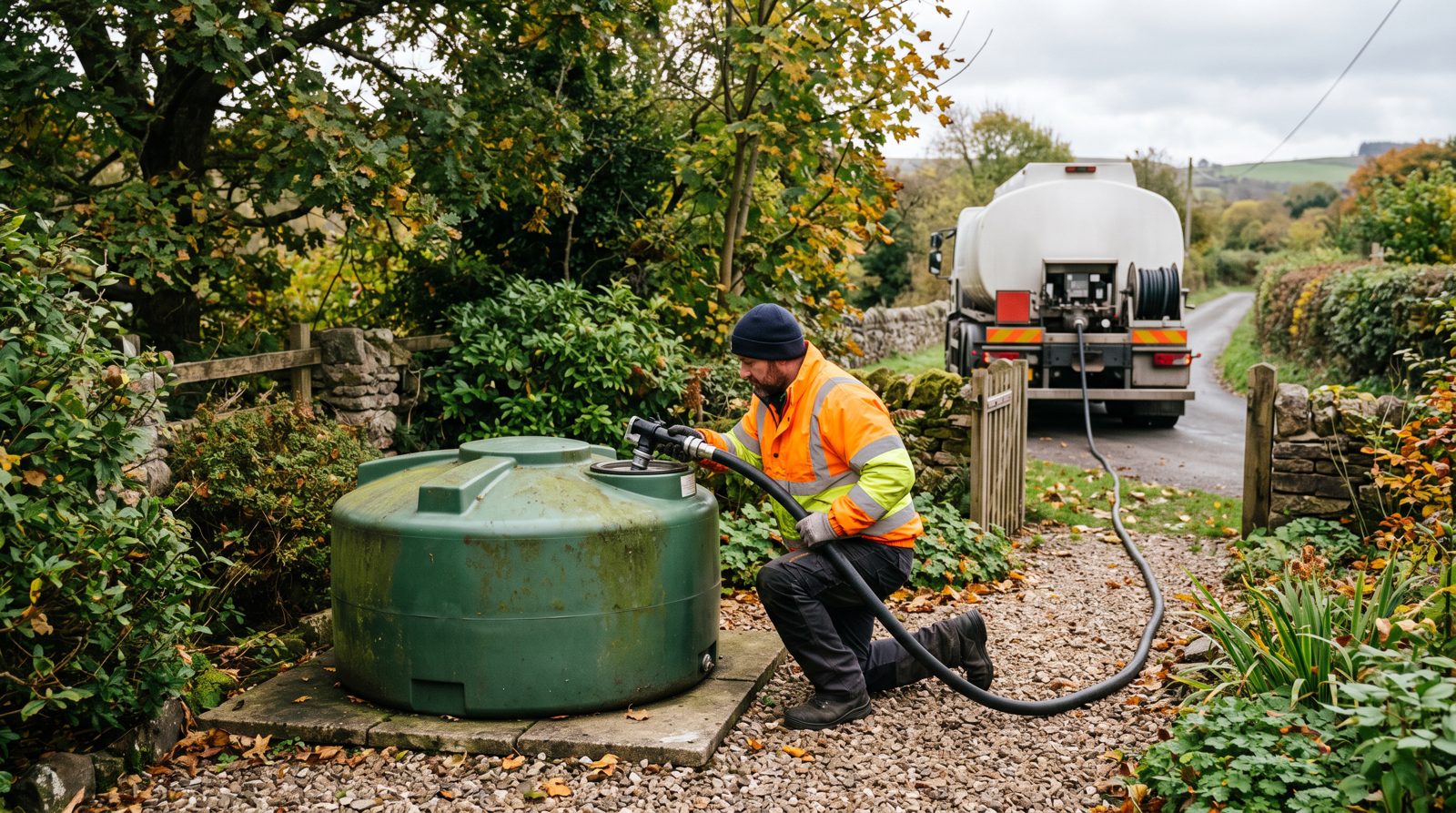
The fuel line runs from the tank outlet to the burner pump. As long as the tank keeps the outlet covered, the line stays full of oil. If the tank runs dry, the pump draws air into the line, and the air stays there when the tank is refilled, because oil arriving at the tank does not push the air out of the line. The pump cannot prime through air, the burner fails to light and the control box locks out. This is the most common cause, and it is why a delivery to a run-dry tank so often ends with a cold house.
Disturbed sludge and water
Every oil tank collects a layer of water from condensation and a layer of sludge from the oil itself. A delivery poured in at speed stirs both up, and for the next day or two the fuel line draws a mixture rather than clean kerosene. The filter clogs, or a fleck of sludge blocks the nozzle, and the burner locks out. Tanks that are rarely cleaned, or that are years old, are the worst offenders.
What you can safely check
- Tank gauge. Confirm the delivery actually went in and the level has risen.
- Valves. Check the tank outlet valve and the fire valve are open. Delivery drivers occasionally close a valve and forget it.
- One reset. Press the burner reset once and wait. If air in the line is minor the pump may prime and the burner may light. If it locks out again, stop. Our guide to resetting an oil boiler lockout explains why one attempt is the limit.
- Filter bowl. If your filter has a clear bowl near the tank, look at it. Cloudy, dark or watery contents point to disturbed sludge.
Why bleeding the line is usually an engineer’s job
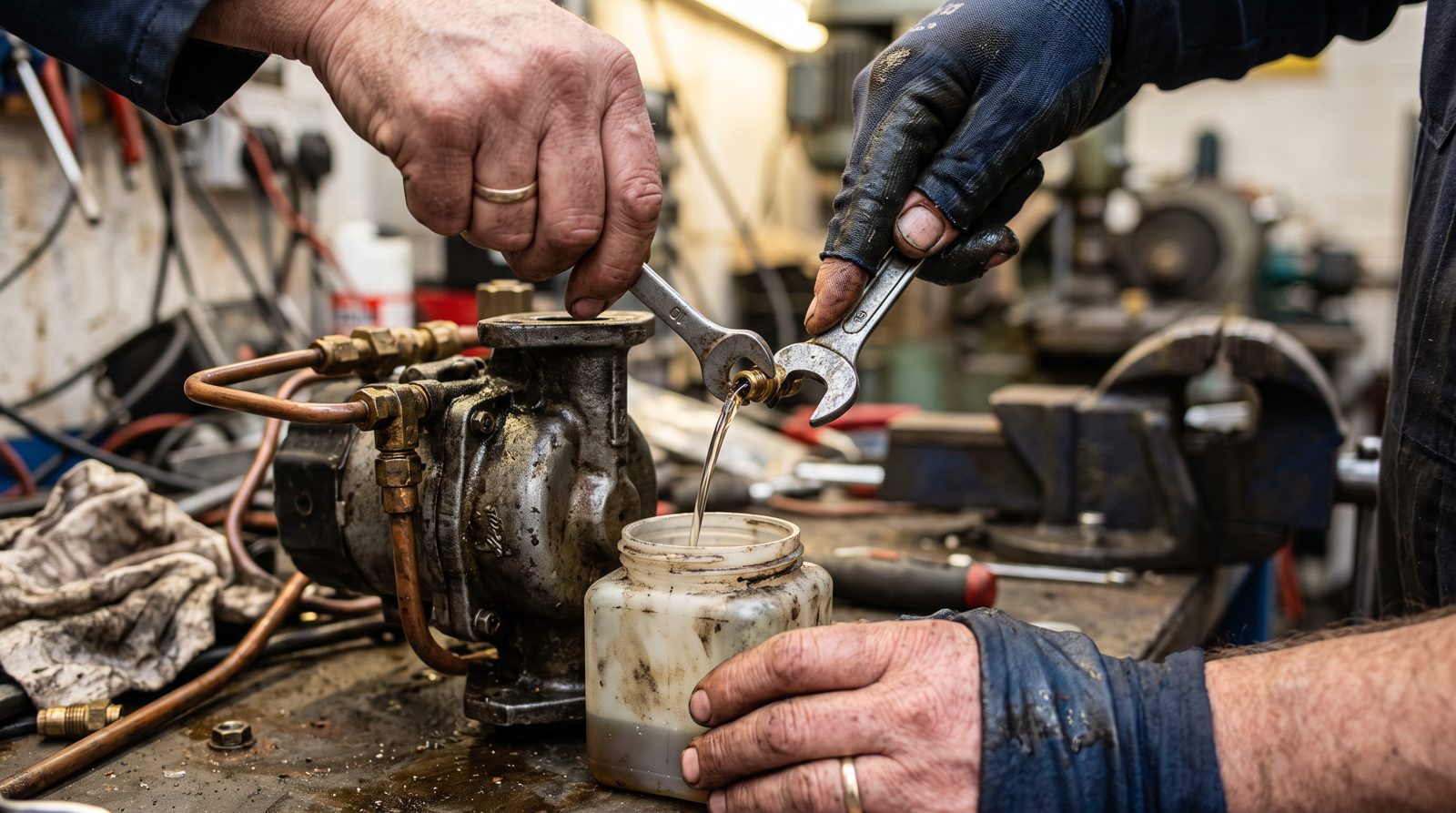
Bleeding means opening the bleed screw on the burner pump, running the pump until oil flows without air, then closing it and firing the boiler. It sounds simple and on some boilers it is, but it involves opening the burner, handling pressurised kerosene and resetting a burner that may have oil in the chamber from failed attempts. Done carelessly it sprays oil, and done on a burner with a blocked nozzle it fixes nothing. An OFTEC engineer bleeds the line, checks the filter and nozzle at the same time and fires the boiler with a combustion test, which is the difference between a fix and a repeat call.
What the engineer will do
- check the tank for water and sludge and, if needed, drain the water off
- replace or clean the fuel filter
- bleed the fuel line at the pump and, on long or uphill runs, check the de-aerator
- check and usually replace the nozzle
- fire the boiler and confirm clean combustion
If the tank turns out to hold a lot of water or sludge, the engineer will recommend a tank clean, and if the tank is old or damaged, replacement. Our guide to oil tank replacement covers the signs.
How to prevent it next time
- never let the tank run below a quarter full; order when the gauge shows a third
- ask for the delivery to be made slowly if your tank is old
- have the tank checked for water and sludge at the annual service
- keep the filter replaced at every service
- consider a tank monitor that warns you when the level is low
Our guide to how often an oil boiler should be serviced explains what the annual visit covers.
How DCI Boilers can help
DCI Boilers gets oil boilers running again after deliveries across Cornwall and Devon, with OFTEC registered engineers who bleed the line, change the filter and nozzle and check the tank in one visit at a fixed price. If the house is cold, our emergency boiler call-out runs around the clock. Otherwise book boiler repairs and we will be with you promptly.
Need help now? Call DCI Boilers on 07888 862 603 or get a free quote.
Frequently asked questions
How long after an oil delivery can I turn the boiler on?
Straight away if the tank never ran dry. If it did, the line probably needs bleeding first. Some engineers advise waiting an hour or two after a delivery to let disturbed sludge settle.
Can I bleed my oil boiler myself?
Some homeowners do, but it involves opening the burner and handling kerosene under pressure. An engineer will also check the filter and nozzle, which is usually where the real problem is.
Is the new oil the problem?
Very rarely. Air in the line and disturbed sludge are almost always the cause. Contaminated oil is uncommon from a reputable supplier.
Why did the boiler work for a day and then stop?
Sludge stirred up by the delivery reached the filter or nozzle a day later. A filter change and a new nozzle usually cure it.