
A hot water cylinder stores the water your boiler heats for the taps, and replacing one is usually a one-day job. The main decision is between a vented cylinder, fed from a tank in the loft and delivering hot water at gravity pressure, and an unvented cylinder, fed directly from the mains and delivering hot water at mains pressure to every outlet. Most replacements today move to unvented, because the stronger showers and the freed-up loft are worth it, provided the mains supply is good enough.
This guide explains the two types, the signs a cylinder is failing, what the replacement involves, the rules that apply to unvented cylinders and how to choose the right size and type for your home.
Vented cylinders
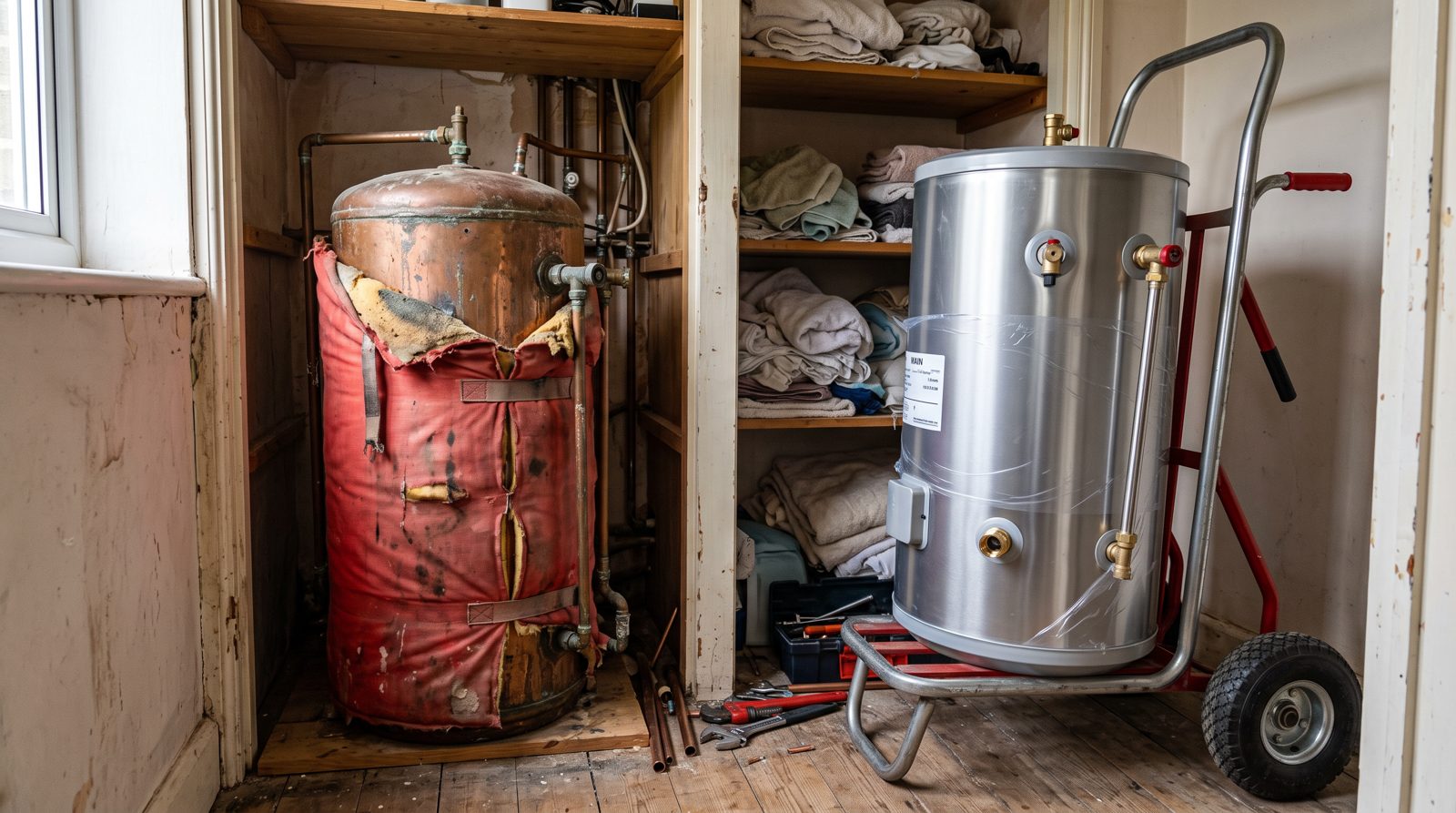
The traditional copper cylinder in the airing cupboard. Cold water arrives from a storage tank in the loft, the boiler heats it through a coil, and the pressure at the taps depends on how far above them the loft tank sits. Advantages: simple, cheap, works with weak mains supplies and needs no annual safety check. Disadvantages: weak showers unless a pump is added, a tank in the loft that can freeze or become contaminated, and slower reheating.
Unvented cylinders
A stainless steel cylinder fed straight from the mains, so the hot water leaves at mains pressure. Advantages: powerful showers and baths that fill quickly, several outlets at once, no loft tank, faster reheating and better insulation. Disadvantages: needs a decent mains flow and pressure, must be installed by a G3-qualified engineer, has safety valves and an expansion vessel that need an annual check, and costs more than a vented cylinder.
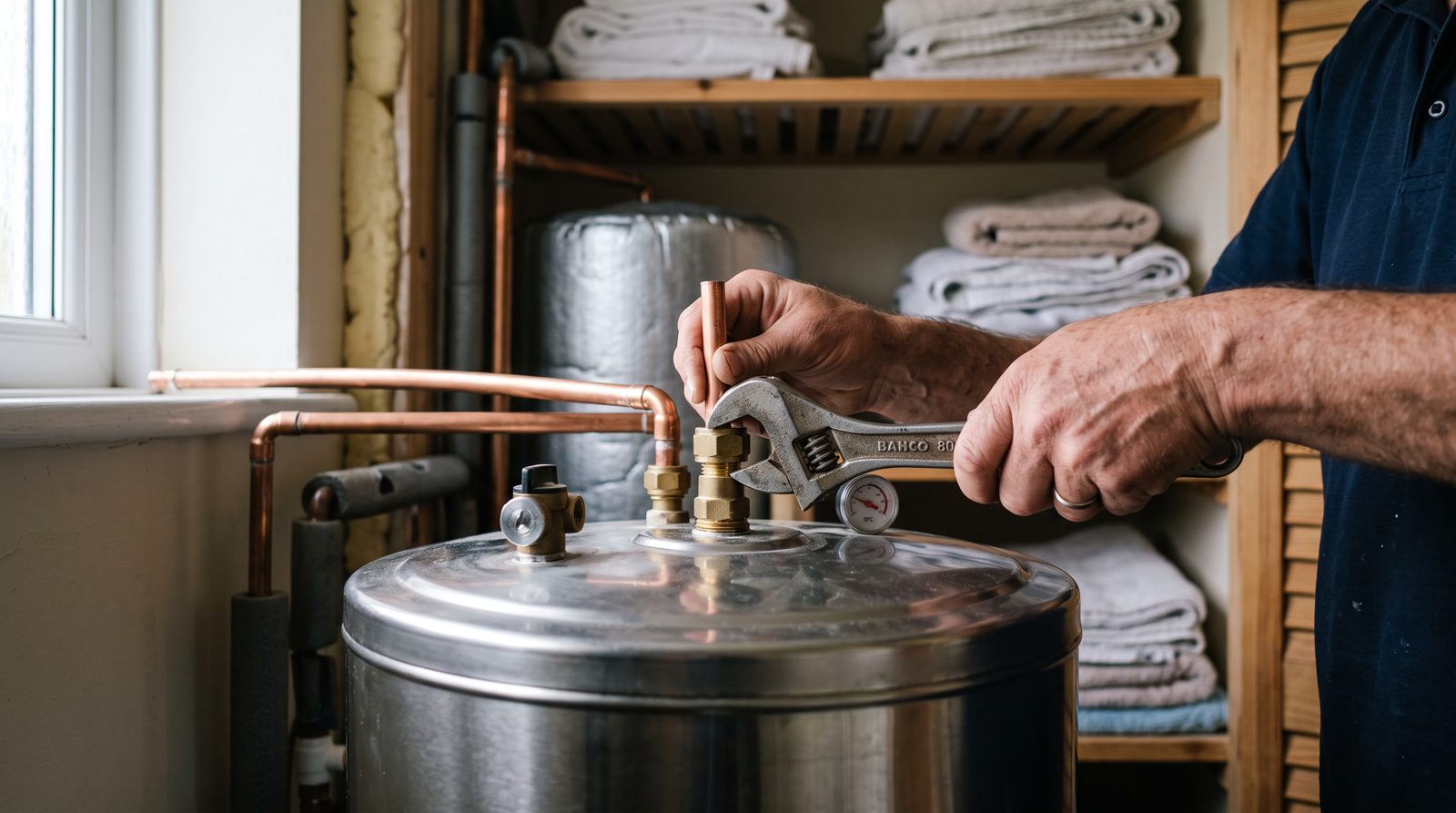
Signs your cylinder needs replacing
- water pooling under or around the cylinder, or a damp airing cupboard
- rust-coloured or discoloured hot water
- hot water that runs out far sooner than it used to
- a cylinder that takes much longer to heat
- noise from the cylinder, such as banging or hissing
- a copper cylinder more than twenty years old, or a badly insulated one
- an immersion heater that keeps failing because of scale
What the replacement involves
- The heating and hot water are turned off and the cylinder is drained.
- The old cylinder is disconnected and removed. Old copper cylinders are recycled.
- For an unvented conversion, the loft cold water tank is removed and the cylinder is connected to the mains with a pressure-reducing valve, expansion vessel and safety valves, and a discharge pipe is run to a safe outside point.
- The new cylinder is connected to the boiler coil, the hot water outlet and the immersion heater, and the controls are set up.
- The system is refilled, tested and the safety devices checked.
A like-for-like vented swap is a morning’s work. An unvented conversion is a full day. If the boiler is being replaced at the same time, it is worth doing both together, as our guide to what a system boiler is explains.
The rules on unvented cylinders
Unvented cylinders store water under pressure, so Building Regulations require them to be installed by someone holding the G3 unvented hot water qualification and notified to building control, usually through a competent person scheme. The safety valves and expansion vessel must be checked annually, which most homeowners have done alongside their boiler servicing. Never let anyone without the qualification fit or work on one.
Choosing the size
Cylinder capacity is matched to the household. As a rough guide, a small home with one bathroom uses around 120 to 150 litres, a family home with one bathroom 150 to 210 litres, and a home with two bathrooms 210 to 300 litres. A larger cylinder costs a little more to keep hot but avoids running out. Your installer will size it against the number of outlets and how the household uses hot water. Our guide to boiler flow rate helps if you are weighing a cylinder against a combi.
Combi instead of a cylinder?
If the boiler is also due, removing the cylinder altogether and fitting a combi is an option for homes with one bathroom and good mains pressure. It frees the airing cupboard and gives endless hot water at the cost of lower flow to several outlets. Our guide to combi versus system boilers weighs the two.
How DCI Boilers can help
DCI Boilers replaces vented and unvented cylinders across Cornwall and Devon with G3-qualified, Gas Safe and OFTEC registered engineers, at a fixed price agreed after a survey that checks your mains supply. We fit cylinders alongside gas boiler replacement and oil boiler replacement jobs or on their own as part of our heating services.
Need help now? Call DCI Boilers on 07888 862 603 or get a free quote.
Frequently asked questions
How long does a hot water cylinder last?
Copper vented cylinders typically last 15 to 25 years. Stainless steel unvented cylinders often come with a 25 year guarantee on the vessel.
Can I replace a vented cylinder with an unvented one?
Yes, if the mains flow and pressure are adequate. The installer measures both at the survey.
Does an unvented cylinder need servicing?
Yes, an annual check of the safety valves, expansion vessel and pressure-reducing valve, usually done with the boiler service.
Can I fit a cylinder myself?
A vented cylinder is a plumbing job but is best left to a professional. An unvented cylinder must be fitted by a G3-qualified engineer by law.