

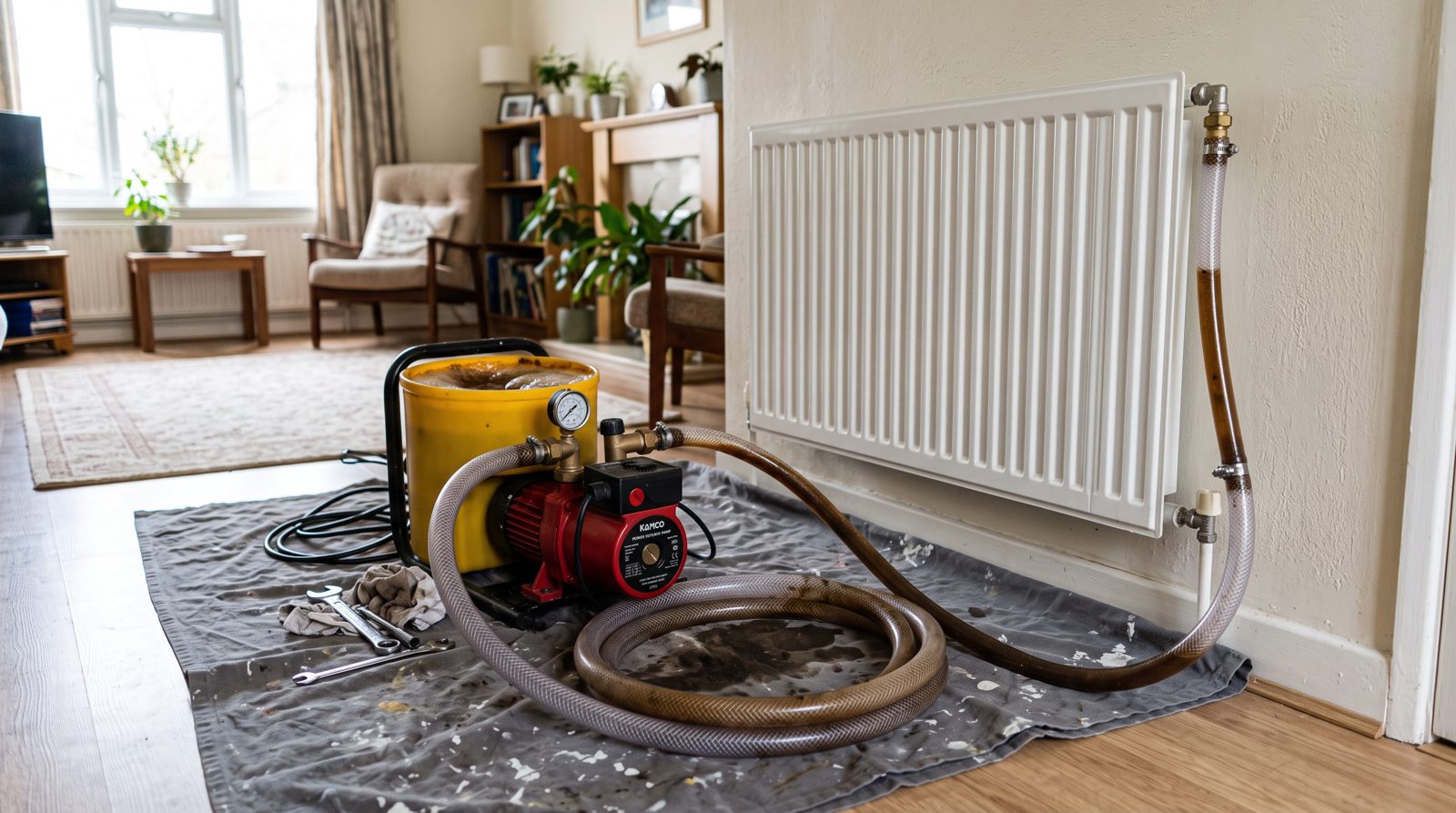
A power flush is a deep clean of a central heating system. An engineer connects a high-flow pump to the system, circulates water and cleaning chemicals at speed through the boiler, pipework and every radiator in turn, dislodging the black iron oxide sludge and scale that build up over years, and flushes it out until the water runs clear. The system is then refilled with inhibitor and, if there is not one already, fitted with a magnetic filter. A power flush takes most of a day, restores heat to radiators that were cold at the bottom, quietens a kettling boiler and is often a condition of a new boiler’s warranty when it is fitted to an older system.
This guide explains how it works, the symptoms that mean you need one, the difference from a chemical clean, what the day involves and when it is worth doing.
What sludge is and why it matters
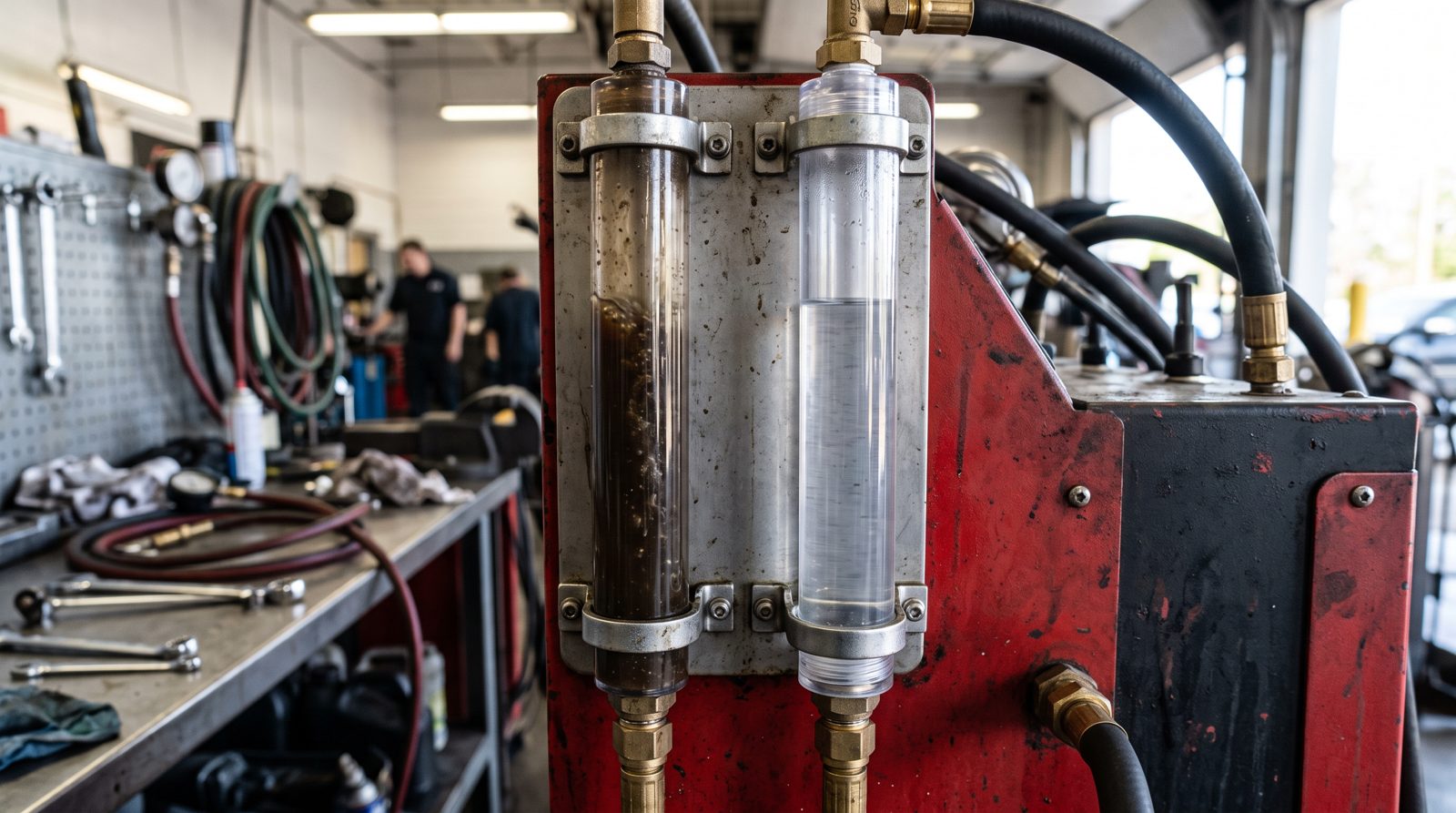
Steel radiators and the water inside them corrode slowly, producing magnetite, a black sludge that circulates round the system and settles wherever the flow is slowest. It collects in the bottom of radiators, clogs the pump, sticks valves and, worst of all, coats the boiler’s heat exchanger, insulating it so the boiler overheats, kettles and fails early. Inhibitor slows the corrosion and a magnetic filter catches the sludge, but a system that has run for years without either is usually full of it.
Signs you need a power flush
- radiators hot at the top and cold at the bottom
- radiators that take a long time to heat, or some that never do
- a boiler that kettles, bangs or rumbles
- frequent pump or valve failures
- black, dirty water when a radiator is bled
- a magnetic filter that fills quickly between services
- an older system about to receive a new boiler
Our guide to radiators cold at the bottom explains the tell-tale pattern.
Power flush versus chemical clean
A chemical clean adds a cleanser to the system, circulates it with the normal pump for a few days or weeks, then drains and refills. It is cheaper and less disruptive and suits systems with light sludge. A power flush uses a dedicated pump at far higher flow, agitates each radiator and clears heavy sludge and partial blockages that a chemical clean cannot shift. An engineer decides which is appropriate from the symptoms and a look at the system water. A badly sludged system given only a chemical clean will be back to the same state within a year or two.
What the day involves
- The engineer lays dust sheets and connects the flushing pump to the system, usually at the pump position or across a radiator.
- The system is filled with water and a cleaning chemical and circulated hot.
- Each radiator is isolated and flushed in turn, with the engineer reversing the flow and tapping the panel to loosen settled sludge, until the water leaving it runs clear.
- The boiler and pipework are flushed the same way.
- The system is rinsed with clean water until the water quality meets the target, then refilled with inhibitor.
- A magnetic filter is fitted on the return if one is not present.
- Radiators are bled and balanced, and the boiler is checked.
A typical house takes five to eight hours. Large systems, microbore pipework and heavily sludged radiators take longer, and occasionally a radiator is too far gone to clear and is replaced.
Before a new boiler
Almost every manufacturer requires a new boiler to be fitted to a clean system with a filter and inhibitor, and will refuse warranty claims on a heat exchanger blocked with old sludge. On an older system a power flush before the new boiler is fitted is the single best protection for the investment. Our guide to what is included in a new boiler installation explains where the flush sits in the job.
Risks and limits
A power flush can reveal a weak spot that was already leaking slowly, such as a corroded radiator or a pinhole under a floor, which is better found in a controlled way than in January. Very old radiators may not come fully clean. Microbore pipework can be difficult to clear. A good engineer inspects the system first and tells you what to expect.
Keeping it clean afterwards
Inhibitor, a magnetic filter emptied at each service, and fixing any leak that causes repeated topping up. With those in place a system rarely needs flushing again. Our guide to how often a gas boiler should be serviced covers the annual checks that keep it that way.
How DCI Boilers can help
DCI Boilers power flushes and chemically cleans heating systems across Cornwall and Devon, fits magnetic filters and inhibitor, and cleans every system before a new boiler goes on it. Our Gas Safe and OFTEC registered engineers will tell you honestly which clean your system needs. See our heating services, or ask about a flush when you book a gas boiler replacement or boiler servicing visit.
Need help now? Call DCI Boilers on 07888 862 603 or get a free quote.
Frequently asked questions
How long does a power flush take?
Most of a day for a typical house. Larger or heavily sludged systems can take longer.
Is a power flush necessary before a new boiler?
On an older system, usually yes. Most manufacturers require a clean system for the warranty, and it protects the new heat exchanger.
Can a power flush damage radiators?
It can expose an existing weak spot, but it does not damage sound radiators. Very old radiators are inspected first.
How often should a system be power flushed?
Only when the symptoms return. With inhibitor and a magnetic filter, many systems never need a second flush.