
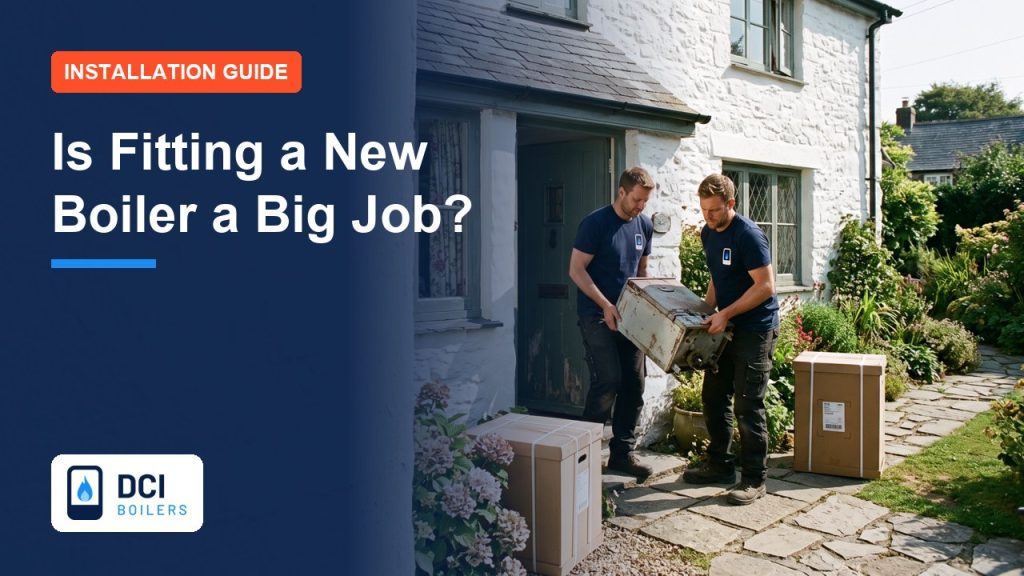
Fitting a new boiler is a big job in the sense that it needs a registered engineer, a full day and a fair amount of care, but for most homes it is not the upheaval people fear. A like-for-like swap, where a new combi replaces an old combi on the same wall, is usually finished in a day with the heating back on by the evening. The job gets bigger when the boiler moves, when the type of system changes, or when the old pipework and radiators need serious attention at the same time.
The honest answer to how big a job it is depends on four things: what you have now, what you are changing to, where the new boiler is going and what condition the rest of the system is in. This guide runs through each so you can judge where your own home sits.
The one-day job: a like-for-like swap
If your existing boiler is a combi and it is being replaced by a combi in the same spot, most of the hard work has already been done by whoever fitted the first one. The gas or oil supply, the flue position, the condensate drain and the heating pipework are all in place. The engineer removes the old boiler, adapts the pipework to the new connections, fits a new flue, flushes the system, hangs the new boiler and commissions it. Expect the engineer from early morning to late afternoon, with no heating or hot water for most of that time.
A system boiler replacing a system boiler, or a conventional boiler replacing a conventional one, is a similar day, since the cylinder and tanks stay where they are.
The two-day job: changing the type of boiler
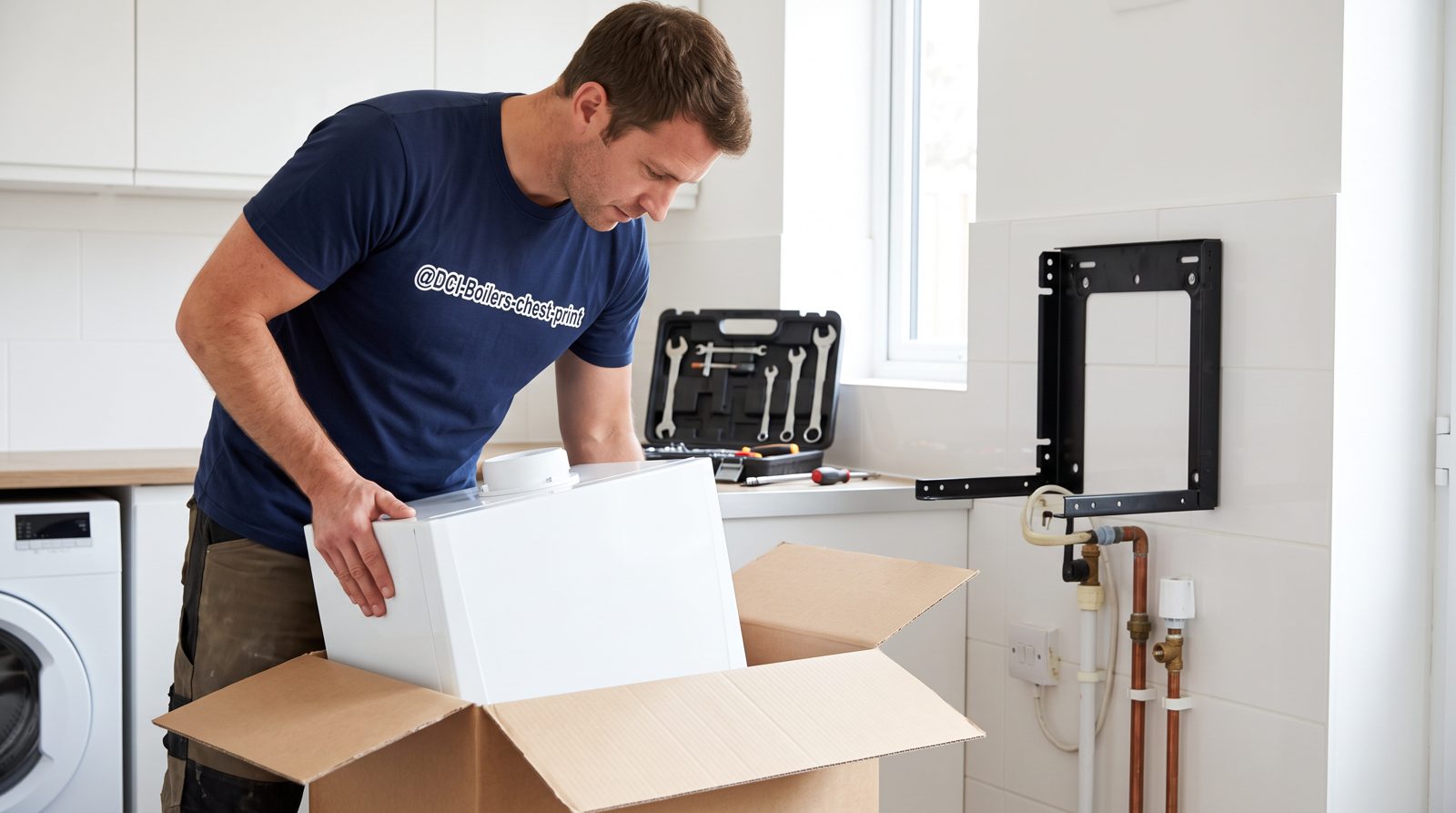
Converting from a conventional or system boiler to a combi is the most common bigger job. The hot water cylinder comes out, the cold water tank and feed and expansion tank in the loft come out, the pipework that served them is capped or removed, and the boiler itself often moves because the old one was sized and positioned around the cylinder. Mains water pressure is checked first, because a combi depends on it, and sometimes the incoming main needs upgrading. Two days is typical, occasionally three in a larger house.
Going the other way, from a combi to a system boiler with a cylinder, is also a two-day job because a cylinder and its pipework have to be installed from scratch.
The job that grows: moving the boiler
Relocating a boiler to a different room adds a new gas or oil supply run, a new flue through a different wall or the roof, a new condensate route to a drain and, often, a new electrical spur. Each of those is straightforward on its own. Together they add a day, plus making good where old pipework came out. Our guide on whether you can move a boiler to another room covers what makes a location workable.
What else can make it bigger
- Sludge and corrosion. An old system full of black sludge needs a power flush before a new boiler goes on it, which adds several hours. Fitting a new boiler to a dirty system is the fastest way to shorten its life and void its warranty.
- Old pipework. Microbore pipe, lead pipe or badly corroded steel may need replacing in places.
- Radiators. If you are replacing radiators or adding valves at the same time, each one adds time, but it is far cheaper to do while the system is drained.
- Oil tanks. A new oil boiler with a new tank is a bigger job than the boiler alone, because the tank base, position and fire separation distances have to meet the regulations.
- Access. A boiler in a tight loft, a boxed-in airing cupboard or a cupboard above a worktop takes longer to get at and get out.
How much disruption to expect
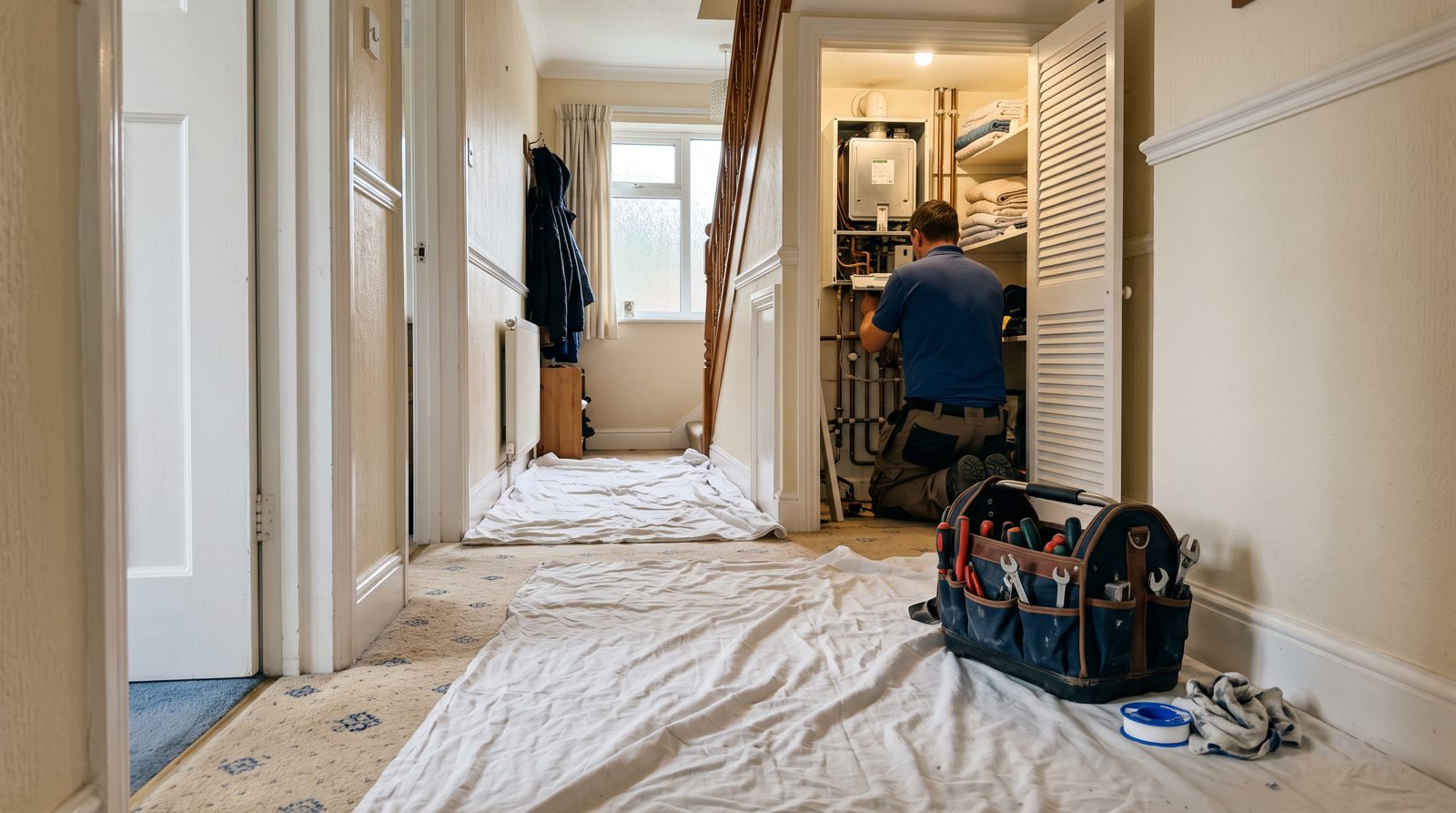
Dust sheets go down from the door to the boiler. There is some noise from drilling for the flue and from pipework, and some water when the system is drained. You will lose heating and hot water for most of the day, so plan a shower before the engineer arrives. In winter, a plug-in heater for one room is worth having. The engineer takes the old boiler, flue and packaging away, and a good one leaves the area as clean as they found it. Our guide on preparing your home for a boiler installation lists the small things that make the day run smoothly.
Why the size of the job is not the size of the worry
People sometimes put off a replacement because they imagine a week of chaos. In practice the disruption is measured in hours, and the reward is years of reliable heating and lower running costs. A proper survey beforehand tells you exactly which category your job falls into, how many days it needs and what it will cost, fixed, before anyone picks up a spanner.
How DCI Boilers can help
DCI Boilers installs gas and oil boilers across Cornwall and Devon, from one-day swaps to full conversions and relocations. Our Gas Safe and OFTEC registered engineers survey every job properly, quote a fixed price and tell you honestly how long it will take. See our gas boiler replacement and oil boiler replacement pages for what we fit, or read how long it takes to fit a new boiler for typical timings.
Need help now? Call DCI Boilers on 07888 862 603 or get a free quote.
Frequently asked questions
Can a new boiler be fitted in a day?
A like-for-like swap in the same position usually can. Conversions and relocations take two days or more.
Will I be without heating for long?
Typically for most of the installation day. On a two-day job the engineer will often get the hot water running at the end of day one.
Do I need to empty the cupboard the boiler is in?
Yes. Clear the cupboard and the space around it so the engineer has room to work and nothing gets damaged.
Is it a bigger job for an oil boiler?
Replacing an oil boiler in the same place is similar to a gas swap. Adding a new oil tank makes it a bigger job because of the base and siting rules.