
An LPG boiler is a gas boiler that runs on liquefied petroleum gas stored in a tank at the property instead of gas from the mains. For homes in rural Cornwall and Devon with no gas supply, it is the main alternative to oil. LPG boilers are essentially the same appliances as mains gas boilers, including combis, so they are compact, quiet and widely available. The trade-off is that LPG usually costs more per unit of heat than oil, and you depend on tank deliveries just as you would with oil.
This guide explains how LPG heating works, how it compares with oil and electric, what the tank and supply arrangements involve, what installation requires and the kind of home where LPG is the sensible choice.
How an LPG boiler works
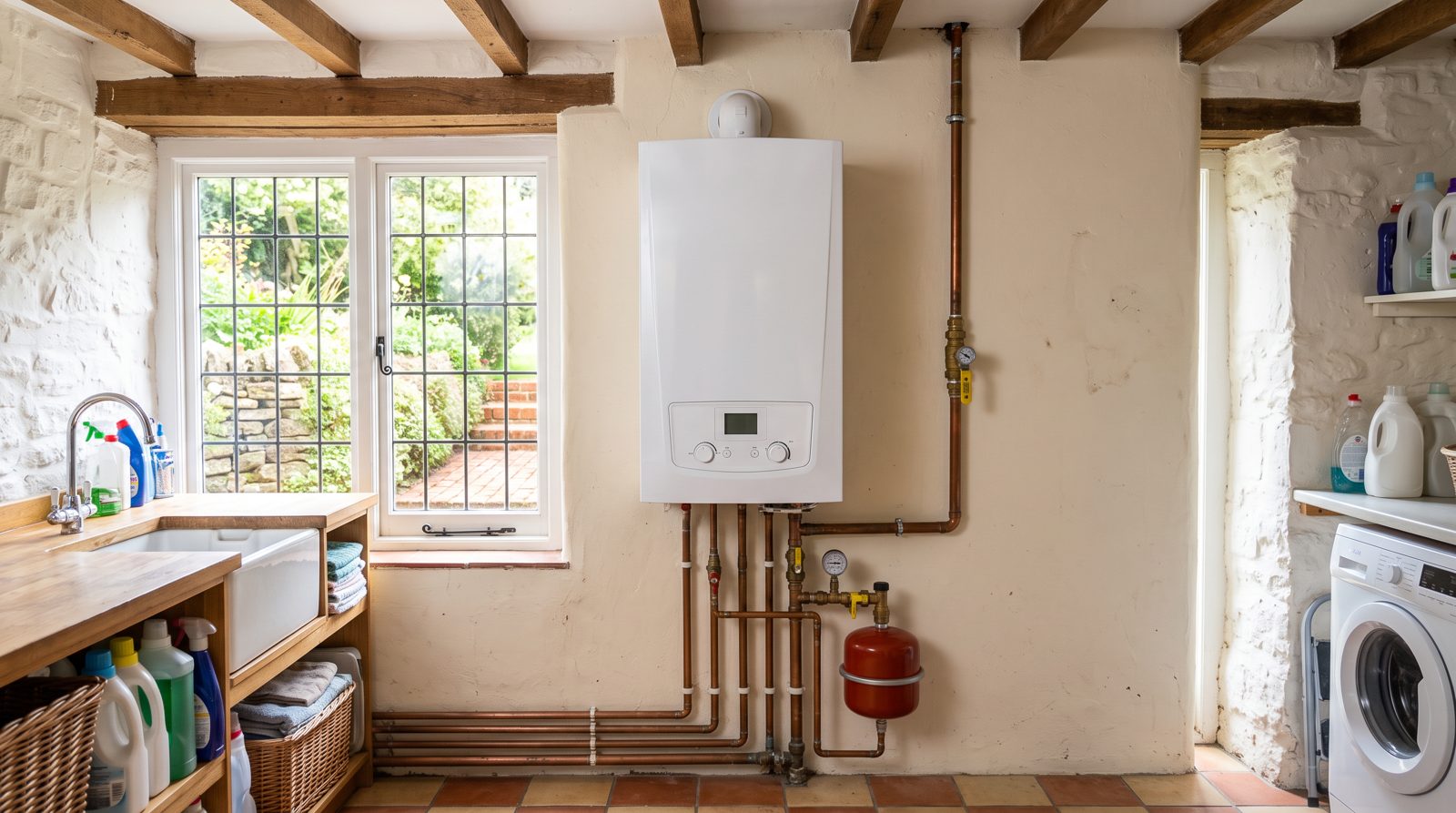
LPG is propane, delivered as a liquid under pressure and stored in an above-ground or underground tank, or in cylinders for smaller properties. It turns back into gas as it leaves the tank and is piped to the boiler, which burns it much as a mains gas boiler burns natural gas. Most manufacturers offer LPG versions of their gas ranges, or conversion kits fitted at installation. Combi, system and conventional LPG boilers all exist, so the choice of hot water arrangement is the same as on mains gas.
LPG versus oil
| LPG | Oil | |
|---|---|---|
| Boiler types | Combi, system, conventional; compact wall-hung | Mostly system and conventional; combis available; usually floor-standing or external |
| Running cost | Typically higher per unit of heat | Typically lower |
| Storage | Pressurised tank, often rented from the supplier | Plastic or steel tank you own |
| Supplier | Usually tied to one supplier for the tank | Free to shop around |
| Cleanliness | Cleaner burn, less servicing residue | Needs annual burner and baffle clean |
| Space | Boiler small; tank needs clearance | Boiler larger; tank needs a base and separation distances |
Our guide to oil versus gas boilers covers the oil side in more depth.
Tanks and supply
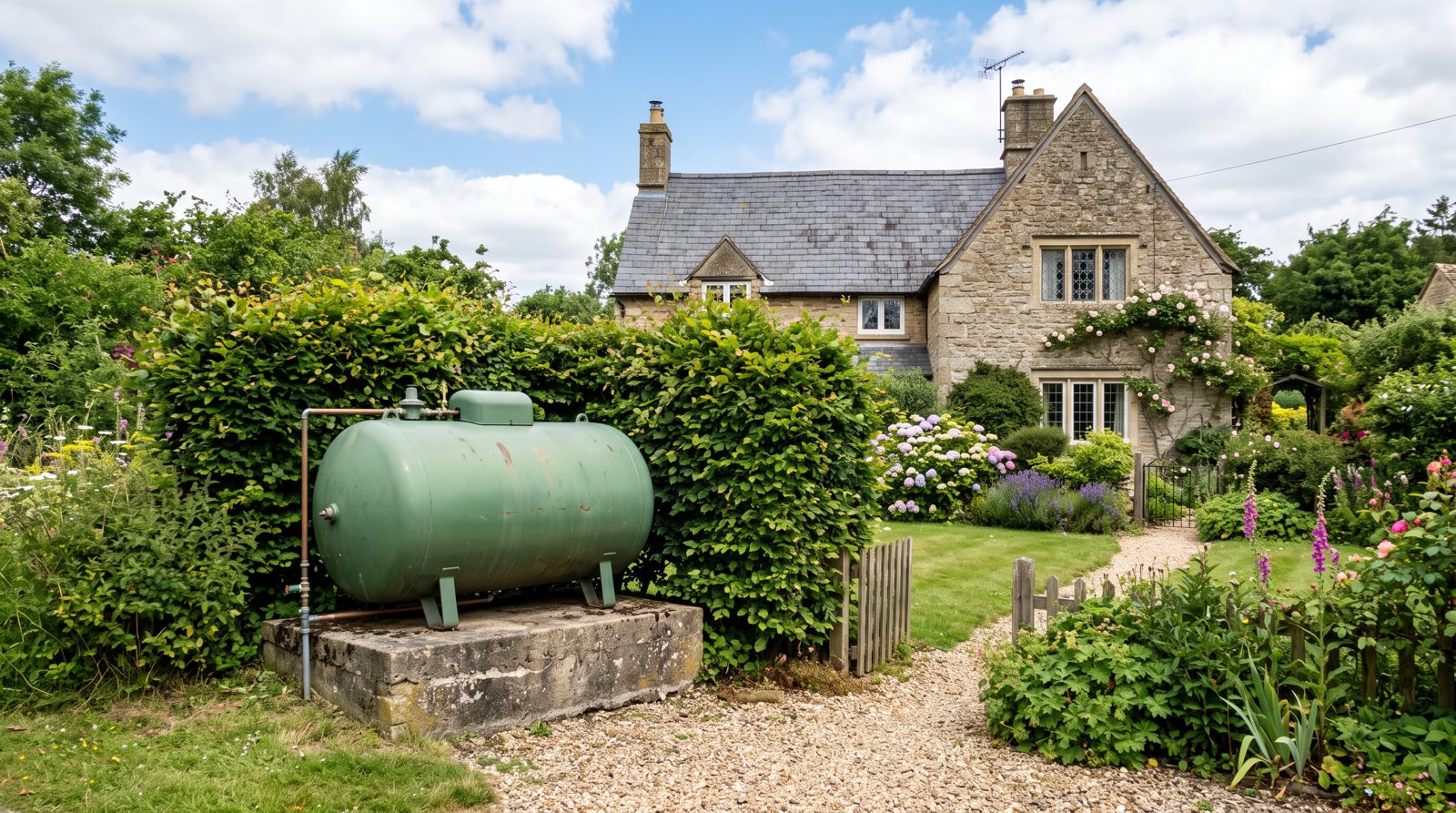
LPG tanks are usually owned and installed by the gas supplier and rented to you, which means you are typically tied to that supplier for the gas. Above-ground tanks need set distances from buildings, boundaries and drains, and a hardstanding base. Underground tanks are less visible but cost more to install. Smaller homes can run on pairs of cylinders that are swapped when empty, which suits a holiday let or an annexe. Automatic top-up schemes with a tank gauge are common and avoid running out.
Installation
An LPG boiler must be installed by a Gas Safe registered engineer who is qualified for LPG specifically, which is a separate category on their card. The tank installation is done by the gas supplier or a specialist, and the pipework from the tank to the house has to meet the relevant standards. Inside the house, the installation is much like a mains gas boiler: flue, condensate drain, controls and commissioning with a flue gas analyser set for propane. Our guide to what happens during a boiler installation applies equally to LPG.
Running costs and efficiency
Modern LPG condensing boilers reach the same efficiencies as mains gas models, in the low nineties. The higher running cost comes from the price of the fuel rather than the boiler. Prices move with the wholesale market and vary between suppliers, so it is worth comparing before committing to a tank agreement and reviewing it at renewal.
Who LPG suits
- homes with no mains gas that want a compact wall-hung combi rather than a floor-standing oil boiler
- properties where an oil tank cannot meet the siting rules but a gas tank can
- homes that also use gas for cooking or a gas fire
- holiday lets and smaller homes where cylinders are practical
- homeowners who value a cleaner-burning fuel and simpler servicing
Who should look at oil or other options
If lowest running cost is the priority and there is room for an oil tank, oil usually wins. For a well-insulated home considering a low-carbon route, a heat pump may suit better than either. Our guides to oil boiler installation and heat pumps versus boilers cover those choices.
How DCI Boilers can help
DCI Boilers installs gas, LPG and oil boilers across Cornwall and Devon with Gas Safe and OFTEC registered engineers, fixed pricing and manufacturer warranties of up to 12 years. If you are off the gas grid and unsure between LPG and oil, we will look at your property, your tank options and your heating demand and give you an honest recommendation. Read about our oil boiler replacement and gas boiler replacement services.
Need help now? Call DCI Boilers on 07888 862 603 or get a free quote.
Frequently asked questions
Is LPG cheaper than oil?
Usually not. Oil generally costs less per unit of heat, though prices for both move with the market and vary by supplier.
Can I get an LPG combi boiler?
Yes. Most manufacturers offer LPG versions of their combi ranges, which is one of the main attractions over oil.
Who owns the LPG tank?
Usually the gas supplier, who installs it and rents it to you. That normally ties you to that supplier for the gas.
Can a mains gas boiler be converted to LPG?
Many models can be converted with a manufacturer kit fitted by a Gas Safe engineer qualified for LPG. Check with the manufacturer for your model.