
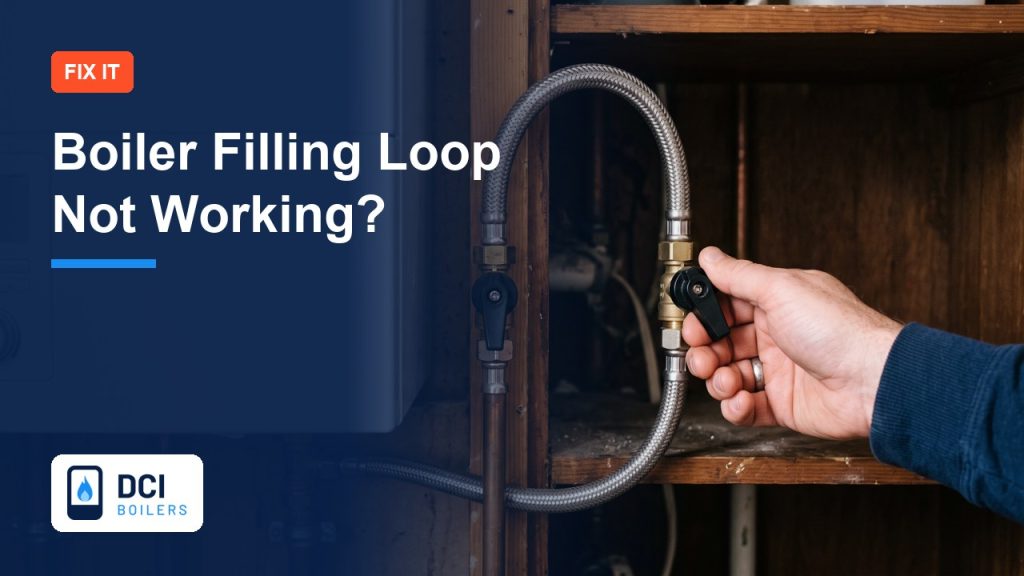
A filling loop that is not working usually means one of the two valves is stuck or has failed, the loop’s non-return valve has jammed, the boiler uses a keyed or internal filling system you have not opened correctly, or the mains supply to the loop is off. The result is a pressure gauge that will not rise when you try to top up. A few of these you can sort in minutes; a seized or leaking valve needs replacing by an engineer, and a filling loop that lets water in on its own is a fault as well.
This guide explains how the loop works, walks through the checks in order and describes the types of filling system you might find under your boiler.
How a filling loop works
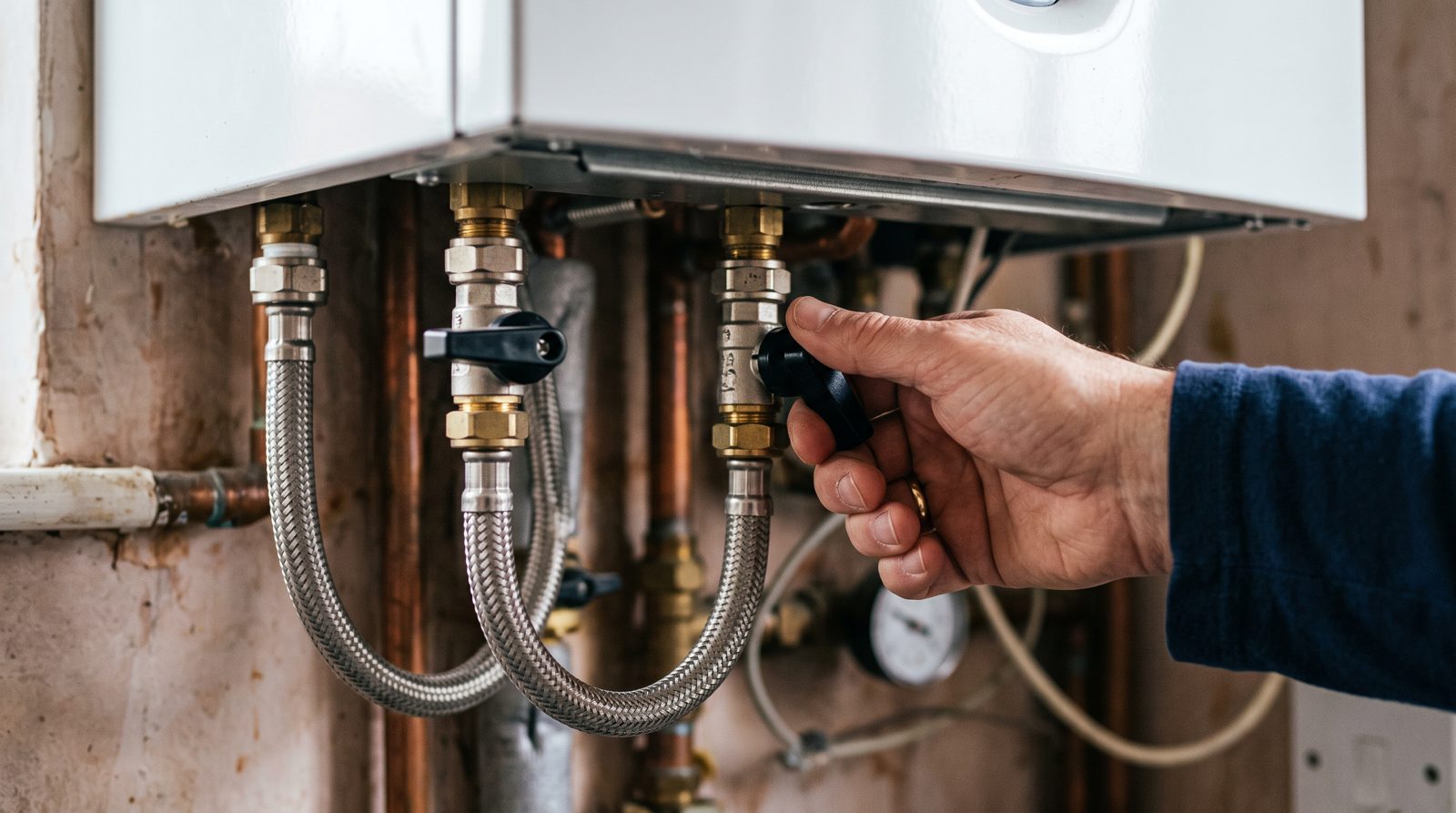
Sealed heating systems need topping up occasionally, and the filling loop is the link between the mains cold water and the heating circuit. It consists of a short braided hose or a fixed pipe with a valve at each end, one on the mains side and one on the heating side, and a non-return valve that stops heating water flowing back into the drinking water. Opening both valves lets mains water into the system and the gauge rises. Both must be closed afterwards, and on a traditional braided loop the hose should be disconnected to comply with the water regulations. Our guide to how to repressurise a boiler covers the normal top-up.
The types you might find
- Braided flexible loop. A silver hose with a valve at each end, sometimes with the hose stored separately and connected only for topping up.
- Fixed rigid loop. Copper pipe with two valves, permanently connected.
- Built-in keyed filler. Common on Worcester Bosch and some others. A plastic key slots into the underside of the boiler, is turned to lock, and a separate nut or lever is opened to fill. Losing the key is the commonest reason these “do not work”.
- Internal filling valve. A single lever or knob under the boiler that opens the mains link. Some are spring-loaded and must be held.
Checks in order
- Are both valves fully open? Lever valves are open when the handle is in line with the pipe. Screwdriver-slot valves are open when the slot is in line.
- Is the mains on? Run a cold tap. If the mains is off, the loop cannot fill.
- Is there a stopcock or isolation valve on the mains side of the loop? Some installations add one; check it is open.
- Keyed filler. Push the key in fully and turn to lock before opening the filling nut. If the key is lost, the boiler manufacturer or a merchant sells replacements.
- Listen. With both valves open you should hear water flowing. Silence with the mains on means a valve has failed closed or the non-return valve has jammed.
- Gauge. If you hear water but the gauge does not move, the gauge itself may have failed. A boiler that runs normally with a gauge stuck at zero is a gauge fault.
Common faults
Seized valve
Valves that are opened once a year seize with scale. Do not force them with pliers; a snapped valve floods the cupboard. An engineer replaces the valve or the whole loop.
Failed non-return valve
The non-return valve can jam shut, blocking flow, or jam open, letting the pressure creep up on its own. Either way it is replaced.
Passing valve
A valve that does not close fully lets mains water into the system continuously, and the pressure rises until the relief valve discharges. Our guide to boiler pressure too high covers the symptom.
Leaking loop
A braided hose that drips at the ends or has corroded should be replaced before it fails.
Blocked strainer
Some loops have a small strainer that clogs with debris from the mains. Cleaning it restores flow.
Why the pressure drops again
If the loop works but you are topping up every few weeks, the loop is not the problem. Water is leaving the system through a leak, a weeping relief valve or an expansion vessel fault. Our guide to a boiler losing pressure explains what to look for.
How DCI Boilers can help
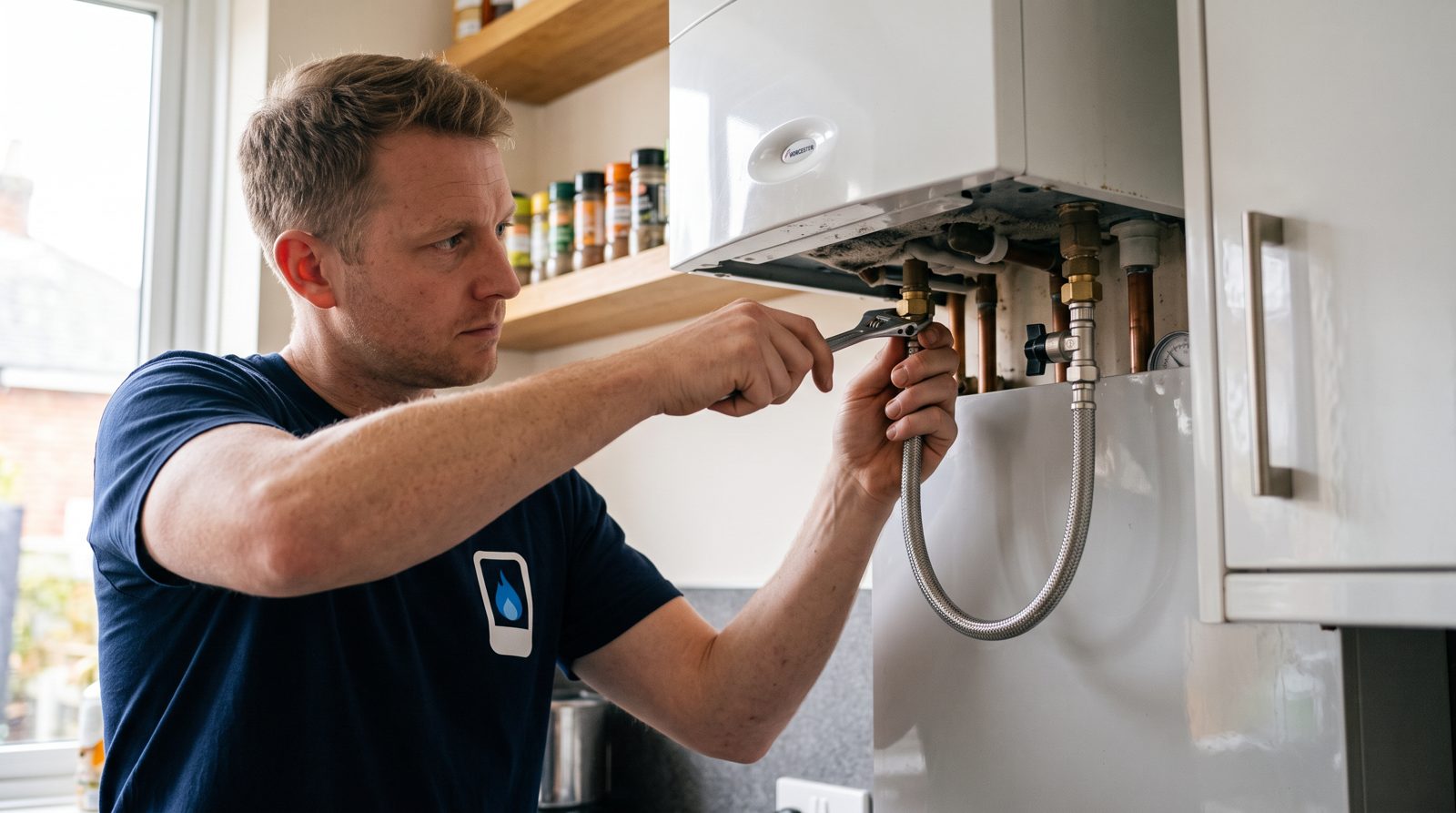
DCI Boilers replaces filling loops, valves and gauges across Cornwall and Devon as part of fixed-price boiler repairs, and checks the loop and the reason for any pressure loss at every boiler servicing visit. Our engineers are Gas Safe and OFTEC registered. If the boiler has locked out on low pressure and you cannot top it up, our emergency boiler call-out can get you running again.
Need help now? Call DCI Boilers on 07888 862 603 or get a free quote.
Frequently asked questions
Why will my boiler pressure not go up when I open the filling loop?
One valve is not fully open, the mains is off, a valve or the non-return valve has seized, or the gauge has failed. Check in that order.
Should the filling loop be left connected?
A braided loop should be disconnected after use under the water regulations, though many are left in place. Fixed and keyed fillers are designed to stay connected.
Can I replace a filling loop myself?
It is a plumbing job that involves isolating the mains and draining a little of the system. Most homeowners have an engineer do it, and on a gas boiler anything inside the casing must be done by a Gas Safe engineer.
Where can I get a replacement filling key?
From the boiler manufacturer, a plumbers’ merchant or online, by boiler model. Keep the spare somewhere memorable.