
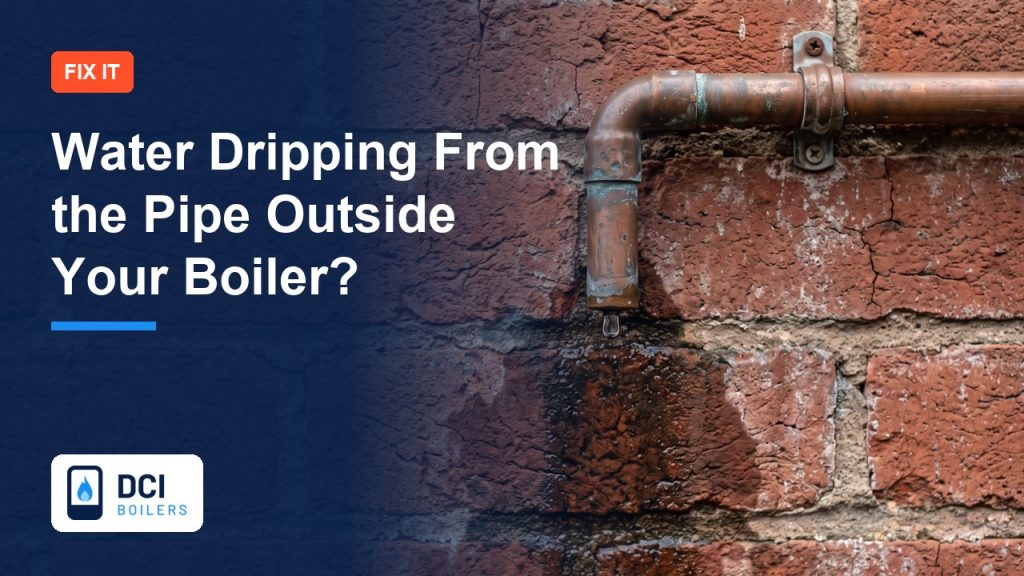
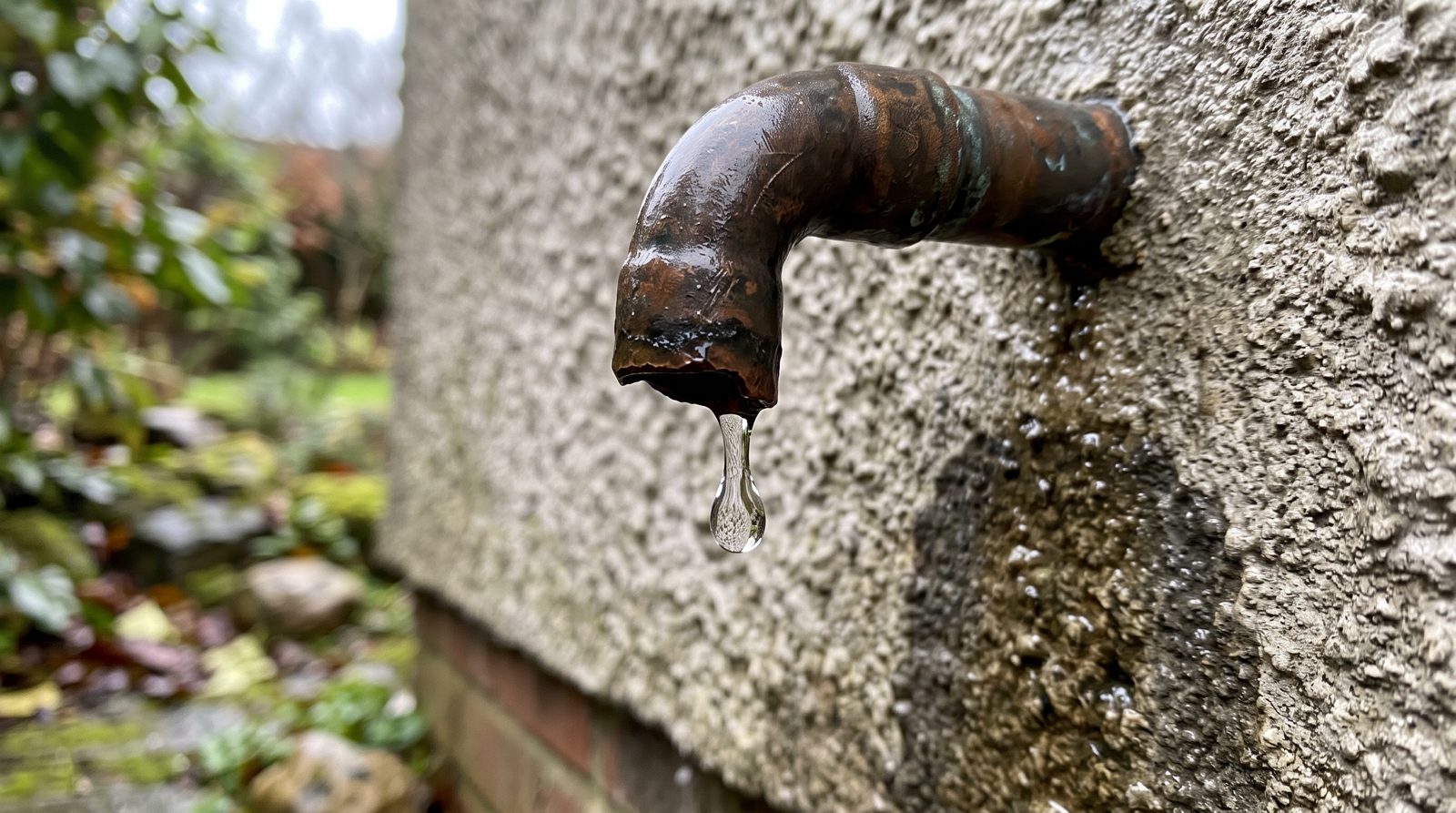
There are usually two pipes coming through the wall near a boiler, and a drip from each means something different. A small plastic pipe that drips steadily while the boiler runs is the condensate pipe, and that is normal, provided it drains to a gully rather than onto a path. A copper pipe, usually ending in a downward bend, that drips or runs is the pressure relief discharge pipe, and that is not normal: it means the safety valve has opened, either because the system pressure got too high or because the valve itself has failed to reseat. The first case you can often sort yourself. The second needs an engineer.
This guide explains how to tell the two pipes apart, what each drip means, and what to do.
Which pipe is which
| Condensate pipe | Pressure relief discharge pipe | |
|---|---|---|
| Material | White, grey or black plastic, about 22mm | Copper, 15mm, sometimes with a plastic sleeve |
| Where it goes | To a drain, gully or soakaway | Ends outside, pointing down at the wall |
| Normal state | Drips or trickles whenever the boiler runs | Bone dry |
| Water | Slightly acidic, cool | Heating system water, often hot |
If the condensate pipe is dripping
A condensing boiler produces a couple of litres of condensate an hour when running hard, so a steady trickle from the plastic pipe is the boiler working properly. Problems arise only if the pipe discharges onto a path, where it stains and freezes, or if it is blocked or frozen, in which case the boiler locks out rather than dripping. Our guide to a frozen condensate pipe covers that. If the condensate has nowhere sensible to go, an engineer can re-route it to a drain or fit a soakaway.
If the pressure relief pipe is dripping
Cause 1: the pressure got too high
The relief valve opens at 3 bar to protect the boiler. If the system was overfilled, the filling loop was left open or the expansion vessel has lost its charge, the pressure climbs when the heating runs and the valve discharges. Check the gauge. If it reads high, lower the pressure and watch whether it climbs again. Our guide to boiler pressure too high explains how.
Cause 2: the valve has not reseated
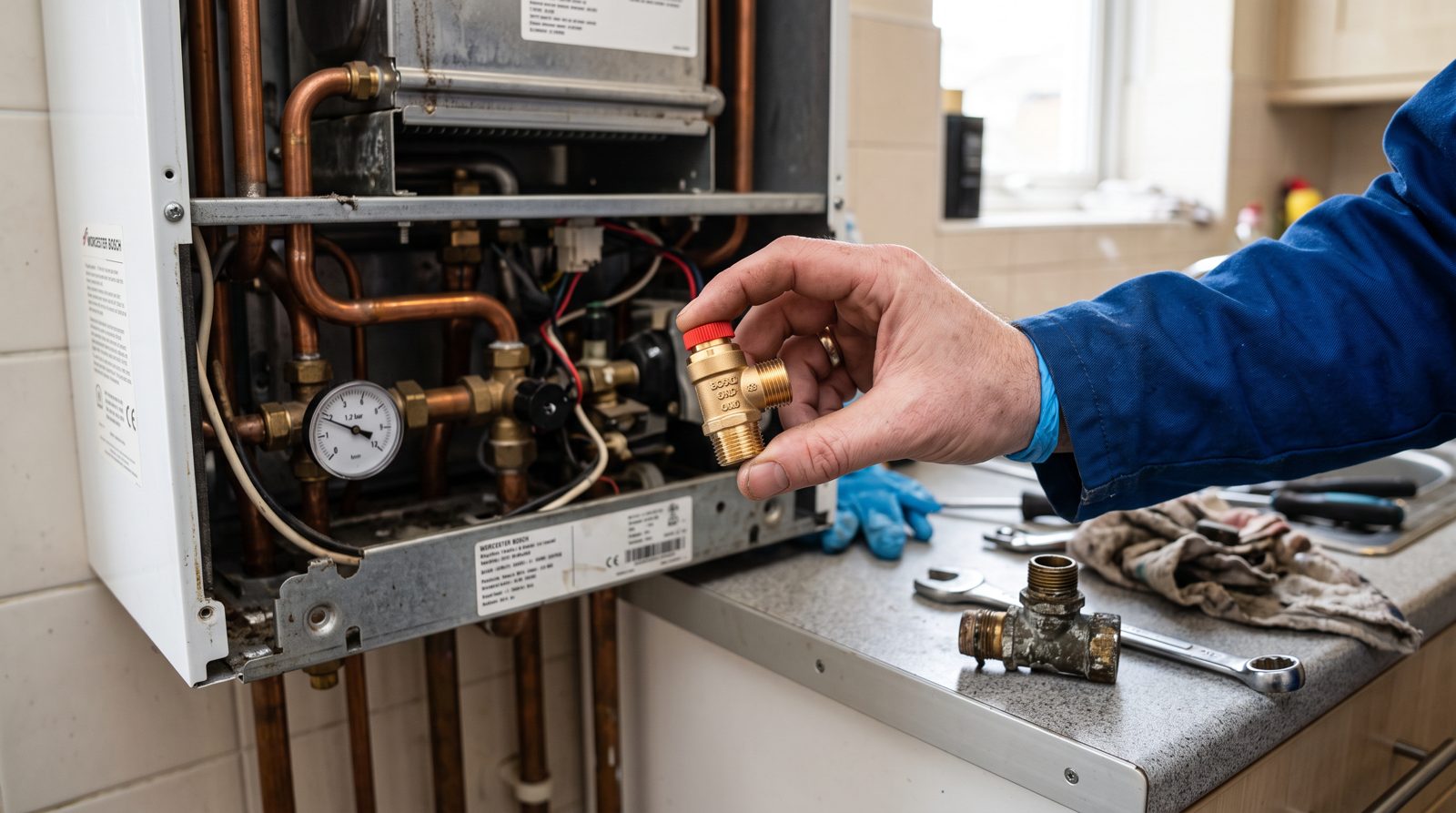
Once a relief valve has opened, a speck of debris often stops it closing fully, and it weeps at normal pressure. The tell-tale is a drip with the gauge reading normal, and a pressure that slowly falls. The valve needs replacing, which is a short job for an engineer. Do not try to clear it by lifting the lever; that usually makes it worse.
Cause 3: the expansion vessel
If the drip appears every time the heating runs and stops when it cools, the vessel has lost its air charge and cannot absorb expansion. The engineer recharges or replaces it, and usually replaces the relief valve at the same time because it will have opened repeatedly.
Why it matters
A weeping relief valve loses system water, so the pressure keeps dropping and you keep topping up, which brings fresh oxygen into the system and accelerates corrosion. In winter the discharge can freeze at the outlet and, in the worst case, block the pipe so the valve cannot relieve at all. The drip also stains the wall and can undermine paving. It is a small job that gets more expensive the longer it is left. Our guide to a boiler losing pressure covers the wider symptoms.
What you can do
- Identify which pipe is dripping.
- If it is the copper pipe, check the boiler pressure gauge and note the reading cold and hot.
- If the pressure is high, lower it by bleeding a radiator and check the filling loop is closed.
- If the pressure is normal and it still drips, book an engineer for a relief valve.
- If the drip appears only when the heating runs, book an engineer for the expansion vessel.
How DCI Boilers can help
DCI Boilers replaces pressure relief valves, recharges expansion vessels and re-routes condensate pipes across Cornwall and Devon as part of fixed-price boiler repairs, with Gas Safe and OFTEC registered engineers. Both the valve and the vessel are checked at every boiler servicing visit, which is the best way to catch them before they drip.
Need help now? Call DCI Boilers on 07888 862 603 or get a free quote.
Frequently asked questions
Is it normal for a boiler pipe outside to drip?
The plastic condensate pipe drips when the boiler runs and that is normal. The copper pressure relief pipe should be dry.
Why is my pressure relief valve leaking?
Either the pressure got too high and the valve opened, or the valve has failed to reseat after opening. The first is a pressure fault, the second a valve replacement.
Can I replace the pressure relief valve myself?
On a gas boiler the valve is inside the casing and must be replaced by a Gas Safe engineer. It is a short job.
Why does the pipe only drip when the heating is on?
The expansion vessel has lost its charge, so pressure spikes when the water heats and the valve opens. Recharging or replacing the vessel fixes it.